Recent Posts

Freshwater Kayak Fishing Tips for Beginners


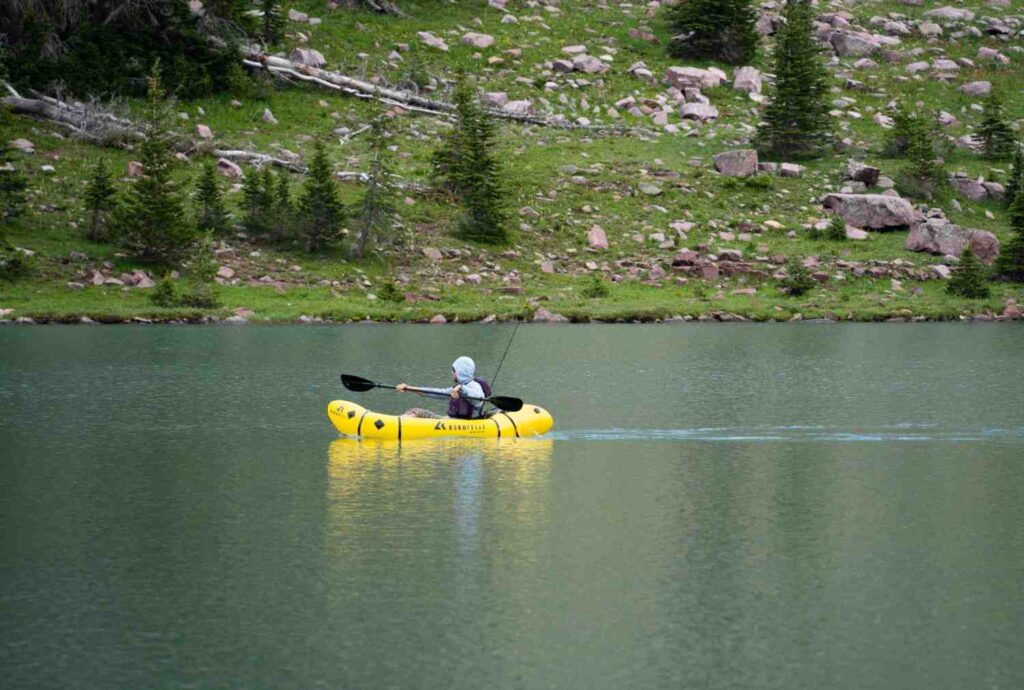
A solo angler paddling a yellow inflatable kayak with a fishing rod on a calm green mountain lake surrounded by rocky slopes and pine trees

Yeah, the first few trips can be rough.

You’ve got rods sticking everywhere. Your paddle keeps drifting away. The tackle box slides under your seat. Then you finally cast at a promising spot and wonder, Am I even fishing the right area?

I’ve watched beginners buy a $2,000 fishing kayak and struggle all morning while an old guy in a scratched-up kayak catches bass after bass with one rod and a handful of lures.

That’s the first lesson.

Fishing skill matters more than kayak accessories.

The kayak is just your vehicle.

Learn how fish behave. Learn boat control. Keep your setup simple. Everything else comes later.

Quick Answers for Beginners Who Want the Short Version

QuestionShort Answer
Best kayak type?Stable sit-on-top kayak
Best fish species to target first?Bass, crappie, bluegill
How many rods?One or two maximum
Anchor or drift?Drift first, anchor later
Electronics needed?No
Biggest beginner mistake?Bringing too much gear
First place to fish?Shorelines, weed edges, fallen trees
Stand up to fish?Only after you’re comfortable sitting

That’s the cheat sheet.

Now let’s talk about what actually works.

A young boy in a life jacket sitting in a blue kayak with a single fishing rod on a calm green freshwater lake at golden hour

The Biggest Mistake I See? People Bring Their Entire Garage

Seriously.

Beginners pack:

  • Six rods
  • Three tackle boxes
  • Fish finder
  • Landing net
  • Cooler
  • Extra clothes
  • Camera gear
  • Huge crate system
  • Four different lure boxes

Then they launch.

The kayak feels unstable.

They spend more time searching for gear than fishing.

And after two hours, they’re exhausted.

Bring less than you think you’ll need.

My standard beginner setup?

  • One medium spinning rod
  • Small tackle tray
  • Paddle leash
  • Landing net
  • Water bottle
  • Pliers
  • Life jacket

That’s it.

Simple setup.

More fishing.

Less chaos.

The right kayak accessories help keep your gear organized, reduce unnecessary clutter, and let you spend more time fishing instead of searching for equipment.

A smiling man in a fishing kayak with one rod near green shoreline vegetation on a calm freshwater river

The Weirdest Mistake I Ever Saw

A guy showed up at a small lake with seven rods.

Seven.

Every rod had a different lure tied on because he didn’t want to “waste time changing lures.”

He launched.

Ten minutes later he hooked a decent bass.

Fish runs left.

Rod holders catch his fishing line.

He turns awkwardly.

Another rod falls overboard.

Now he’s fighting a fish with one hand and grabbing floating gear with the other.

Fish escapes.

Rod sinks.

And somehow the paddle drifts away too.

The poor guy paddled back using his hands.

Nobody laughed.

Well… not until he was safely back at the dock.

More gear creates more problems.

I’ve never met a beginner who said:

“I wish I’d brought more stuff.”

I’ve met hundreds who wished they’d brought less.

Team A vs Team B: Guess Who Catches More Fish?

Let’s compare two beginners.

Team A

  • Buys expensive kayak
  • Carries five rods
  • Installs electronics immediately
  • Changes lures every five minutes
  • Paddles randomly around the lake
  • Focuses on equipment

Team B

  • Uses basic stable kayak
  • Carries one rod
  • Learns fish behavior
  • Stays in productive water
  • Makes accurate casts
  • Focuses on fundamentals

Guess who wins?

Team B almost every time.

Fish don’t care how expensive your kayak is.

They care whether your lure lands where they live.

Silhouette of a kayak angler casting a fishing rod on a perfectly calm lake with a warm golden sunset in the background

Start With Fish That Actually Want To Cooperate

This is another mistake.

New anglers often chase giant fish immediately.

Big bass.

Huge pike.

Monster catfish.

Sounds fun.

Usually ends in frustration.

Target easy fish first.

Go after:

Bluegill

Aggressive.

Found almost everywhere.

Great for learning casting accuracy.

Crappie

Love brush piles and submerged trees.

Teach you how fish relate to structure.

Bass

Perfect beginner predator.

They live near:

  • Fallen trees
  • Weed lines
  • Docks
  • Rock piles
  • Shoreline cover

Find cover.

Cast beside it.

Repeat.

Simple game.

The First Places You Should Fish

Beginners paddle into open water because it looks fishy.

Most of the time?

It’s empty.

Fish want:

  • Shade
  • Protection
  • Ambush points
  • Oxygen-rich water
  • Food

That means looking for:

Fallen Trees

Bass love them.

Crappie love them.

The branches create hiding spots.

Cast beside the tree.

Then cast deeper.

Then shallower.

Work the entire area.

A young boy in a life jacket fishing from a blue kayak near a weed edge on a calm freshwater lake surrounded by green trees at golden hour

Weed Edges

Think of weeds as underwater neighborhoods.

Small fish hide there.

Big fish patrol the edges.

Fish the transition line.

That’s where predators wait.

Docks

Shade.

Structure.

Food.

Fish magnets.

Skip your lure underneath if you can.

If not, cast along the edges.

Boat Control Matters More Than Casting

This surprises people.

Everyone practices casting.

Almost nobody practices controlling the kayak.

Yet poor positioning ruins fishing faster than bad casts.

Your kayak should move quietly and deliberately.

Wind pushes harder than beginners expect.

Even a gentle breeze can spin your kayak sideways.

A few tricks help:

  • Face into the wind when possible
  • Use short paddle corrections
  • Stop paddling early and drift quietly
  • Avoid sudden movements
  • Learn how your kayak reacts before fishing seriously

Building confidence in different water conditions is just as important, especially if you’re learning how to kayak in a river for beginners, where understanding how your kayak handles current and obstacles can make every trip safer and more enjoyable.

Good boat control means:

Less spooking fish.

Better casts.

More time fishing.

A solo angler in a yellow fishing kayak with life jacket drifting quietly on calm open water with one fishing rod in holder

Standing Up Isn’t Required

You see videos.

Everybody’s standing.

Casting.

Walking around their kayak like it’s a bass boat.

Don’t rush it.

You can catch thousands of fish while sitting down.

Actually, many experienced anglers sit most of the day.

Standing helps:

  • Sight fishing
  • Stretching
  • Seeing weed lines
  • Making longer casts

But it’s optional.

First learn:

  • Entering the kayak smoothly
  • Reaching gear safely
  • Fighting fish while seated
  • Recovering balance

Standing comes later.

Safety Isn’t Boring. It’s Fishing Insurance.

I know.

Nobody clicks kayak videos for safety talks.

But freshwater can surprise you.

I’ve seen people flip in:

  • Calm lakes
  • Small ponds
  • Narrow rivers
  • Perfect weather

Usually for silly reasons.

One guy leaned too far trying to lip a bass.

Splash.

Phone gone.

Wallet gone.

Car keys gone.

Fish escaped too.

That story spreads around our local lake every spring.

Wear the life jacket. Every trip.

Not stored behind the seat.

Not strapped to the kayak.

On your body.

Always.

Also carry:

  • Whistle
  • Water bottle
  • Phone in waterproof pouch
  • Sunscreen
  • Small first aid kit

A waterproof pouch protects your phone, but it’s also smart to carry the best kayak dry bag for keeping extra clothing, keys, snacks, and other essentials safe and dry throughout your trip.

Boring?

Maybe.

Useful?

Absolutely.

Learn To Read The Water Before Buying More Gear

This is the skill that changes everything.

Fish aren’t randomly swimming around.

They’re reacting to:

  • Water temperature
  • Shade
  • Current
  • Oxygen
  • Food sources
  • Structure

Start asking:

Where would a small fish hide?

Where would a predator wait?

Where does wind push food?

Why are birds diving over there?

The best anglers are students of water.

They observe.

They notice patterns.

And once you start seeing those patterns?

Fishing becomes a completely different sport.

The First Fish From A Kayak Feels Different

I still remember one beginner I took fishing years ago.

Nervous guy.

Brought way too much gear.

Asked a hundred questions.

About an hour into the trip he hooked a bass near a fallen oak tree.

Nothing huge.

Maybe two pounds.

But the kayak started moving.

The fish pulled him sideways.

Water splashed.

His eyes got wide.

For a few seconds, he forgot every technique I’d explained.

He was just laughing.

That’s kayak fishing.

You’re not standing on a stable deck.

You’re connected to the fish.

Every head shake moves the boat.

Every run feels bigger.

Even average fish become memorable.

And that’s why so many of us get obsessed with it.

A young excited angler holding up a freshwater fish with a big open-mouthed smile while standing in a river in the rain

A Few Things I Wish Every Beginner Knew

Before you head out, remember these:

  • Fish close to shore first
  • Bring less gear
  • Learn boat control early
  • Wear the life jacket every time
  • Stay seated until balance feels natural
  • Fish structure instead of open water
  • Spend more time observing than changing lures
  • Accept that you’ll make mistakes

Everybody does.

I’ve dropped pliers overboard.

Lost fish at the kayak.

Forgot sunscreen.

Even launched once without my paddle sitting beside the truck.

Twenty-five years later, I still laugh about that one.

Questions Beginners Always Ask

Do I need a fish finder?

No.

Helpful? Sure.

Necessary?

Not even close.

Learn where fish live first.Once you understand fish behavior, adding the best kayak fish finding setup becomes much more effective because you’ll know how to use the technology to confirm what the water is already telling you.

Electronics make more sense once you already understand the water.

How many rods should I carry?

One or two.

That’s plenty.

Every extra rod adds clutter and something else to snag.

Is kayak fishing harder than bank fishing?

At first, yes.

After a few trips?

No.

Actually, many anglers catch more fish because kayaks reach places boats can’t and shore anglers never touch.

What if I flip?

Stay calm.

Hold onto the kayak.

Most modern fishing kayaks float even when overturned.

Practice re-entering in shallow water before heading to bigger lakes.Spending time getting into a kayak in calm, shallow conditions builds confidence and helps you react more effectively if you ever need to climb back in on open water.

That confidence changes everything.

Morning or evening?

Both are great.

If I had to choose for beginners?

Early morning.

Cooler weather.

Less boat traffic.

Active fish.

And usually calmer winds.

Final Thoughts

Freshwater kayak fishing isn’t about owning the fanciest kayak or filling your boat with gadgets.

It’s learning how water moves.

Understanding where fish hide.

Keeping your setup simple enough that you spend the day fishing instead of managing equipment.

The first few trips might feel awkward.

Your casts will miss.

Something will fall in the water.

You’ll probably bring too much gear.

Everybody does.

Then one day you’ll slide quietly beside a weed line, make a cast you barely think about, and watch your line jump.

The kayak will swing.

The fish will pull.

And suddenly all those little lessons make sense.

That’s usually the moment people stop saying, “I tried kayak fishing.”

And start saying,

“When am I getting back on the water?”

 Silhouette of a lone angler sitting in a small boat on a perfectly calm lake with a dramatic golden sunset reflected on the water

How to Kayak Safely in the Ocean


A solo kayaker in a yellow sea kayak paddling on perfectly calm coastal water with snow-capped mountains in the background

Ocean kayaking looks peaceful from shore.

Then you launch for the first time.

The beach suddenly feels far away. The swell lifts your kayak higher than expected. Wind pushes from the side. Your paddle splashes awkwardly. Every sound feels louder.

Yeah. That’s normal.

I’ve spent more than two decades paddling coastal water, guiding beginners, and helping people after things went sideways. The biggest surprise? Most ocean kayaking accidents don’t happen because people are reckless.

They happen because people underestimate how quickly the ocean changes.

The ocean doesn’t care if you’re experienced. It rewards preparation and punishes assumptions.

Once you understand that, everything becomes easier.

Quick Answer: What Actually Matters Most?

If you’re brand new, don’t obsess over speed, expensive gear, or fancy techniques.

Focus on these first.

ThingWhat Beginners Should ChooseWhy
KayakSit-on-top, 11–13 feetStable and easy to re-enter
WeatherWind under 10 mphLess fatigue and better control
WavesUnder 2 feetEasier launches and landings
DistanceStay within 300–500 yards of shoreEasy return if conditions change
ClothingDress for water temperatureCold water is more dangerous than cold air
Safety GearPFD, whistle, leash, phone in dry bagSmall items that save lives

Notice something?

Nothing there says “be strong.”

Because ocean kayaking isn’t a strength sport.

It’s mostly judgment.

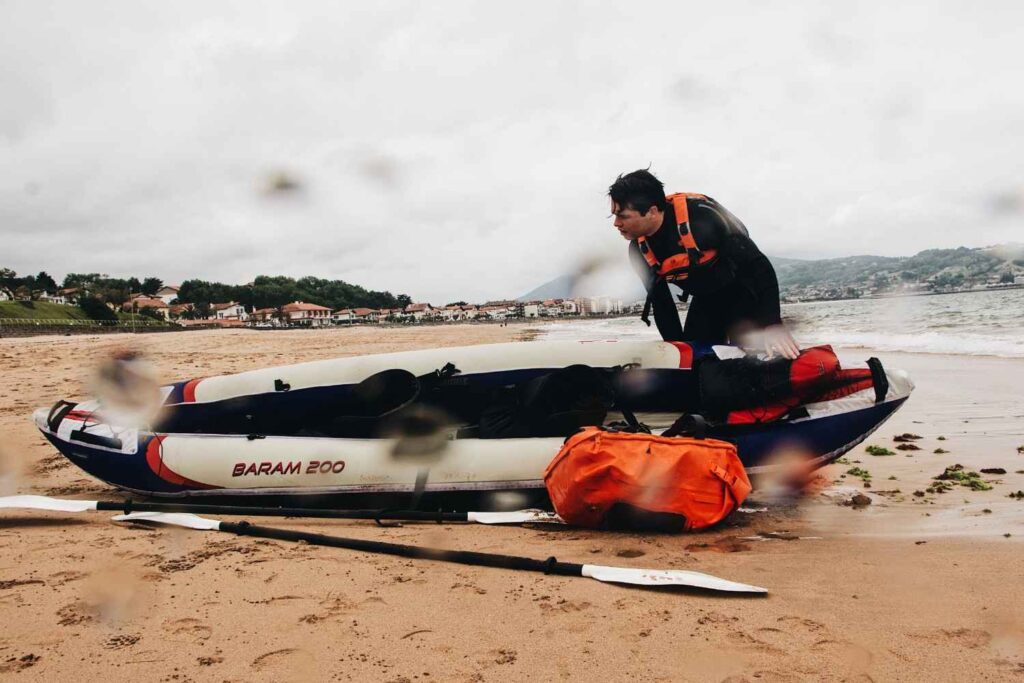
A man in a wetsuit and life jacket preparing his inflatable kayak with dry bag and gear on a sandy beach before launching into the ocean

The First Ocean Mistake Almost Everyone Makes

Beginners think waves are the scary part.

They’re not.

Wind is the real bully.

I’ve watched people launch into perfectly calm water at 8 AM.

By 11 AM?

The breeze builds to 15 mph.

Suddenly paddling back feels like trying to bike uphill in soft sand.

Arms burn.

Progress slows.

Panic creeps in.That’s why many first-time paddlers start with the best sit-on-top kayak for ocean beginners, as the added stability and easy re-entry can help build confidence when conditions become challenging.

The ocean didn’t become dangerous.

Conditions just changed faster than they expected.

A red kayak resting on a sandy beach with rough choppy waves and thick fog in the background showing dangerous ocean conditions

This is why experienced paddlers check:

  • Wind forecast
  • Tide schedule
  • Wave height
  • Current direction
  • Air temperature
  • Water temperature

That last one surprises people.

Because cold water can wreck your day even on a warm summer afternoon.

The Scariest Rescue I Ever Saw Started on a Perfect Day

About fifteen years ago I was paddling near a sheltered bay.

Blue sky.

Tiny waves.

Beach crowded with families.

A young guy launched alone in a cheap recreational kayak.

No PFD.

No whistle.

No phone.

He wasn’t doing anything crazy.

Just exploring.

An hour later the wind shifted.

Nothing dramatic.

Maybe 15 mph.

But his kayak had a tall seat and a wide bow. Every gust pushed him sideways.

Instead of paddling diagonally toward shore, he fought directly into the wind.

For forty minutes.

Eventually he exhausted himself.

When we reached him, he wasn’t injured.

He wasn’t hypothermic.

He was simply done.

Hands shaking.

Breathing hard.

Embarrassed.

The weird part?

He was less than half a mile offshore.

Distance isn’t what gets beginners. Fatigue does.

A woman in an orange sea kayak with life jacket paddling alone on open turquoise water far from shore

That lesson stuck with me.

The ocean rarely announces danger with a giant wave.

Usually it whispers first.

Team A vs Team B: Which Beginner Actually Gets Home Happier?

I’ve watched this play out hundreds of times.

Team A

  • Launches early morning
  • Checks wind and tides
  • Wears a PFD
  • Stays near shore
  • Turns back while still feeling fresh
  • Carries safety gear

Team B

  • Launches at noon
  • Checks weather once yesterday
  • Leaves PFD behind because “it’s calm”
  • Keeps paddling farther
  • Gets tired before returning
  • Assumes nothing will go wrong

Guess who has more fun?

Team A.

Every time.

Ocean kayaking rewards people who quit while things are still easy.

That’s not fear.

That’s wisdom.

Two kayakers preparing their sea kayaks on a remote sandy beach with rocky cliffs and a small island visible in the background

Learn to Read Water Before You Read Gear Reviews

Most beginners spend weeks researching kayaks.

Very few spend an hour learning how water moves.

That’s backwards.

The ocean is always talking.

You just need to learn its language.

Watch for:

  • Dark patches = stronger wind
  • Whitecaps = waves beginning to break
  • Foam lines = current boundaries
  • Water moving sideways near shore = rip current
  • Seabirds hovering repeatedly = baitfish and changing currents
  • Boats bouncing suddenly = rougher water ahead

Here’s an easy exercise.

Stand on the beach for ten minutes before launching.

Don’t touch your kayak.

Just watch.

See where waves break.

Notice where swimmers avoid entering.

Look for sections where water flows strangely.

That quiet observation often teaches more than an hour on YouTube.

Aerial view of two sea kayakers paddling through churning white water near jagged coastal rocks showing how to read dangerous ocean conditions

Cold Water Is Sneakier Than Big Waves

This catches people every season.

Air temperature: 80°F.

Water temperature: 58°F.

Feels like summer.

Acts like spring.

Fall into that water unexpectedly and your body can react violently.

Breathing becomes rapid.

Muscles tighten.

Fine motor control disappears.

People imagine hypothermia happens hours later.

Sometimes the dangerous part happens in the first minute.

Dress for the water, not the weather.Just as important, keep your essentials protected with the best kayak dry bag, so extra clothing, your phone, and emergency gear stay dry if conditions change unexpectedly.

A wetsuit or drysuit might feel excessive standing on shore.

Once you’re floating beside your kayak in cold water, it feels like genius.

The Weirdest Beginner Mistake I Ever Saw

This one still makes me laugh.

A guy showed up with beautiful gear.

Carbon paddle.

Expensive GPS.

High-end kayak.

Everything.

He launches.

Starts paddling.

And keeps drifting left.

He paddles harder.

Still drifts left.

More power.

More frustration.

After ten minutes he shouts:

“Something’s wrong with this kayak!”

Nothing was wrong.

He had attached his skeg backward.

For anyone unfamiliar, a skeg is a small fin under the kayak that helps it track straight.

Installed backward, it behaved like a tiny underwater rudder fighting him every stroke.

We fixed it in thirty seconds.

Problem solved.

Point is:

Expensive gear won’t save you from simple mistakes.

Basic knowledge beats fancy equipment almost every time.

The Launch Is Often Harder Than the Paddle

Most ocean flips happen near shore.

Not offshore.

Why?

Because waves are messy where they break.

Timing matters.

Here’s the routine I teach beginners:

Watch five or six waves first.

Notice the rhythm.

Push off during a calmer gap.

Get seated quickly.

Paddle with confidence.

Don’t stop halfway.

Hesitation is what flips people.

Think of launching like merging onto a highway.

Slow and uncertain feels safer.

Actually, it’s usually worse.

Commit.

Move forward.

Keep your momentum.

A man paddling a yellow kayak through breaking shore waves at a busy beach resort on a sunny day

What To Do If You Flip

Because eventually…

Almost everyone does.

And that’s okay.

First rule?

Stay with your kayak.

The kayak floats.

You might not.

Second:

Don’t rush.

Take one breath.

Then another.

Most beginners burn energy fighting panic instead of solving the problem.

If you’re using a sit-on-top kayak:

  • Flip it upright
  • Position yourself beside the seat
  • Kick your legs
  • Pull your chest across the seat
  • Rotate your body back on top
  • Rest before paddling again

Practice this near shore.It’s also the safest place to practice getting into a kayak, so you can build confidence and improve your balance before heading into deeper or more challenging water.

Seriously.

The first time shouldn’t happen half a mile offshore with waves slapping your face.

The Safety Gear Most People Skip

Nobody forgets their paddle.

Funny how often they forget the gear that matters more.

Carry:

  • Properly fitted PFD
  • Whistle
  • Paddle leash
  • Phone in waterproof case
  • Dry bag
  • Drinking water
  • Small first aid kit
  • Sun protection
  • Emergency snack

A comfortable PFD is much more likely to stay on all day, which is why many paddlers look for the best kayak life jacket for women to get a secure fit without sacrificing comfort or freedom of movement.

Simple stuff.

Tiny weight.

Huge difference.

I’ve used my whistle more times than my first aid kit.

And thankfully, far fewer times than my sunscreen.

How Far Offshore Should Beginners Go?

Short answer?

Not far.

Here’s my personal rule:

If swimming back sounds impossible, you’re too far away.

For first trips:

  • Stay inside protected bays
  • Keep shore clearly visible
  • Remain within easy paddling distance
  • Avoid open crossings
  • Paddle with a partner whenever possible

Having someone with you is especially valuable when you’re learning how to kayak in a river for beginners, where changing currents and unexpected obstacles can make shared experience and assistance much more important.

Confidence grows quickly.

Distance can wait.

The ocean isn’t going anywhere.

The Moment You Start Feeling Cocky Is Usually The Dangerous Part

First trip?

People are cautious.

Second trip?

Still careful.

Third or fourth?

That’s when trouble sneaks in.

Because things feel familiar.

You stop checking forecasts.

Launch a little farther.

Ignore small warnings.

Every experienced paddler I know has a story that starts with:

“I thought I’d done this enough times…”

Respect never becomes optional.

Even after twenty-five years.

Actually, especially after twenty-five years.

FAQ

Is ocean kayaking safe for beginners?

Absolutely.

But beginners should stick to calm conditions, protected water, and short trips.

The ocean isn’t dangerous by default.

Bad decisions are.

Start small.

Build experience gradually.

What’s the best kayak for ocean beginners?

A stable sit-on-top kayak around 11 to 13 feet long is hard to beat.

They’re easier to climb back onto after a flip and generally more forgiving in waves.

Narrow racing kayaks can wait.

What wind speed is too much?

For beginners, I tell people:

Under 10 mph = comfortable.

10–15 mph = challenging.

Over 15 mph = stay on shore unless you’re experienced.

Could an expert paddle in stronger wind?

Sure.

But that’s not the goal.

The goal is enjoying yourself and getting home smiling.

Should I kayak alone in the ocean?

Not at first.

A partner gives you:

  • Extra eyes
  • Extra gear
  • Help after a capsize
  • Someone to make better decisions when stress kicks in

Even experienced paddlers prefer company.

There’s a reason for that.

What if I panic after flipping?

Everyone thinks they’ll panic.

Most don’t.

Because training beats fear.

Practice re-entering your kayak near shore.

Do it once.

Then do it again.

When the real moment comes, your body remembers.

That’s incredibly reassuring.

Final Thoughts

After all these years, here’s the thing I wish every beginner understood:

The goal isn’t conquering the ocean.

It’s learning to work with it.

Some days the sea invites you farther.

Other days it tells you to stay close to shore.

Listen.

The best paddlers I know aren’t fearless.

They’re observant.

Patient.

Prepared.

And they never stop respecting the water.

Do that consistently and something wonderful happens.

The nervous first launch becomes routine.

The sound of waves stops feeling intimidating.

You start noticing dolphins instead of worrying about balance.

Then one morning you’re gliding across glassy water at sunrise, completely relaxed, and you’ll remember how nervous you felt on day one.

That’s when you’ll realize:

You didn’t beat the ocean.

You learned its rhythm.

And now you belong out there.

Silhouette of a solo kayaker paddling on perfectly calm water with a dramatic golden sunset reflected on the surface

How to Kayak in a River for Beginners: Step-by-Step


A child in an orange life jacket paddling a kayak through crystal clear turquoise water surrounded by lush green cliffs with a group ahead

Yeah, this feels intimidating at first.

The river is moving. The kayak feels unstable. Videos online make everything look effortless while you’re standing at the launch wondering, What if I flip in the first five minutes?

I’ve been kayaking rivers for more than two decades. I’ve taught complete beginners, watched people make spectacular mistakes, and rescued more hats, shoes, and floating sandwiches than I can count.

Here’s the good news.

River kayaking is one of the easiest outdoor sports to learn if you start the right way.

Most beginners don’t get into trouble because they’re weak or uncoordinated.

They get into trouble because they start too big.

Don’t do that.

Quick Answers For Nervous Beginners

QuestionShort Answer
Can beginners kayak on rivers?Absolutely. Start on slow-moving Class I rivers.
Will I flip?Maybe. Everyone flips eventually. It’s usually not a big deal.
Sit-inside or sit-on-top?Beginners usually feel more comfortable on stable sit-on-top kayaks.
Do I need a life jacket?Every trip. No exceptions.
How long should my first trip be?Two to five miles is plenty.
What’s the biggest beginner mistake?Fighting the river instead of learning how it moves.

The First Thing Most Beginners Get Wrong

People think kayaking is about paddling.

It’s not.

It’s about balance and reading water.

The paddle is just the tool.

The river does most of the work.

I’ve watched athletes struggle because they tried to overpower the water.

Then I’ve seen a retired guy in his sixties drift through the same stretch effortlessly because he understood where the current was pushing him.

That’s the secret.

Stop fighting.

Start observing.

Water tells you where it wants to go.

Your job is to work with it.

Start On The Boring River

Seriously.

Find the most boring river you can.

Slow current.

Wide channel.

Few obstacles.

No rapids.

A lot of beginners secretly want adventure on day one.

Bad idea.

Your first trip should be boring enough that you spend most of the time thinking:

“Wait…that’s it?”

Exactly.

Because while the river feels easy, your brain is learning:

  • How to hold the paddle
  • How hard to paddle
  • How the kayak turns
  • What current feels like
  • How to get in and out without looking ridiculous

And trust me…

Everybody looks ridiculous at first.

What You Need Before Launching

Keep it simple.

You don’t need expensive gear.

You need reliable gear.

Bring:

  • A properly fitted life jacket (PFD)
  • Kayak and paddle
  • Dry bag for phone and keys
  • Water bottle
  • Sunscreen
  • Hat with a strap
  • Whistle
  • Extra clothes in your car

Fit matters just as much as wearing one in the first place. Many paddlers spend time looking for the best kayak life jacket for women because a properly designed PFD can provide better comfort, mobility, and safety during long days on the water.

The life jacket is non-negotiable.

I’ve heard every excuse.

“It’s shallow.”

“I’m a strong swimmer.”

“I’ll wear it if the river gets rough.”

None of that matters.

Cold water, current, and panic change the equation fast.

Wear it.

Every time.

A red kayak with paddle resting on a sandy shore beside choppy water on a misty day, ready for launch

The Real Story I Tell Every Beginner

Years ago I was teaching a friend named Chris.

Confident guy.

Gym six days a week.

Played college football.

He showed up convinced kayaking would be easy.

Five minutes after launching, he drifted near a tree branch hanging over the river.

His hat blew off.

Without thinking, he leaned way over the side to grab it.

The kayak flipped instantly.

Not in rapids.

Not in rough water.

Not because of bad gear.

A baseball cap.

That’s what got him.

He came up sputtering and laughing.

Then he said something I still remember:

“I thought the river would beat me with something big.”

It almost beat him with something stupid.

That lesson sticks.

Most beginner mistakes aren’t dramatic.

They’re tiny moments where people forget balance matters more than strength.

Getting Into The Kayak Without Falling In

This is where everyone’s dignity takes a hit.

No worries.

Happens to everybody.

Place the kayak parallel to shore in shallow water.

Keep your paddle across the cockpit or seat.

Hold the kayak steady.

Sit first.

Then bring your legs in.

Not the other way around.

I’ve seen beginners try to jump in like they’re mounting a horse.

The river loves people like that.

Move slowly.The same approach makes getting into a kayak much easier, helping you stay balanced and avoid unnecessary slips or sudden movements.

Center your weight.

Once seated, take a few deep breaths.

You’re already kayaking.

A child holding a paddle and an adult dragging a yellow kayak toward the water on a tropical beach

The Paddle Grip Everyone Overthinks

Look at the paddle.

Find the center.

Place your hands slightly wider than shoulder width.

Relax your grip.

That’s it.

Seriously.

Beginners squeeze the paddle like they’re wrestling an alligator.

After twenty minutes their forearms are burning.

Hold the paddle firmly enough that it won’t fly away. No tighter.

Your torso should do most of the work.Using the right technique becomes much easier when you’re using the correct equipment, which is why understanding how to size a kayak paddle is an important part of improving efficiency and reducing fatigue on the water.

Not your arms.

Think about throwing a punch.

The power comes from rotating your body.

Same thing here.

Reading The River: Learn This And Everything Gets Easier

Water isn’t random.

Certain patterns repeat everywhere.

Watch for these:

Smooth, Dark Water

Usually deeper.

Often faster.

Good place to paddle.

Choppy, White Water

Rocks underneath.

Shallow areas.

Approach carefully.

V-Shaped Current

A V pointing downstream usually means open water.

A V pointing upstream often means an obstacle.

This is the part everyone misses.

You don’t beat the river.

You read it.

A woman in a blue life jacket paddling a kayak on a wide calm river surrounded by green trees under a blue sky

And once you start seeing these patterns, you can’t unsee them.

Team A vs Team B

I’ve watched this happen for years.

You can usually tell who’ll have a great day before they even launch.

Team ATeam B
Starts on easy riversStarts on rapids
Wears a PFD all dayKeeps it behind the seat
Practices firstTries to impress friends
Stops and studies currentCharges ahead blindly
Ends the day smilingEnds the day exhausted

Be Team A.

Nobody gets bonus points for struggling.

A smiling man wearing a blue life jacket and GoPro camera paddling a white kayak on a calm river

The best paddlers I know aren’t fearless.

They’re patient.

The Weirdest Mistake I’ve Ever Seen

One beginner tied his dry bag to the kayak.

Good idea.

Then he tied the other end around his ankle.It was a simple setup, but keeping essential gear protected is just as important, which is why many paddlers never head out without the best kayak dry bag for storing valuables and emergency items.

Bad idea.

Very bad idea.

He flipped.

The kayak drifted.

His ankle leash pulled tight.

Suddenly he was tangled underwater trying to figure out what he’d done.

Luckily we were in shallow water.

Nothing serious happened.

But everybody learned something important.

Never tie yourself to your kayak.

Not with rope.

Not with straps.

Not with homemade inventions you saw online at 2 AM.

If you flip, you want freedom to swim.

Always.

What To Do If You Flip

And someday you probably will.

That’s okay.

Here’s what matters:

  • Stay calm.
  • Hold onto your paddle if possible.
  • Stay with your kayak.
  • Float on your back if needed.
  • Swim toward shore when safe.

Panic is usually the biggest danger.

The first time I flipped, I remember thinking:

“Well…that wasn’t nearly as dramatic as I imagined.”

Most flips are like that.

Wet.

Embarrassing.

Memorable.

Then you climb back in and keep going.

Aerial close-up of churning white water rapids showing the power and unpredictability of river currents

The One Thing I Wish Every Beginner Knew

Your first trip isn’t about distance.

It isn’t about speed.

Nobody cares how many miles you paddle.

Success means getting off the water wanting to go again.

That’s it.

I’ve seen people paddle one mile and become obsessed with kayaking.

I’ve seen others force themselves through ten miserable miles and quit forever.

Leave while you’re still having fun.

The river isn’t going anywhere.

Quick Safety Checks Before Every Trip

Ask yourself:

  • Is the weather changing?
  • Am I wearing my PFD?
  • Is someone expecting me home?
  • Do I know where I’m getting out?
  • Is the river within my skill level?

If one answer worries you…

Wait.

Tomorrow is a perfectly good paddling day.

FAQ

Is river kayaking harder than lake kayaking?

Usually, yes.

A lake mostly stays where it is.

A river is constantly moving.

Current changes your direction, speed, and angle.

But once you learn moving water, lakes feel easy.

Should beginners paddle alone?

I wouldn’t.

Bring a friend.

Join a paddling group.

Or choose a popular river where other paddlers are nearby.

Problems are much easier to solve when another person is around.

What if I panic after flipping?

Float.

Breathe.

Trust your life jacket.

Focus on one thing at a time.

People get overwhelmed because they try solving five problems at once.

Slow down mentally.

The river is moving fast enough already.

How far should my first river trip be?

Two to five miles.

That’s enough.

Finish early.

Go home smiling.

Come back next weekend.

Final Thoughts

After all these years, I still remember my first river trip.

I was nervous.

I gripped the paddle too hard.

Every ripple looked dangerous.

And I honestly believed everyone else knew some secret I didn’t.

Turns out they didn’t.

They’d simply spent more time on the water.

That’s the whole game.

Start small.Many new paddlers find that a best lightweight kayak under 40 pounds is easier to handle, transport, and gain confidence with while learning the basics.

Wear your PFD.

Respect the river.

Laugh at your mistakes.

A few trips from now, you’ll watch a nervous beginner wobble at the launch and think:

“Relax. I was exactly like that.”

And you’ll be right.

Because every great kayaker starts the same way.

A little scared.

A little awkward.

And completely hooked after the first good day on the river.

Silhouette of two kayakers paddling on calm water under a dramatic golden sunset sky

Best Lightweight Kayak Under 40 Pounds: Less Carry, More Paddle


A lone kayaker paddling a red and yellow kayak on a calm river surrounded by dense green forest

The first lightweight kayak I bought taught me an expensive lesson.

I spent weeks comparing speed, tracking, and hull designs.

Nobody asked me a simple question.

“Can you carry it by yourself?”

Turns out, the answer was no.

The kayak weighed almost fifty pounds.

Didn’t sound heavy in the store.

Felt like a refrigerator when I was dragging it down a muddy boat ramp after a six-hour paddle.

That’s when I realized something.

A kayak you hate carrying becomes a kayak you rarely use.

And that’s exactly why lightweight kayaks under 40 pounds have exploded in popularity.

Not because paddlers got weaker.

Because they got smarter.

The Best Lightweight Kayaks Under 40 Pounds

KayakWeightTypeBest For
Eddyline Sky 1032 lbsRecreationalBest Overall
Delta 10 AR37 lbsRecreationalComfort & Storage
Hurricane Santee 116 Sport39 lbsTouringSpeed & Stability
Oru Lake17 lbsFoldingUltimate Portability
Pelican Mustang 100X39 lbsRecreationalBudget Buyers

If someone told me:

“I paddle alone and don’t want to struggle loading my kayak.”

I’d immediately point them toward the Eddyline Sky 10.

Light.
Durable.

Easy to carry.

And surprisingly capable.

Weight Matters More Than Most People Realize

Here’s something funny.

People obsess over paddle weight.
They’ll spend $300 to save eight ounces.

Then they’ll buy a 60-pound kayak.

Makes no sense.

Because the hardest part of kayaking often isn’t paddling.

It’s:

  • Loading onto roof racks
  • Carrying to the water
  • Moving around garages
  • Pulling across beaches
  • Lifting after a long trip

Many paddlers underestimate how much effort roof loading can require until they’re doing it alone in a parking lot. That’s why learning how to transport a kayak properly can save time, prevent damage, and make every trip to the water much easier.

Ten pounds feels like fifty after a tiring day on the water.

Trust me on this.

I’ve carried both.

A red Jeep with a kayak strapped to the roof rack parked at a campsite surrounded by trees

Why Under 40 Pounds Is The Sweet Spot

There’s a reason this category is so popular.

Once kayaks dip below forty pounds, something changes.

You stop planning around the kayak.

You just go.

Spontaneous morning paddle?

Easy.

Short evening trip?

No problem.

You don’t stand in the garage thinking:

“Do I really want to wrestle this thing today?”

You grab it and leave.

That’s freedom.

A woman paddling a yellow kayak on a glassy lake with snow-capped mountains in the background at golden hour

And honestly?

That’s worth paying for.

Lightweight Doesn’t Mean Fragile

This is probably the biggest myth.

People hear “lightweight” and imagine something flimsy.

Not true.

Modern lightweight kayaks use:

  • Thermoformed ABS
  • Composite materials
  • Folding polymers
  • High-density plastics

Many are incredibly durable.

I’ve seen lightweight thermoformed kayaks survive years of:

  • Rocky launches
  • River trips
  • Roof rack abuse
  • Accidental drops

Meanwhile, I’ve seen heavy kayaks crack after one bad impact.

Weight and strength aren’t opposites anymore.

Technology changed that.

Team A Vs Team B: Same Lake, Different Experience

Team A

Buys:

  • Heavy polyethylene kayak
  • Saves a little money
  • Ignores carrying weight

Three months later:

  • Uses it less often
  • Hates loading it
  • Starts shopping again

Team B

Chooses:

  • Lightweight kayak
  • Slightly higher price
  • Prioritizes portability

Three months later:

  • Paddles every weekend
  • Loads alone
  • Actually enjoys ownership

The difference?

Convenience.

That’s what keeps people paddling.

Not marketing.

Not fancy accessories.

Convenience.

An older solo kayaker in a yellow kayak paddling peacefully on calm water on a sunny day

The Hidden Trade-Off Nobody Talks About

You know what’s annoying?

Manufacturers advertise lightweight kayaks like they’re magical.

They’re not.

Every design involves compromise.

Lighter Kayaks Usually Cost More

Because premium materials aren’t cheap.

Extremely Light Kayaks Can Feel Less Solid

Not unsafe.

Just different.

Less tank-like.

Budget Lightweight Kayaks May Sacrifice Features

Smaller storage.

Basic seats.

Fewer accessories.

The goal isn’t finding a kayak with zero compromises.

It’s finding compromises you can live with.The same idea applies to comfort on the water, which is why many paddlers invest in the best kayak seat cushion for back pain to improve support without replacing their entire setup.

That’s the secret.

Folding Kayaks Changed My Opinion Completely

I’ll admit it.

I used to laugh at folding kayaks.

A boat that folds?

Seriously?

Then I tried one.

The Oru Lake weighs around seventeen pounds.

Seventeen.

You can carry it with one hand.

Store it in a closet.

Fit it inside a car trunk.

Is it as rugged as a hard-shell kayak?

No.

Is it ridiculously convenient?

Absolutely.

I’ve watched apartment dwellers go from:

“I can’t own a kayak.”

to

“Why didn’t I buy this years ago?”

Sometimes portability beats perfection.That’s one of the biggest reasons inflatable kayaks have become so popular—they offer a practical balance of convenience, storage, and on-water performance for many paddlers.

A young man paddling a sit-inside kayak alone on calm open water in casual clothes on a sunny day

Wind Is More Noticeable In Lightweight Kayaks

This deserves attention.

Because physics doesn’t care about marketing.

Lighter kayaks tend to:

  • Drift more in strong winds
  • Get pushed sideways easier
  • Feel less planted on rough water

Now before you panic…

This matters mostly when:

  • Wind exceeds 10-15 mph
  • You’re on open lakes
  • You’re paddling coastal waters

For calm lakes?

Rivers?

Easy cruising?

You’ll barely notice.

Skill matters more than weight.
Still, if you live somewhere windy, it’s worth considering.

The Weirdest Lightweight Kayak Story I’ve Seen

A retired gentleman bought a sixty-pound kayak.

Couldn’t lift it.
So he kept it permanently strapped to his truck.
For two years.

Rain.

Sun.

Snow.

Everywhere he drove.

Eventually his wife convinced him to buy a 34-pound model.

First weekend?

He paddled twice.

Second weekend?

Three times.

A month later he told me:

“I didn’t need a new kayak.”

He paused.

“I needed one I wasn’t afraid to carry.”

That stuck with me.

Sometimes the obstacle isn’t the sport.

It’s everything that happens before the sport.

Materials Matter More Than Weight Alone

A 35-pound kayak isn’t automatically better than a 39-pound kayak.

Look at the material too.

Polyethylene

Pros:

  • Cheap
  • Tough
  • Widely available

Cons:

  • Heavier
  • Less efficient

Thermoformed ABS

Pros:

  • Lightweight
  • Durable
  • Glossy finish
  • Better performance

Cons:

  • More expensive

Composite Fiberglass

Pros:

  • Extremely light
  • Fast
  • Premium feel

Cons:

  • Expensive
  • Less impact resistant

Folding Materials

Pros:

  • Ultra-portable
  • Easy storage

Cons:

  • Limited lifespan compared to rigid hulls

This is the part everyone misses.

The material affects:

  • Weight
  • Durability
  • Performance
  • Price

You can’t evaluate one without the others.

Various colorful kayaks of different sizes and materials stored on a multi-tier outdoor rack surrounded by green trees

Common Mistakes Buyers Make

Avoid these and you’ll save yourself money.

  • Buying heavier “just in case”
  • Ignoring roof loading height
  • Focusing only on price
  • Forgetting storage space
  • Assuming lightweight means weak
  • Choosing speed over usability
  • Testing on flat ground instead of lifting overhead

Storage often becomes an issue only after the kayak arrives home. Taking the time to learn how to store a kayak properly can help protect it from damage while making the most of the space you have available.

And here’s another mistake.

People think they’ll “get stronger.”

Maybe.

But why buy a kayak that feels like a gym exercise?

The water should be the adventure.

Not carrying the boat.

Who Should Actually Buy A Lightweight Kayak?

Honestly?

Almost everyone.

Especially:

  • Solo paddlers
  • Older adults
  • Smaller paddlers
  • Apartment owners
  • Casual weekend kayakers
  • People with shoulder or back problems

For paddlers dealing with shoulder or back issues, the right setup can make a significant difference in comfort and endurance. Investing in supportive kayak accessories can help reduce strain and make longer trips much more enjoyable.

If carrying your kayak feels stressful, lighter is almost always better.

Simple as that.

Frequently Asked Questions

Is a kayak under 40 pounds durable?

Yes.

Many lightweight kayaks use premium materials that are both strong and light.

Durability depends more on construction than weight alone.

What’s the lightest kayak available?

Folding models like the Oru Lake weigh around 17 pounds.

Some inflatable kayaks are even lighter.

Are lightweight kayaks more expensive?

Usually.

Advanced materials cost more.

But many paddlers feel the convenience justifies the price.

Can beginners use lightweight kayaks?

Absolutely.

Most recreational lightweight kayaks are stable and beginner friendly.

Is 40 pounds really a big difference compared to 50 pounds?

More than you think.

Especially after a long day.

Ten pounds saved on paper often feels much larger in real life.

Final Thoughts

The kayak industry spent years convincing people bigger was better.

Longer.

Heavier.

More rugged.

And for certain adventures, that’s true.

But most paddlers aren’t crossing oceans.

They’re chasing sunsets.

Fishing quiet coves.

Escaping work for a few hours.

For that kind of life?

Convenience wins.

A lightweight kayak under 40 pounds isn’t exciting because it’s light.

It’s exciting because you actually use it.

More mornings.

More spontaneous trips.

More time on the water.

Less time arguing with roof racks.

 Multiple colorful kayaks stored on a wooden rack near a beach at golden sunset, ready for next paddle

And eventually, something funny happens.

You stop thinking about the kayak’s weight entirely.

Because the only thing that feels heavy anymore is wondering why you waited so long to buy one.

Best Kayak Seat Cushion for Back Pain: It’s Not Always Your Back


View from behind a woman kayaking alone on a peaceful green river surrounded by tropical trees

I’ve watched people spend $2,000 on a kayak and then complain after an hour because their lower back felt like it was made of concrete.

They blamed age.

They blamed bad posture.

A few blamed kayaking itself.

Most of them were sitting on terrible seats.

Here’s the truth.

Back pain in a kayak usually starts at the hips.

Sounds strange, I know.

But after twenty-five years around kayaks, fishing tournaments, and long paddling trips, I’ve learned something simple.

If your hips tilt backward, your spine follows.

Your lower back tightens.

Your shoulders hunch.

And suddenly a relaxing afternoon on the water becomes a countdown until you can stand up again.

The good news?

A quality kayak seat cushion fixes this more often than people expect.

Not every time.

But far more often than beginners realize.

The Best Kayak Seat Cushions At A Glance

Seat CushionBest ForMaterialBiggest Advantage
Skwoosh Paddling CushionOverall BestGel FoamExcellent pressure relief
GCI Outdoor SitBackerExtra Back SupportFoam + BackrestGreat lumbar support
Yakpads Cushioned Seat PadLong TripsGelStays comfortable for hours
Hornet Watersports Gel SeatBudget PickGel FoamAffordable and soft
Therm-a-Rest Z SeatMinimalistsClosed Cell FoamLightweight and durable

If someone asked me:

“My lower back hurts after two hours. Just tell me what to buy.”

I’d say:

Skwoosh Paddling Cushion.

I’ve recommended it countless times.

And the number of people who came back saying,

“Why didn’t I buy this sooner?”

is honestly ridiculous.

A lone kayaker in a yellow kayak resting on a large calm lake surrounded by forested hills under an overcast sky

The #1 Reason Kayak Seats Cause Back Pain

People assume they need more padding.

Sometimes they do.

Most of the time?

They need better posture support.

Think about sitting on a soft couch.

Feels amazing for ten minutes.

After an hour?

Your hips sink.

Your spine curves.

Everything aches.

A kayak seat works the same way.

Too much softness can actually increase pain.

The best cushions support your pelvis slightly forward.It’s a small detail, but one that experienced paddlers often look for when choosing kayak accessories that improve comfort and reduce fatigue during longer trips.

That keeps your spine aligned.

Small adjustment.

Massive difference.

Gel Vs Foam: Which One Actually Helps?

This debate never ends.

So here’s my real-world answer.

Gel Cushions

Best for:

  • Long paddling sessions
  • Existing lower back pain
  • Pressure point relief
  • Hot weather

Pros:

  • Distributes weight evenly
  • Doesn’t flatten quickly
  • Stays comfortable for hours

Cons:

  • Heavier
  • Usually more expensive

Foam Cushions

Best for:

  • Short trips
  • Lightweight setups
  • Budget buyers

Pros:

  • Cheap
  • Lightweight
  • Durable

Cons:

  • Compresses over time
  • Less pressure relief

If back pain is your main problem, gel usually wins.

Not always.

But often enough that it’s my first recommendation.

Two kayakers paddling sit-on-top kayaks on calm water with lush green mountains in the background

The Mistake Almost Everyone Makes

They buy the thickest cushion they can find.

Bigger must be better, right?

Wrong.

I learned this the hard way years ago.

Bought a thick stadium cushion for a fishing kayak.

Looked comfortable.

Felt comfortable.

For thirty minutes.

After that?

My knees sat higher than my hips.

Lower back started screaming.

I kept shifting positions.

Nothing helped.

Eventually I tossed the cushion aside.

Problem solved instantly.

Aerial view of a man paddling a green kayak on calm water with a proper seat and life jacket

Height matters as much as softness.

Too high and your posture falls apart.

Too low and pressure builds on your tailbone.

The sweet spot is usually between one and two inches.

More isn’t automatically better.

Signs Your Seat Cushion Is Actually The Problem

Here’s a quick test.

If any of these sound familiar:

  • Lower back pain starts after 30-60 minutes
  • Tailbone feels numb
  • You constantly shift positions
  • Hamstrings tighten during paddling
  • Pain disappears shortly after standing

There’s a good chance your seat setup is causing the issue.

Not your kayak.

Not your age.

Not your fitness.

I’ve seen people buy entirely new kayaks when a $50 cushion would’ve solved everything.That said, comfort is only one part of the equation, which is why learning how to pick the perfect kayak for fishing can help you choose a model that fits your needs from the start rather than trying to fix problems later.

That hurts more than the back pain.

Team A Vs Team B: Same River, Different Ending

Team A

Uses:

  • Factory seat
  • No cushion
  • Poor posture
  • Keeps paddling through discomfort

Three hours later:

  • Lower back locked up
  • Constant stretching
  • Ends trip early
  • Doesn’t kayak again for months

Team B

Uses:

  • Gel seat cushion
  • Slight lumbar support
  • Takes short breaks
  • Adjusts posture regularly

Three hours later:

  • Comfortable
  • Still fishing
  • Planning the next trip

The difference isn’t toughness.

It’s support.

A kayaker in an orange kayak paddling between towering rocky cliffs on a scenic waterway

Your spine doesn’t care how stubborn you are.

Back Pain Isn’t Always About The Cushion

This is the part everyone misses.

Sometimes the seat isn’t the problem.

Your paddling technique is.

Watch beginners.One of the most common mistakes is using the wrong paddle length, which is why understanding how to size a kayak paddle can make a noticeable difference in comfort, efficiency, and overall control on the water.

They tend to:

  • Hunch shoulders
  • Lean backward
  • Grip paddles too tightly
  • Twist awkwardly
  • Stay frozen in one position

After an hour?

Everything hurts.

Experienced paddlers move constantly.

Tiny shifts.

Small adjustments.

Relaxed posture.

Their backs aren’t stronger.

They’re simply working smarter.

The Weirdest Fix I’ve Ever Seen

Years ago, a guy showed up convinced he needed surgery.

Couldn’t sit in his kayak longer than forty minutes.

Terrible pain.

He’d tried:

  • Expensive seats
  • Gel pads
  • Physical therapy
  • Stretching routines

Nothing worked.

Then I noticed something strange.

His wallet.

He kept it in his back pocket while paddling.

Six hours a day.

Every weekend.

That little lump tilted his hips just enough to throw his spine out of alignment.

He removed the wallet.

Pain disappeared.

I’m serious.

Sometimes the solution isn’t complicated.

Sometimes it’s embarrassingly simple.

Long Trips Change Everything

A cushion that feels amazing for an hour might feel terrible after four.

That’s why I always ask:

How long are your trips?

Under Two Hours

Almost anything decent works.

Foam is fine.

Budget options are okay.

Two To Four Hours

Look for:

  • Gel inserts
  • Breathable fabric
  • Tailbone support
  • Anti-slip surface

Over Four Hours

Now comfort becomes critical.

You’ll want:

  • Premium gel cushioning
  • Adjustable lumbar support
  • Moisture-resistant materials
  • Pressure distribution across the hips

The longer you paddle, the more important pressure relief becomes.This is especially true when spending hours on the water in the best tandem kayak for couples, where both paddlers benefit from comfortable seating and proper support during longer outings.

This is where cheap cushions usually fail.

A kayaker paddling down a lush jungle river with other kayakers ahead, seen from a first-person perspective

Common Mistakes That Make Back Pain Worse

Avoid these and you’ll save yourself a lot of frustration.

  • Buying cushions that are too thick
  • Ignoring lumbar support
  • Sitting with a wallet in your pocket
  • Locking knees straight
  • Paddling with poor posture
  • Choosing price over comfort
  • Waiting until pain becomes severe

Poor posture doesn’t just cause discomfort—it can also reduce paddling efficiency and lead to fatigue much faster. That’s especially important for larger paddlers searching for the best fishing kayak for big guys, where proper seating support and ergonomics play a major role in overall comfort.

And here’s another mistake.

People assume pain is normal.

It’s not.

Mild soreness?

Sure.

Sharp lower back pain every trip?

Something needs fixing.

What I’d Buy With My Own Money

If I needed a cushion tomorrow:

Skwoosh Paddling Cushion.

No hesitation.

If I wanted extra back support:

GCI Outdoor SitBacker.

If I was trying to save money:

Hornet Watersports Gel Seat.

Notice something?

I didn’t pick the thickest.

I didn’t pick the most expensive.

I picked the ones I’d trust after four hours on the water.

That’s the real test.

A woman in a blue life jacket paddling an orange kayak on a wide open river with green trees on both sides and a clear sky above

Frequently Asked Questions

Do kayak seat cushions actually help back pain?

Absolutely.

Especially if the pain comes from poor posture or pressure points.

Many paddlers notice improvement on the first trip.

Is gel better than foam?

For long trips and existing back pain, yes.

Gel distributes pressure more evenly and stays comfortable longer.

How thick should a kayak seat cushion be?

Usually between one and two inches.

Thicker cushions often create posture problems.

Can a bad kayak seat cause sciatica?

It can contribute.

Poor hip position and prolonged pressure sometimes irritate the sciatic nerve.

Should I replace the entire seat or just add a cushion?

Start with a cushion.

It’s cheaper and often solves the problem.

Upgrade the entire seat only if the existing design lacks proper support.

Final Thoughts

Back pain has a sneaky way of stealing the fun.

First it’s a little stiffness.

Then you start shortening trips.

Soon you’re making excuses not to paddle at all.

I’ve watched that happen.

I’ve also watched people fix the problem with one smart purchase.

A better cushion won’t make you paddle faster.

It won’t catch more fish.

It won’t impress anyone at the launch ramp.

What it does is simpler.

You stop thinking about your back.

You stop shifting every ten minutes.

You stay on the water longer.

And eventually, something wonderful happens.

The kayak disappears.

The discomfort disappears.

All that’s left is the sound of the paddle entering the water and the realization that your body isn’t fighting the experience anymore.

That’s when kayaking becomes addictive.

Not because you’re chasing adventure.

Because you’re finally comfortable enough to enjoy it.

Best Tandem Kayak for Couples Beginners: 2026 Guide


A man and young girl paddling a yellow inflatable tandem kayak together on a calm lake at golden hour

I’ve seen couples laugh so hard they nearly tipped over.

I’ve also seen couples argue over which direction to paddle before they even left shore.

Same river.

Same weather.

Completely different experience.

That’s the funny thing about tandem kayaks.

People think they’re buying a boat.

They’re really buying teamwork.

And if you’re beginners?

The kayak you choose matters more than you think.

Because the wrong tandem kayak feels like dancing with someone who keeps stepping on your feet.

The right one?

Everything clicks.

The boat moves smoothly.

Communication gets easier.

And suddenly you’re talking about the next trip before this one even ends.

The best tandem kayak for beginners isn’t the fastest or the most expensive.

It’s the one that forgives bad timing, uneven paddling, and rookie mistakes.

Trust me.

There will be plenty of those.

The Quick Answer If You Want The Best Tandem Kayaks

KayakBest ForLengthBiggest Strength
Ocean Kayak Malibu TwoBest Overall12 ftStable and beginner friendly
Perception Rambler 13.5TComfort13’6″Spacious and forgiving
Lifetime KokaneeBudget Buyers10’6″Affordable and easy to use
Brooklyn Kayak Company TK122Fishing Couples12’8″Tons of storage
Advanced Elements Island Voyage 2Inflatable Option11’2″Portable and stable

If a beginner couple asked me:

“We want something simple that won’t scare us.”

I’d say:

Ocean Kayak Malibu Two.

It’s been around forever for a reason.

Stable.

Predictable.

And surprisingly fun.

Two people wearing orange life jackets paddling a green tandem kayak together on a calm green lake surrounded by lush forest

The Biggest Mistake Couples Make

One person chooses the kayak.

The other person chooses silence.

Bad combination.

I’ve watched couples buy sleek, narrow tandem kayaks because they looked exciting.

First trip?

  • Wobbling constantly
  • Bumping paddles together
  • Arguing over steering
  • Ending early

The kayak wasn’t bad.

It just wasn’t beginner friendly.

A beginner tandem should prioritize stability over speed.

Always.

Because confidence changes everything.

If both paddlers feel secure, they’ll learn quickly.

If one person feels nervous?

Nobody has fun.

Why Tandem Kayaks Feel Weird At First

Here’s the part nobody warns beginners about.

You’re not paddling independently.

Every movement affects another person.

You paddle hard.

They paddle softly.

The kayak drifts.

You stop.

They keep paddling.

The kayak turns.

At first?

It’s messy.

And honestly…

That’s normal.

What Beginners Usually Experience

  • Paddles hitting each other
  • Uneven rhythm
  • Zigzagging
  • Small disagreements
  • Laughing at mistakes

After an hour?

Things improve.

After a few trips?

You stop thinking about it.

That’s when tandem kayaking becomes addictive.

A man and woman wearing blue life jackets paddling a green tandem kayak together on a tranquil green river

Ocean Kayak Malibu Two: The Safe Bet

This kayak has introduced thousands of people to paddling.

And I understand why.

It feels stable immediately.

No drama.

No surprises.

You climb aboard and think:

“Okay. I can do this.”

That’s valuable.

Especially for beginners.

Why Couples Love It

  • Wide and stable hull
  • Comfortable seating
  • Easy to re-enter
  • Handles lakes and calm coastal water
  • Can even paddle solo

I’ve seen couples keep this kayak for ten years.

Not because it’s perfect.

Because it keeps delivering exactly what they wanted:

Fun without stress.

Weight Capacity Matters More Than You Think

This is the section people skip.

And regret later.

Manufacturers advertise:

“Maximum capacity: 500 pounds.”

Sounds great.

But here’s what I tell people.

Never paddle near the maximum weight limit.

Because:

  • Stability decreases
  • Water sits lower in the hull
  • Speed drops
  • Tracking gets worse

Aim for using about 70-80% of the rated capacity.If carrying extra gear or paddling with a partner, look for a tandem model with the highest weight capacity you can reasonably afford.

That leaves room for:

  • Coolers
  • Dry bags
  • Fishing gear
  • Unexpected gear additions

The kayak feels happier.

You’ll feel happier too.

Sit-On-Top Vs Sit-Inside For Couples

This debate comes up constantly.

My answer?

For beginners:

Sit-on-top wins.

Sit-On-Top

Pros:

  • Easier to get in and out
  • More stable
  • Better for warm weather
  • Easier after a capsize

Getting back on the water is often much easier after a capsize, especially if you’ve already practiced getting into a kayak safely and efficiently in different conditions.

Cons:

  • You’ll get wetter
  • Less protection from wind

Sit-Inside

Pros:

  • Drier ride
  • Better cold-weather protection
  • More efficient

Cons:

  • Harder to re-enter
  • Can feel cramped
  • Less beginner friendly

I’ve seen nervous beginners relax instantly on a sit-on-top.

That’s hard to ignore.

Two men paddling a red sit-inside tandem kayak together across calm dark blue water

Team A Vs Team B: Same Lake, Different Day

Team A

Buys:

  • Narrow kayak
  • Focuses on speed
  • Ignores weight limits
  • Never practices together

First trip:

  • Constant wobbling
  • Poor steering
  • Frustration
  • Ends early

Team B

Chooses:

  • Stable hull
  • Comfortable seats
  • Plenty of capacity
  • Beginner-friendly design

First trip:

  • Laughs at mistakes
  • Learns quickly
  • Gains confidence
  • Starts planning weekend trips

The difference isn’t skill.

It’s choosing a kayak that matches reality.

Beginners don’t need perfection.

They need forgiveness.

Communication Is The Secret Feature Nobody Talks About

The front paddler sees the scenery.

The rear paddler usually steers.

Problems happen when neither person talks.

Simple phrases make a huge difference:

  • “Left turn.”
  • “Slow down.”
  • “Big wave.”
  • “Take a break.”

That’s it.

No complicated system.

No military commands.

I’ve watched couples transform their experience just by talking more.

Funny enough…

The kayaking lessons sometimes improve things off the water too.

I’ve heard that more than once.

The Weirdest Tandem Experience I’ve Ever Seen

A couple rented a tandem kayak.

The husband insisted he should steer.

The wife agreed.

Ten minutes later?

He was paddling backward.

Completely convinced they were going straight.

She quietly corrected him.

He ignored her.

Eventually she stopped paddling entirely.

The kayak spun in circles.

He finally looked back.

Realized what was happening.

They both burst out laughing.

By the end of the day?

Best trip ever.

That’s tandem kayaking.

You make mistakes.

You laugh.

You improve.

The kayak becomes part of the story.

A man and woman paddling a yellow tandem kayak in a relaxed manner across calm turquoise water near rocky cliffs

Wind Changes The Entire Experience

This deserves attention.

Because tandem kayaks are long.

Long boats catch wind.

Even moderate wind can:

  • Push the bow sideways
  • Slow progress
  • Tire beginners quickly
  • Make steering harder

Here’s what experienced couples do:

  • Paddle early mornings
  • Stay near shore
  • Check weather before launching
  • Paddle into the wind first
  • Save energy for the return trip

Weather can change quickly on open water, especially if you’re just starting out. That’s why many beginners look for the best sit-on-top kayak for ocean beginners, as these models are designed to offer better stability and confidence in changing conditions.

This is the part everyone misses.

The paddle home is almost always harder.

Plan for that.

Not just the fun part.

 Two women paddling a colorful tandem kayak together across deep blue open water

Common Mistakes Beginner Couples Make

Avoid these and you’ll learn faster.

  • Buying for speed
  • Ignoring weight limits
  • Choosing narrow kayaks
  • Paddling without communication
  • Going out in windy conditions
  • Sitting incorrectly for weight balance
  • Expecting perfection on day one

Weight limits affect more than just safety—they influence stability, performance, and comfort on the water. It’s also worth thinking ahead about how to transport a kayak, since heavier or larger models can be much harder to load and carry without the right setup.

And here’s another mistake.

People compare themselves to experienced paddlers.

Don’t.

Everyone looks awkward at first.

Everyone.

Frequently Asked Questions

What’s the best tandem kayak for beginner couples?

For most beginners:

Ocean Kayak Malibu Two.

Stable, forgiving, and easy to learn.

Are tandem kayaks harder to paddle?

Initially, yes.

But after a few trips, coordination becomes natural.

Most couples improve quickly.

Is a tandem kayak faster than two single kayaks?

Sometimes.

If both paddlers work together.

Poor coordination can actually make it slower.

Can one person paddle a tandem kayak?

Many models allow it.

But they’re heavier and less agile than solo kayaks.

Should beginners buy inflatable tandem kayaks?

If storage space is limited, absolutely.

Modern inflatable kayaks are far more durable than people expect.In fact, today’s inflatable kayaks are built with reinforced materials and improved designs that make them a reliable option for recreational paddlers and beginners alike.

Final Thoughts

A tandem kayak teaches patience.

It teaches communication.

It teaches humility too.

You can’t force rhythm.

You can’t ignore your partner.

And you definitely can’t pretend coordination happens automatically.

But that’s the beauty of it.

Trip after trip, things get easier.

The arguments become jokes.

The awkward moments become stories.

One day you’ll realize something.

You aren’t thinking about paddle strokes anymore.

You aren’t worrying about balance.

You’re just enjoying the water together.

And honestly?

That’s what most couples wanted from the beginning.

Not the perfect kayak.

Not the fastest boat.

Just a reason to spend more time side by side.

A good tandem kayak gives you exactly that.

 A man and young girl paddling a green tandem kayak together on a calm river lined with reeds and ducks