
Yeah, This Feels Sketchy the First Time
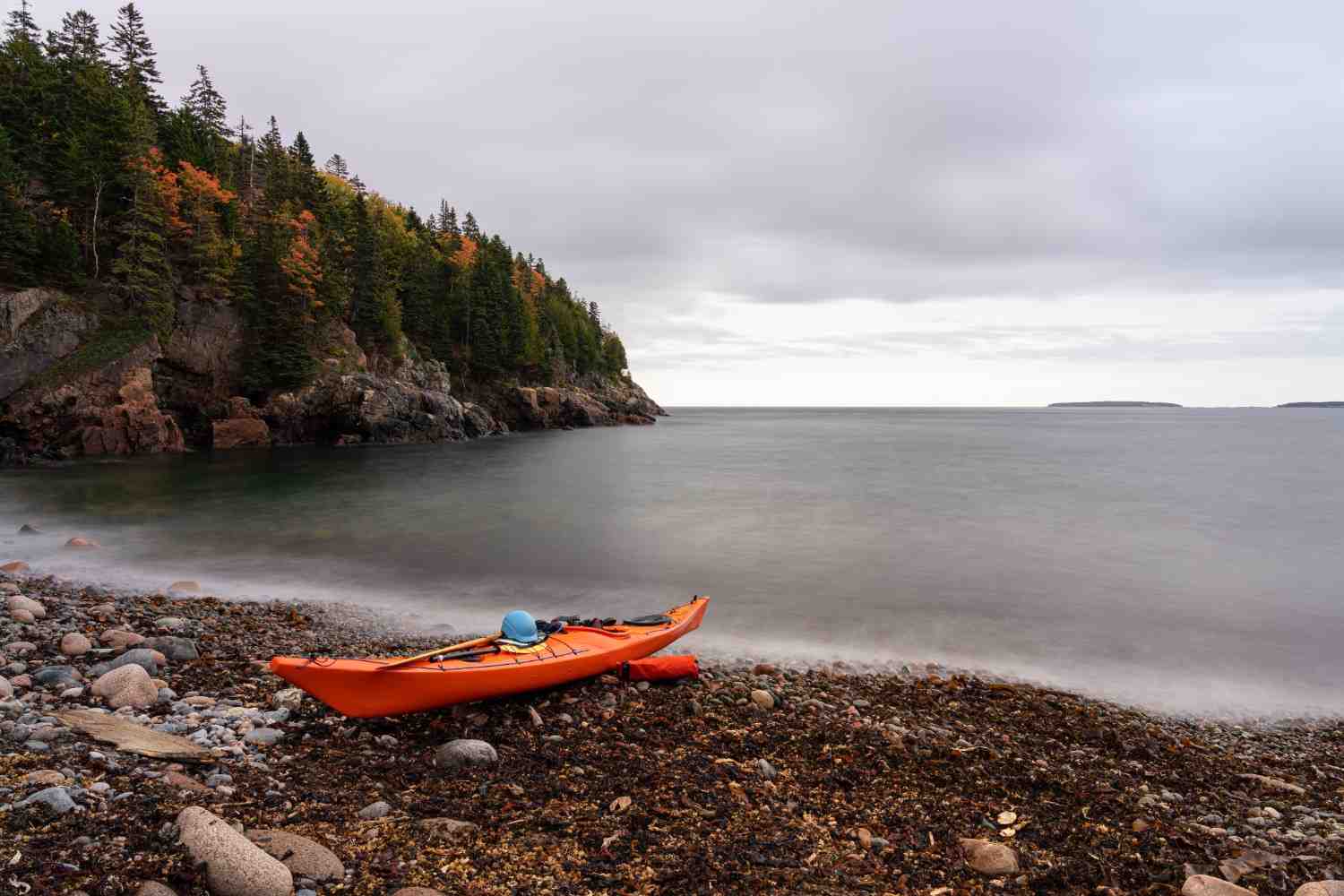
You’re standing on uneven rocks.
The kayak is wobbling.
Water is slapping against the shoreline.
You’re trying to hold the paddle, keep your balance, protect the kayak from scraping, and somehow get into the seat without ending up waist-deep in cold water.
I’ve seen grown men stand on a rocky shore for fifteen minutes talking themselves into launching.
I’ve also seen beginners make it look easy after learning one simple rule.
The launch starts before the kayak touches the water.
Most people think launching is about climbing into the kayak.
Wrong.
Launching from rocks is really about picking the right spot and controlling the kayak before you sit down.
Get those two things right and the rest becomes surprisingly easy.
Quick Answers for People Who Want the Cheat Sheet
| Question | Short Answer |
| Best place to launch? | Smooth rocks or small gravel areas |
| Should the kayak be fully loaded first? | Mostly yes |
| Wear shoes? | Absolutely |
| Sit before pushing off? | No |
| Push kayak into deeper water first? | Usually yes |
| Use paddle for support? | No, use your hands |
| Biggest mistake? | Launching from the first spot you see |
| Scratch the hull a little? | Probably. It’s normal. |
Memorize one thing:
Protect yourself first. Protect the kayak second.
I’ve replaced scratched hulls.
I’ve seen broken ankles.
Only one of those ruins your season.

The #1 Mistake: People Launch From the First Rock They Reach
This drives me crazy.
A beginner hikes to the water.
Sees an opening.
Drops the kayak.
Starts climbing in.
Meanwhile, five yards away there’s a flat gravel patch that’s ten times safer.
Take two minutes and scout the shoreline.It’s also a good time to think about how to transport a kayak safely, making sure it’s secured properly before and after every trip to avoid unnecessary damage or hassle.
Look for:
- Flat rocks instead of jagged ones
- Gradual slopes
- Knee-deep calm water
- Places sheltered from waves
- Areas without slippery algae
Avoid:
- Sharp boulders
- Steep drop-offs
- Moss-covered rocks
- Spots where waves push the kayak sideways
- Fast-moving current
This is the part everyone rushes.
And it’s usually where things go wrong.

The Weirdest Launch I’ve Ever Seen
Years ago I watched a guy launch from a rocky shoreline on a mountain lake.
He had expensive gear.
Carbon paddle.
Brand-new fishing kayak.
Top-end electronics.
He walked straight onto a large rock covered in algae.
Looked perfectly dry.
Wasn’t.
The second he stepped down, both feet shot forward.
He landed flat on his back.
The kayak slid sideways.
His tackle crate popped open.
Hundreds of soft plastics rolled into the lake.
Nobody laughed.
At least not immediately.
He sat there staring at floating lures and finally said:
“I spent three grand on gear and forgot to check if the rock was slippery.”
Experience teaches you this: wet-looking rocks are dangerous. Dry-looking rocks can be worse.
Test footing before committing your weight.
Every time.
The Launch Technique That Actually Works
Here’s the method I’ve taught beginners for years.
And honestly?
It’s boring.
That’s why it’s good.
Boring launches are successful launches.
First:
Put most of your gear inside the kayak.
Keep paddle within arm’s reach.
Leave rods secured.
Wear shoes with grip.Pair that with the best kayak life jacket for women for better comfort and safety, giving you more confidence when launching, landing, or moving around your kayak.
Then:
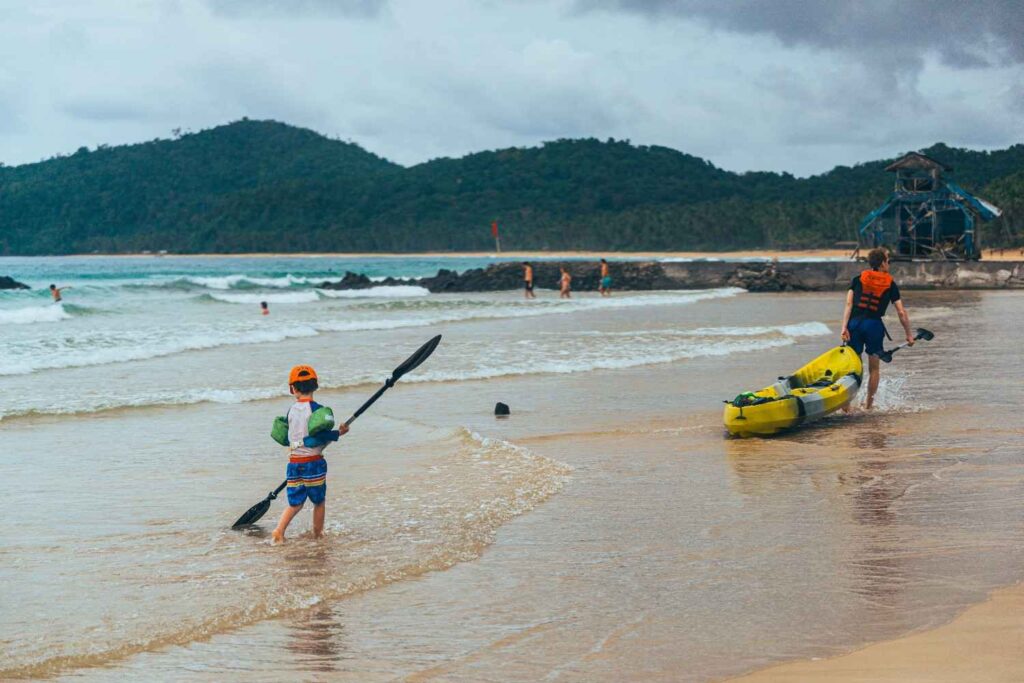
Walk the kayak into shallow water.
Hold both sides of the cockpit or seat area.
Keep the kayak parallel to shore at first.
Push it into water deep enough that rocks aren’t scraping badly.
Stabilize the kayak with your hands.
Sit down smoothly.
Bring legs in.
Grab paddle.
Push away calmly.
No jumping.
No dramatic shove.
No superhero move where you leap into the seat.
I’ve seen that attempt hundreds of times.
It almost never ends gracefully.
Team A vs Team B: Who Has The Better Launch?
Team A
- Rushes to the water
- Launches from the nearest rocks
- Carries paddle, rod, and cooler at once
- Climbs into kayak while it’s grinding on rocks
- Pushes off hard
Result?
Scraped hull.
Wet feet.
Sometimes wet everything.
Team B
- Scouts shoreline first
- Picks calm entry point
- Loads gear carefully
- Pushes kayak into deeper water
- Sits slowly and launches deliberately
Result?
Boring launch.
Dry clothes.
Zero drama.
Be Team B.
Nobody gives awards for exciting launches.
Here’s The Thing Nobody Tells You About Scratches
New kayak owners obsess over scratches.
I’ve been there.
First scratch hurts.
Feels like damaging a new car.
Reality?
Kayaks are tools.
Rocks scratch kayaks.
Sand scratches kayaks.
Boat ramps scratch kayaks.
Normal wear means you’re using it.
Now…
Deep gouges?
Different story.
To reduce damage:
- Launch in deeper water when possible
- Avoid dragging over sharp rocks
- Lift the bow when entering
- Use a kayak cart for long carries
- Consider keel guards if your launch spots are rough
Even if you’re using the best lightweight kayak under 40 pounds, repeated launches over rocks, gravel, or concrete can wear down the hull over time, making extra protection a worthwhile investment.
Tiny scratches?
Ignore them.
Go paddle.
Waves Make Rocky Launches Ten Times Harder
Calm water hides mistakes.
Waves expose them immediately.
Even small waves can:
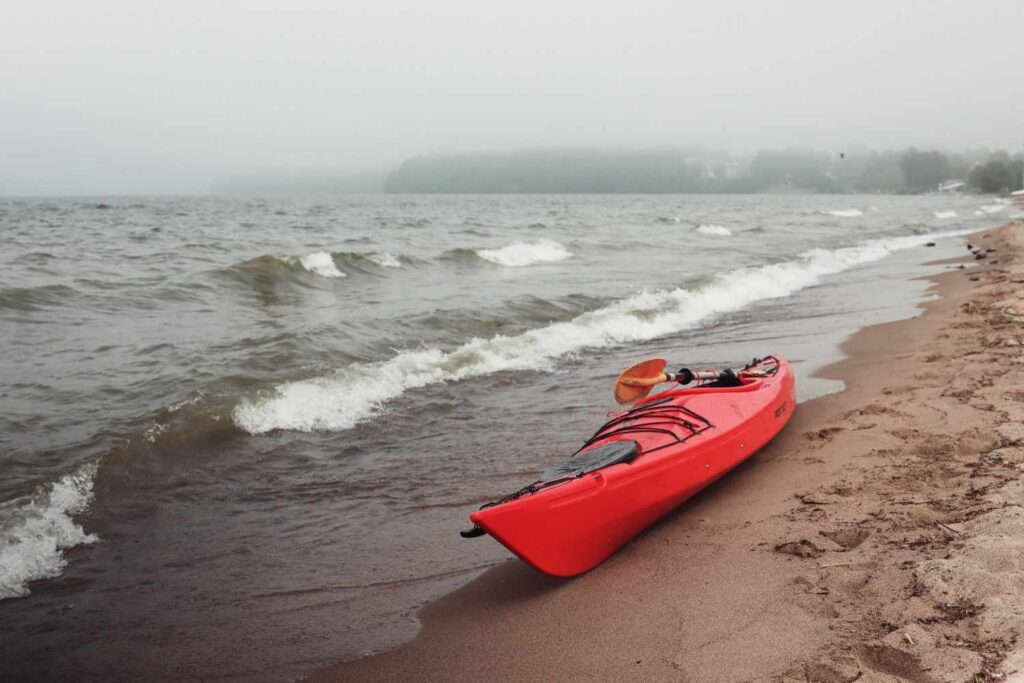
- Push the kayak sideways
- Pin it against rocks
- Knock you off balance
- Slam the hull into sharp edges
Never fight the waves. Time them instead.
Watch for a minute.
See the rhythm.
Notice when the water calms briefly.
Launch during that window.
Ocean paddlers do this constantly.
Lake paddlers should too.
Patience beats strength.
Every single time.
Shoes Matter More Than Most People Realize
I’ve seen people launch barefoot.
I’ve seen flip-flops.
Once I saw Crocs in sport mode.
He survived.
I still wouldn’t recommend it.
Good footwear changes everything.
You want:
- Rubber soles
- Strong grip
- Closed toes
- Fast draining material
- Secure fit
What you don’t want:
- Bare feet
- Slippery sandals
- Loose flip-flops
- Anything that slides on wet stone
The shoreline is where most kayak injuries happen.
Not out on the water.
Right there.
At launch.
What If You’re Alone?
Most kayakers paddle alone sometimes.
Nothing wrong with it.
But rocky launches demand a little extra caution.
Slow down when nobody’s around to help.
Double-check:
- Weather
- Wind direction
- Footing
- Water depth
- Gear placement
Then ask yourself:
“If I slipped right now, could I recover by myself?”
If the answer feels shaky?
Choose another launch spot.
I’ve turned around plenty of times.
Smart paddlers do that.It’s one of the habits you’ll develop naturally as you learn how to kayak safely in the ocean, where preparation and good decision-making matter just as much as paddling skills.
Ego gets people hurt.
The First Rocky Launch I Ever Botched
I’ll give you one of my own.
Twenty-something years ago.
Small river.
Rocky bank.
I was feeling confident.
Too confident.
I shoved the kayak into shallow water, planted one foot inside, and pushed off before I was centered.
Bad idea.
The kayak slid away.
One leg went in.
The other stayed on shore.
For a moment I looked like I was attempting some kind of split nobody asked for.
Then I fell straight into knee-deep water.
Cold.
Embarrassing.
A fisherman nearby yelled:
“That looked expensive!”
I laughed.
Mostly because he was right.
That little mistake taught me something.
Never rush the transition from shore to kayak.
That’s the most unstable moment of the entire trip.
Take your time.
Nobody cares how fast you launch.
Questions Beginners Ask All The Time
Should I drag my kayak over rocks?
Try not to.
Short distances over smooth stones?
Fine.
Dragging across sharp rocks repeatedly?
That shortens the kayak’s life.
Lift when possible.
Is it okay if the hull gets scratched?
Absolutely.
Small scratches are normal.
Deep gouges are worth watching.
A used kayak with scratches usually means one thing:
Someone actually enjoyed it.
Should I get in before the kayak floats?
No.
Get the kayak floating first.
Trying to sit while the hull is wedged on rocks creates instability and damage.
What’s the safest rocky shoreline?
Small gravel mixed with smooth stones.
Stable footing.
Gentle slope.
Calm water.
Simple.
What if waves keep pushing me sideways?
Wait.
Seriously.
Watch the pattern.
Reposition.
Choose another spot if necessary.
Patience is part of launching.
Final Thoughts
Rocky shore launches look intimidating because there are so many things happening at once.
Uneven footing.
Moving water.
A boat that wants to drift away.
Gear that somehow gets in the way at the worst moment.
But here’s what years on the water have taught me:
The safest kayakers aren’t stronger. They’re slower.That same mindset helps when getting into a kayak—moving deliberately and staying balanced is far safer than trying to rush the process.
They scout first.
They test their footing.
They wait for calm water.
They launch deliberately.
And after a while, rocky shores stop feeling like obstacles.
They become just another place to start an adventure.

One careful step.
One steady hand on the kayak.
Then you’re floating free and wondering why it ever seemed scary in the first place.