
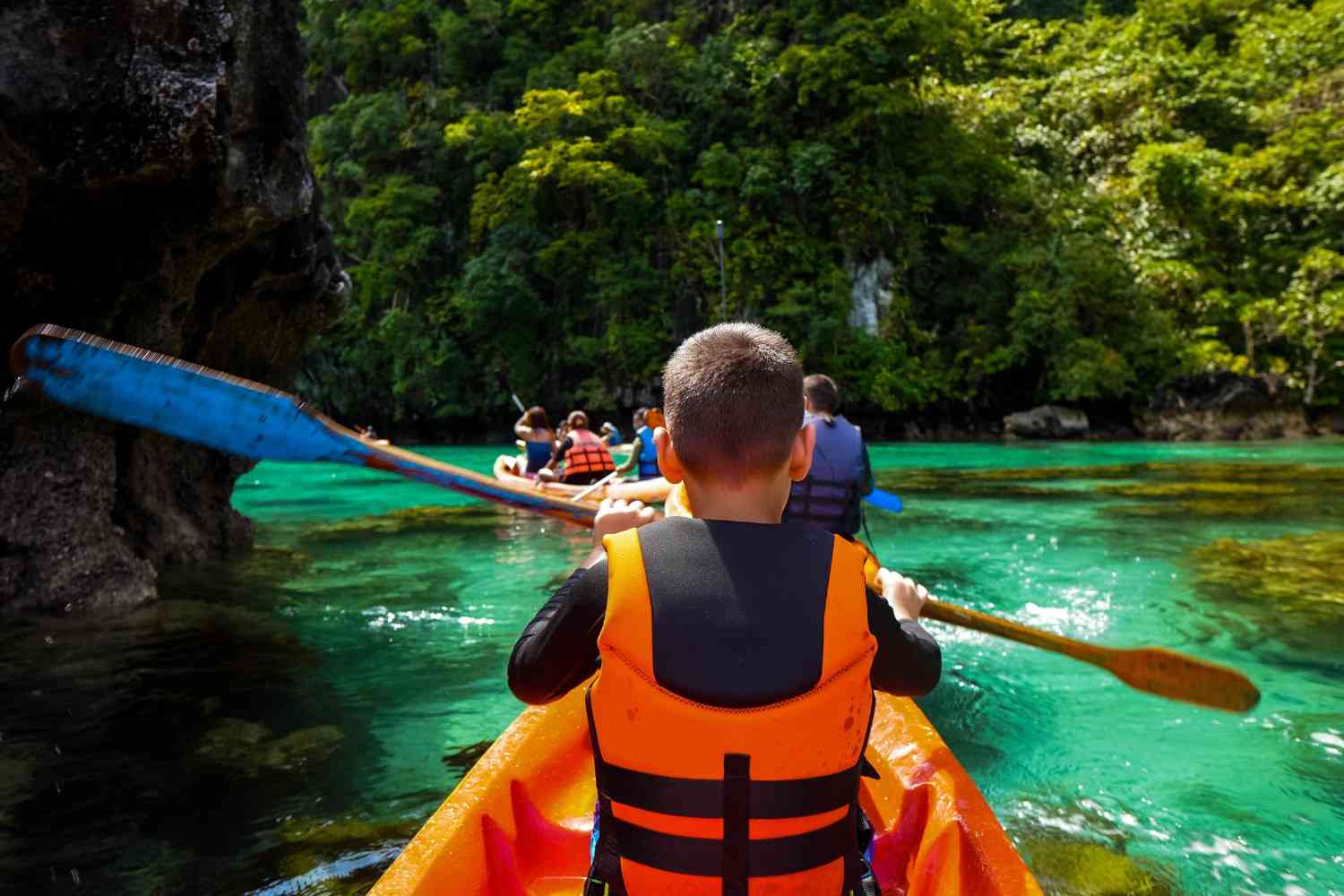
Yeah, this feels intimidating at first.
The river is moving. The kayak feels unstable. Videos online make everything look effortless while you’re standing at the launch wondering, What if I flip in the first five minutes?
I’ve been kayaking rivers for more than two decades. I’ve taught complete beginners, watched people make spectacular mistakes, and rescued more hats, shoes, and floating sandwiches than I can count.
Here’s the good news.
River kayaking is one of the easiest outdoor sports to learn if you start the right way.
Most beginners don’t get into trouble because they’re weak or uncoordinated.
They get into trouble because they start too big.
Don’t do that.
Quick Answers For Nervous Beginners
| Question | Short Answer |
| Can beginners kayak on rivers? | Absolutely. Start on slow-moving Class I rivers. |
| Will I flip? | Maybe. Everyone flips eventually. It’s usually not a big deal. |
| Sit-inside or sit-on-top? | Beginners usually feel more comfortable on stable sit-on-top kayaks. |
| Do I need a life jacket? | Every trip. No exceptions. |
| How long should my first trip be? | Two to five miles is plenty. |
| What’s the biggest beginner mistake? | Fighting the river instead of learning how it moves. |
The First Thing Most Beginners Get Wrong
People think kayaking is about paddling.
It’s not.
It’s about balance and reading water.
The paddle is just the tool.
The river does most of the work.
I’ve watched athletes struggle because they tried to overpower the water.
Then I’ve seen a retired guy in his sixties drift through the same stretch effortlessly because he understood where the current was pushing him.
That’s the secret.
Stop fighting.
Start observing.
Water tells you where it wants to go.
Your job is to work with it.
Start On The Boring River
Seriously.
Find the most boring river you can.
Slow current.
Wide channel.
Few obstacles.
No rapids.
A lot of beginners secretly want adventure on day one.
Bad idea.
Your first trip should be boring enough that you spend most of the time thinking:
“Wait…that’s it?”
Exactly.
Because while the river feels easy, your brain is learning:
- How to hold the paddle
- How hard to paddle
- How the kayak turns
- What current feels like
- How to get in and out without looking ridiculous
And trust me…
Everybody looks ridiculous at first.
What You Need Before Launching
Keep it simple.
You don’t need expensive gear.
You need reliable gear.
Bring:
- A properly fitted life jacket (PFD)
- Kayak and paddle
- Dry bag for phone and keys
- Water bottle
- Sunscreen
- Hat with a strap
- Whistle
- Extra clothes in your car
Fit matters just as much as wearing one in the first place. Many paddlers spend time looking for the best kayak life jacket for women because a properly designed PFD can provide better comfort, mobility, and safety during long days on the water.
The life jacket is non-negotiable.
I’ve heard every excuse.
“It’s shallow.”
“I’m a strong swimmer.”
“I’ll wear it if the river gets rough.”
None of that matters.
Cold water, current, and panic change the equation fast.
Wear it.
Every time.
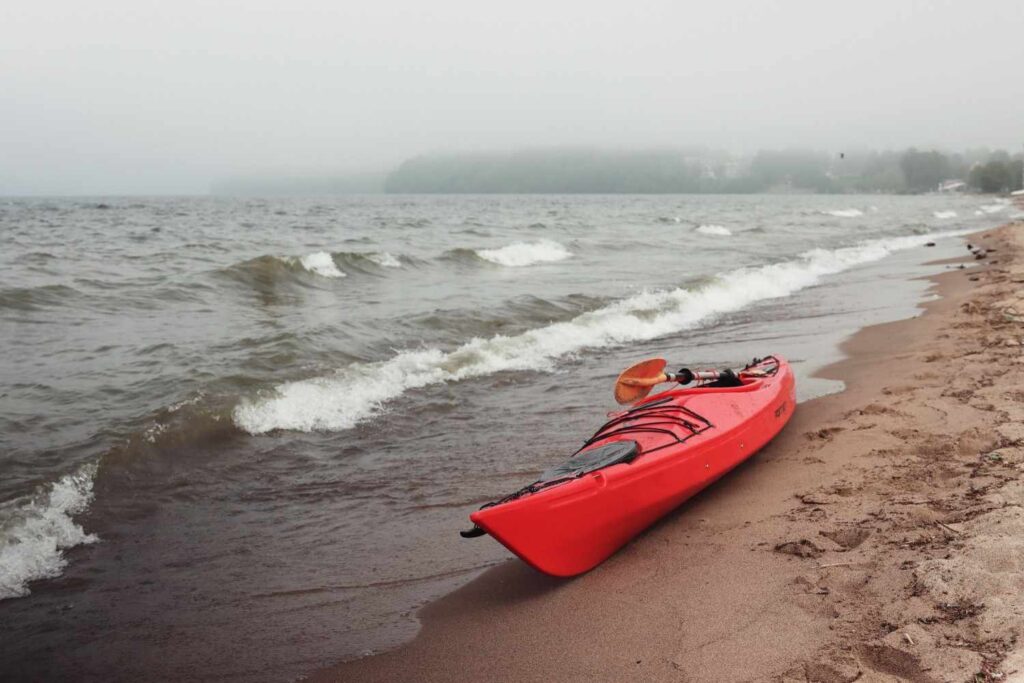
The Real Story I Tell Every Beginner
Years ago I was teaching a friend named Chris.
Confident guy.
Gym six days a week.
Played college football.
He showed up convinced kayaking would be easy.
Five minutes after launching, he drifted near a tree branch hanging over the river.
His hat blew off.
Without thinking, he leaned way over the side to grab it.
The kayak flipped instantly.
Not in rapids.
Not in rough water.
Not because of bad gear.
A baseball cap.
That’s what got him.
He came up sputtering and laughing.
Then he said something I still remember:
“I thought the river would beat me with something big.”
It almost beat him with something stupid.
That lesson sticks.
Most beginner mistakes aren’t dramatic.
They’re tiny moments where people forget balance matters more than strength.
Getting Into The Kayak Without Falling In
This is where everyone’s dignity takes a hit.
No worries.
Happens to everybody.
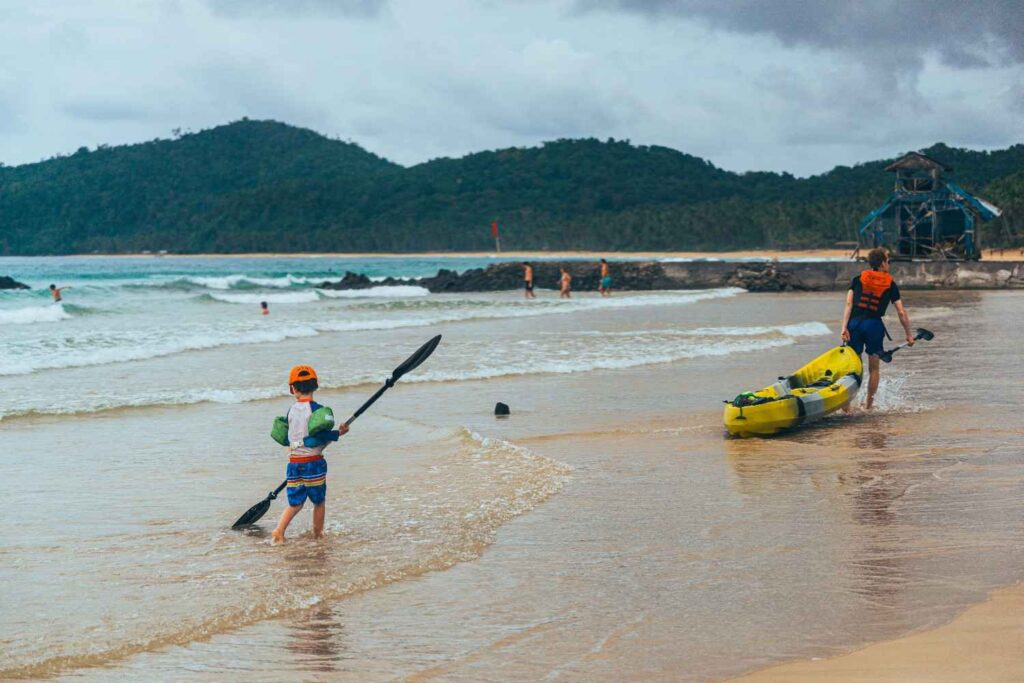
Place the kayak parallel to shore in shallow water.
Keep your paddle across the cockpit or seat.
Hold the kayak steady.
Sit first.
Then bring your legs in.
Not the other way around.
I’ve seen beginners try to jump in like they’re mounting a horse.
The river loves people like that.
Move slowly.The same approach makes getting into a kayak much easier, helping you stay balanced and avoid unnecessary slips or sudden movements.
Center your weight.
Once seated, take a few deep breaths.
You’re already kayaking.
The Paddle Grip Everyone Overthinks
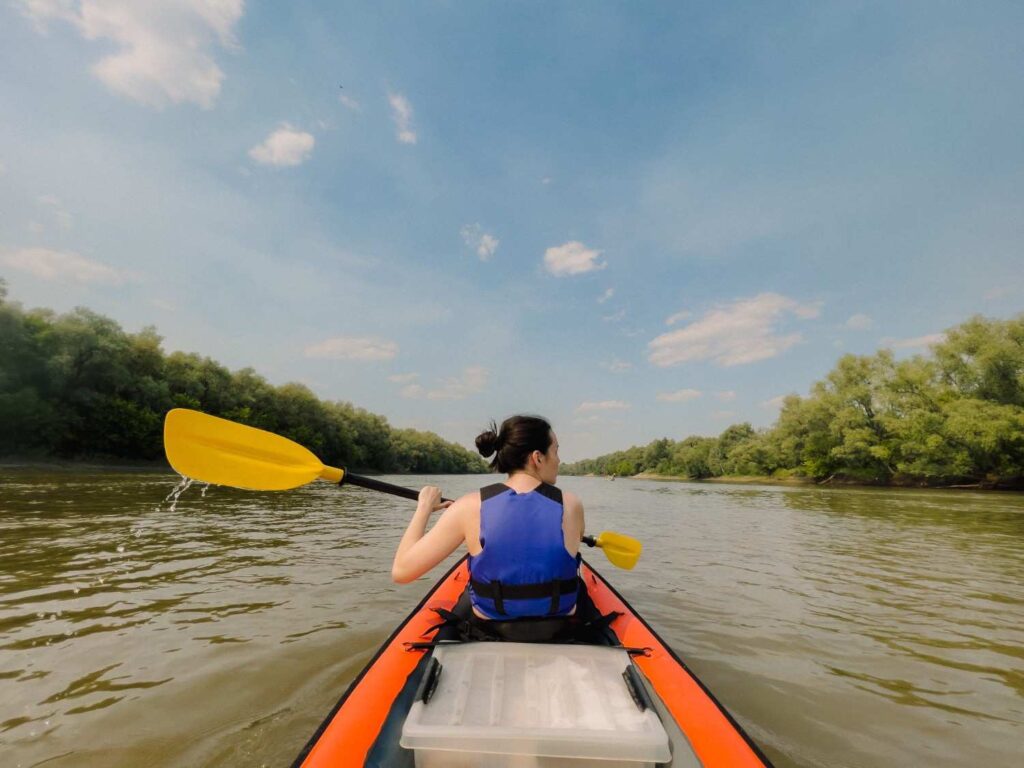
Look at the paddle.
Find the center.
Place your hands slightly wider than shoulder width.
Relax your grip.
That’s it.
Seriously.
Beginners squeeze the paddle like they’re wrestling an alligator.
After twenty minutes their forearms are burning.
Hold the paddle firmly enough that it won’t fly away. No tighter.
Your torso should do most of the work.Using the right technique becomes much easier when you’re using the correct equipment, which is why understanding how to size a kayak paddle is an important part of improving efficiency and reducing fatigue on the water.
Not your arms.
Think about throwing a punch.
The power comes from rotating your body.
Same thing here.
Reading The River: Learn This And Everything Gets Easier
Water isn’t random.
Certain patterns repeat everywhere.
Watch for these:
Smooth, Dark Water
Usually deeper.
Often faster.
Good place to paddle.
Choppy, White Water
Rocks underneath.
Shallow areas.
Approach carefully.
V-Shaped Current
A V pointing downstream usually means open water.
A V pointing upstream often means an obstacle.
This is the part everyone misses.
You don’t beat the river.
You read it.
And once you start seeing these patterns, you can’t unsee them.
Team A vs Team B
I’ve watched this happen for years.
You can usually tell who’ll have a great day before they even launch.
| Team A | Team B |
| Starts on easy rivers | Starts on rapids |
| Wears a PFD all day | Keeps it behind the seat |
| Practices first | Tries to impress friends |
| Stops and studies current | Charges ahead blindly |
| Ends the day smiling | Ends the day exhausted |
Be Team A.
Nobody gets bonus points for struggling.
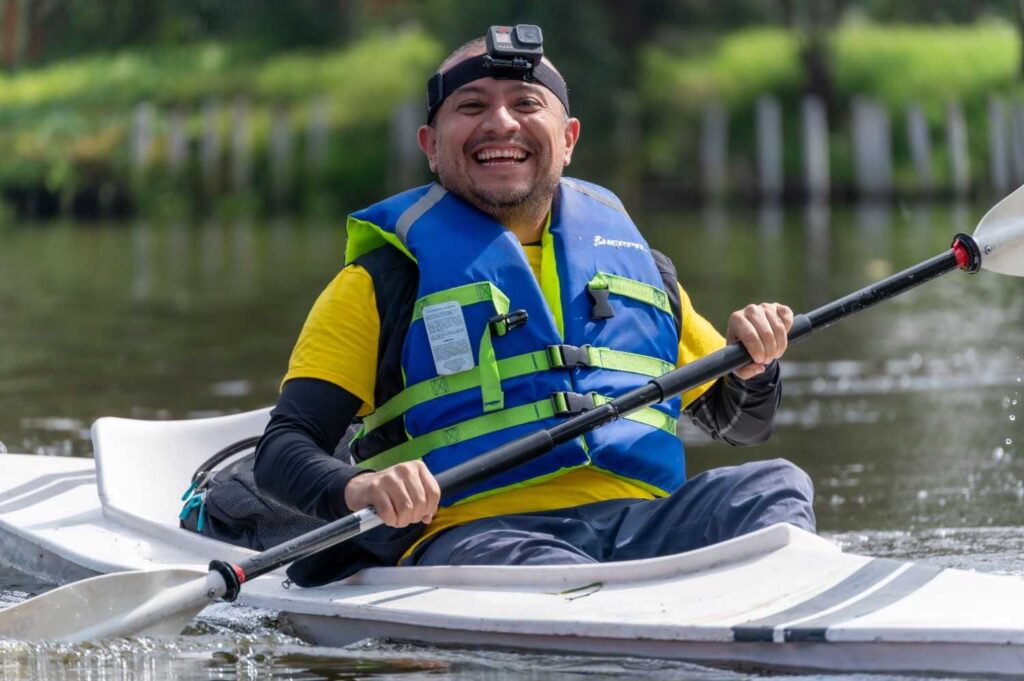
The best paddlers I know aren’t fearless.
They’re patient.
The Weirdest Mistake I’ve Ever Seen
One beginner tied his dry bag to the kayak.
Good idea.
Then he tied the other end around his ankle.It was a simple setup, but keeping essential gear protected is just as important, which is why many paddlers never head out without the best kayak dry bag for storing valuables and emergency items.
Bad idea.
Very bad idea.
He flipped.
The kayak drifted.
His ankle leash pulled tight.
Suddenly he was tangled underwater trying to figure out what he’d done.
Luckily we were in shallow water.
Nothing serious happened.
But everybody learned something important.
Never tie yourself to your kayak.
Not with rope.
Not with straps.
Not with homemade inventions you saw online at 2 AM.
If you flip, you want freedom to swim.
Always.
What To Do If You Flip
And someday you probably will.
That’s okay.
Here’s what matters:
- Stay calm.
- Hold onto your paddle if possible.
- Stay with your kayak.
- Float on your back if needed.
- Swim toward shore when safe.
Panic is usually the biggest danger.
The first time I flipped, I remember thinking:
“Well…that wasn’t nearly as dramatic as I imagined.”
Most flips are like that.
Wet.
Embarrassing.
Memorable.
Then you climb back in and keep going.

The One Thing I Wish Every Beginner Knew
Your first trip isn’t about distance.
It isn’t about speed.
Nobody cares how many miles you paddle.
Success means getting off the water wanting to go again.
That’s it.
I’ve seen people paddle one mile and become obsessed with kayaking.
I’ve seen others force themselves through ten miserable miles and quit forever.
Leave while you’re still having fun.
The river isn’t going anywhere.
Quick Safety Checks Before Every Trip
Ask yourself:
- Is the weather changing?
- Am I wearing my PFD?
- Is someone expecting me home?
- Do I know where I’m getting out?
- Is the river within my skill level?
If one answer worries you…
Wait.
Tomorrow is a perfectly good paddling day.
FAQ
Is river kayaking harder than lake kayaking?
Usually, yes.
A lake mostly stays where it is.
A river is constantly moving.
Current changes your direction, speed, and angle.
But once you learn moving water, lakes feel easy.
Should beginners paddle alone?
I wouldn’t.
Bring a friend.
Join a paddling group.
Or choose a popular river where other paddlers are nearby.
Problems are much easier to solve when another person is around.
What if I panic after flipping?
Float.
Breathe.
Trust your life jacket.
Focus on one thing at a time.
People get overwhelmed because they try solving five problems at once.
Slow down mentally.
The river is moving fast enough already.
How far should my first river trip be?
Two to five miles.
That’s enough.
Finish early.
Go home smiling.
Come back next weekend.
Final Thoughts
After all these years, I still remember my first river trip.
I was nervous.
I gripped the paddle too hard.
Every ripple looked dangerous.
And I honestly believed everyone else knew some secret I didn’t.
Turns out they didn’t.
They’d simply spent more time on the water.
That’s the whole game.
Start small.Many new paddlers find that a best lightweight kayak under 40 pounds is easier to handle, transport, and gain confidence with while learning the basics.
Wear your PFD.
Respect the river.
Laugh at your mistakes.
A few trips from now, you’ll watch a nervous beginner wobble at the launch and think:
“Relax. I was exactly like that.”
And you’ll be right.
Because every great kayaker starts the same way.
A little scared.
A little awkward.
And completely hooked after the first good day on the river.