
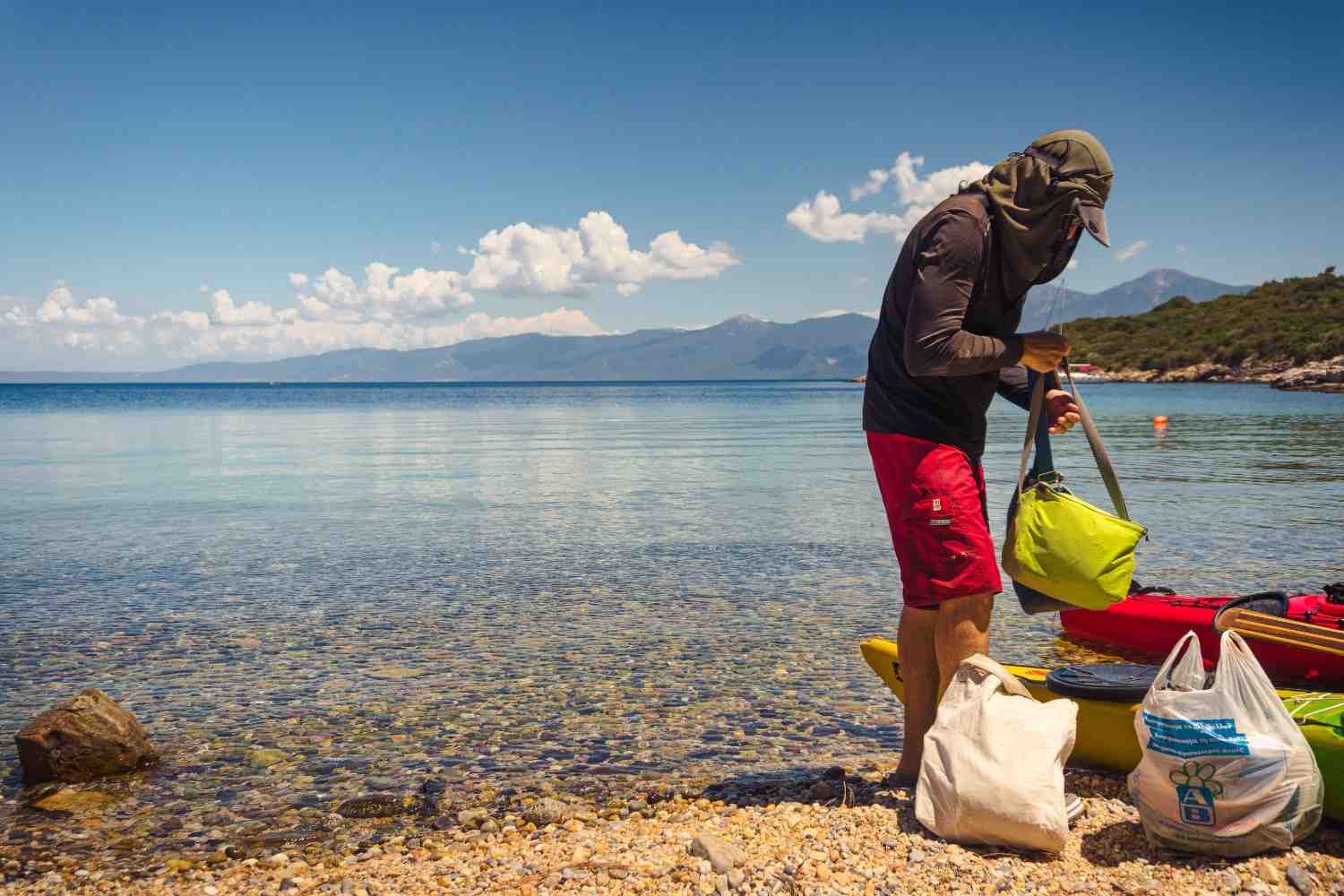
A dry bag doesn’t feel important.
Until it fails.
I’ve seen people lose phones, cameras, car keys, fishing licenses, spare clothes, even insulin, because they trusted a bag that claimed to be “water-resistant.” That’s why in real kayaking safety, having reliable gear like a best kayak life jacket for women matters as part of overall preparedness on the water.
That phrase should make you nervous.
Water-resistant means:
“We’ll try.”
Waterproof means:
“Bring on the rain.”
There’s a difference.
A big one.
And here’s the thing most beginners don’t realize:
The best dry bag isn’t the one that keeps water out.
Almost all decent bags do that.
The best one is the bag you’ll still trust after getting tossed around a kayak for three years.
That’s a completely different test.
The Quick Answer If You Just Want The Best Options
| Dry Bag | Best For | Capacity | Biggest Strength |
| YETI Panga | Best Overall | 28L-100L | Truly bombproof |
| Sea to Summit Big River | Most Kayakers | 5L-65L | Durability + flexibility |
| Earth Pak Waterproof Dry Bag | Budget Choice | 10L-55L | Great value |
| NRS Bill’s Bag | Expeditions | 65L-110L | Massive storage |
| Osprey Ultralight Dry Sack | Lightweight Gear | 3L-35L | Compact design |
If someone asked me:
“I want one dry bag and I don’t want to think about it again.”
I’d say:
Buy the YETI Panga if budget isn’t an issue.
Otherwise?
Sea to Summit Big River.
That bag has survived things most kayakers wouldn’t willingly do to their gear.
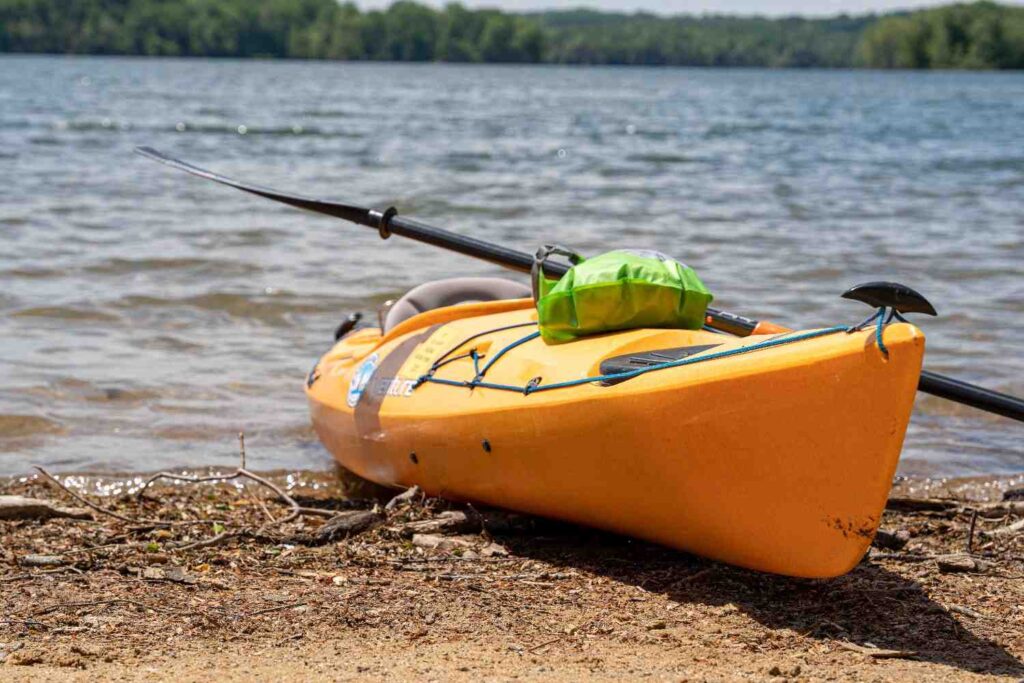
The Biggest Lie Printed On Cheap Dry Bags
“100% Waterproof.”
I hate this phrase.
Because sometimes it’s technically true.
And completely misleading.
A dry bag isn’t magic.
Its waterproof ability depends on:
- Fabric thickness
- Seam construction
- Closure system
- How tightly it’s rolled
- How long it stays underwater
This is the part everyone misses.
The roll-top closure matters more than the material itself.
A premium PVC bag rolled once?
Water can sneak in.
A mid-range bag rolled correctly three times?
Usually bone dry.
Think of it like closing a ziplock bag.
The bag isn’t the problem.
The seal is.
Roll Top Vs Zipper: Which One Actually Keeps Water Out?
People love waterproof zippers.
They look premium.
And honestly?
They’re impressive.
Until sand gets inside.
Or salt builds up.
Or the zipper starts feeling stiff.
Roll tops are boring.
But boring gear survives.
Roll Top Bags
Pros:
- Simpler design
- Easier to repair
- Extremely reliable
- Lower cost
Cons:
- Slightly slower access
- Need proper rolling technique
Waterproof Zippers
Pros:
- Faster access
- Cleaner look
- Premium feel
Cons:
- Expensive
- Can wear over time
- Sensitive to sand and dirt
For kayaking, I’d still choose roll tops.
Every time.
They’re not exciting.
They’re dependable.
And dependable gear wins long-term.
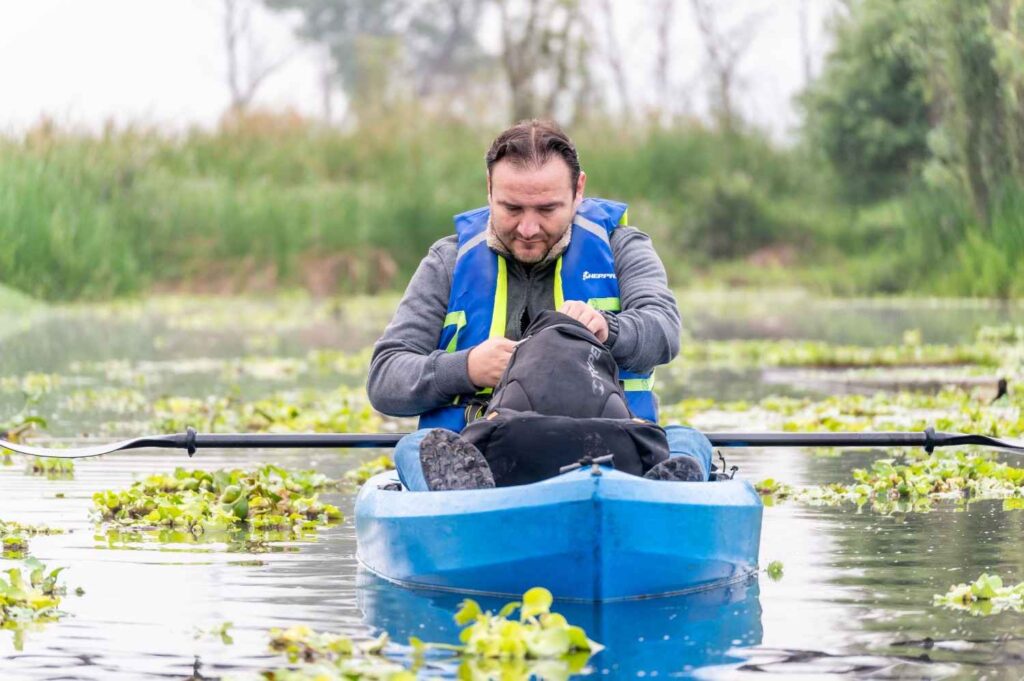
What Size Dry Bag Do You Actually Need?
People either buy too small…
Or ridiculously large.
Nothing in between.
Here’s the simplest breakdown I know.
| Size | Best For |
| 5L | Phone, wallet, keys |
| 10L | Extra clothes, snacks |
| 20L | Day trips |
| 30L | Full-day kayaking |
| 40L+ | Camping and overnight trips |
Most kayakers are happiest with a 20L or 30L dry bag.Among all kayak accessories, a quality dry bag is one of the best investments for protecting valuable gear.
Enough room.
Not too bulky.
Easy to secure.
Simple.
Cheap Vs Premium: Where The Money Goes
People ask:
“Why does one dry bag cost $30 and another cost $300?”
Fair question.
Here’s the answer.
| Budget | What You Usually Get | Biggest Weakness |
| $20-$40 | Basic PVC | Average durability |
| $50-$100 | Better materials | Slightly heavier |
| $150-$300+ | Premium construction | Higher price |
The extra money buys:
- Stronger seams
- Better buckles
- Thicker materials
- Improved abrasion resistance
- Longer lifespan
Not better waterproofing.
That’s important.
A $50 bag can keep gear dry.
A $250 bag can keep gear dry for years of abuse.
Different goal.For anglers on a budget, exploring a fishing kayak under $1500 can be a more practical starting point for getting on the water without overspending.
Team A Vs Team B: I’ve Seen This Story Too Many Times
Team A
Buys the cheapest dry bag online.
The description says:
- Waterproof
- Heavy duty
- Military grade
- Adventure ready
Sounds impressive.
Three months later:
- Shoulder strap breaks
- Buckles crack
- Seams start peeling
- Trust disappears
Now every splash feels stressful.
Team B
Buys a proven bag.
Looks for:
- Welded seams
- Thick PVC or TPU
- Reliable roll top
- Good brand reputation
Three months later:
They stop thinking about their dry bag entirely.
That’s the dream.
Because outdoor gear should disappear into the background.
The best equipment is the equipment you forget exists.
TPU Vs PVC: The Material Debate Nobody Explains Properly
This question comes up constantly.
PVC or TPU?
PVC is tough.
Thick.
Affordable.
TPU is lighter.
More flexible.
Usually more environmentally friendly.
PVC
- Cheaper
- Extremely durable
- Slightly heavier
- Stiffer in cold weather
TPU
- Lighter
- Softer feel
- Packs smaller
- More expensive
Most casual kayakers?
PVC is perfectly fine.
Frequent travelers?
TPU becomes interesting.
Either material can last years.
Construction quality matters more.
Always.
Saltwater Is Brutal On Gear
Freshwater forgives mistakes.
Saltwater remembers them.
I’ve watched beautiful dry bags deteriorate because owners skipped one simple habit.
Rinsing.
That’s it.
After every saltwater trip:
- Rinse buckles
- Wash the closure
- Dry completely
- Store unrolled
Five minutes of care.
Years of extra life.Proper maintenance also includes learning how to store a kayak correctly, especially during the off-season or between trips.
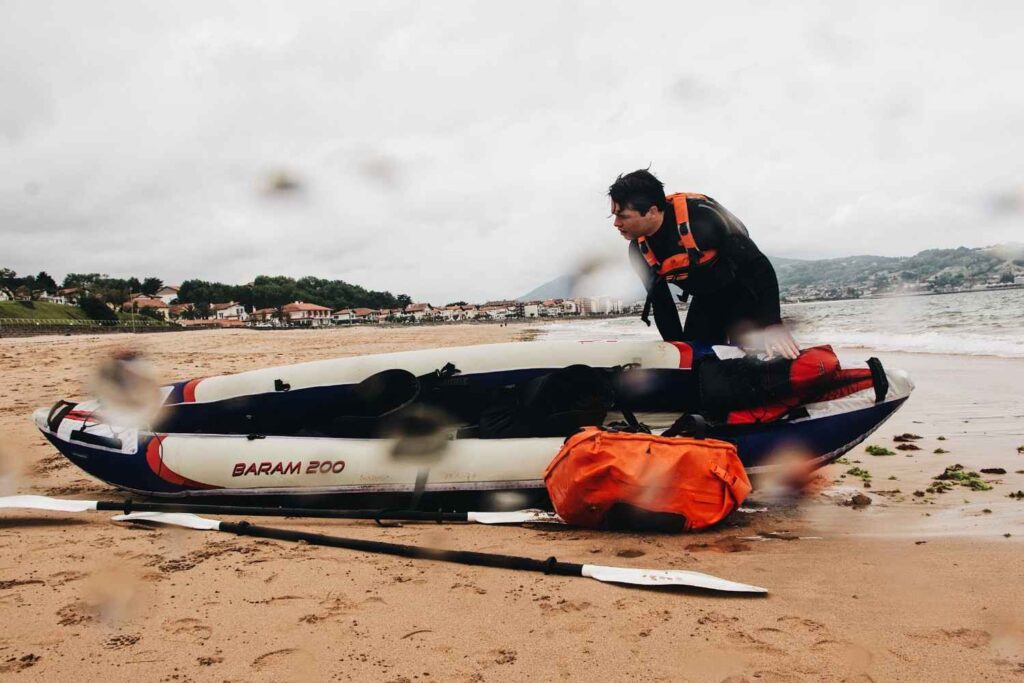
Ignore this and even premium bags age faster.
Salt doesn’t destroy gear overnight.
It does it quietly.
The Weirdest Dry Bag Failure I’ve Ever Seen
Years ago, a paddler insisted his expensive dry bag was defective.
Everything inside kept getting wet.
He was furious.
Swore the bag leaked.
We filled it with air.
Pressed gently.
Nothing.
Perfect seal.
Then I watched him close it.
He rolled the top once.
Once.
That was the problem.
Dry bags need at least three tight rolls.
Sometimes four.
Think of it like folding the top of a paper lunch bag.
One fold?
Not enough.
Several folds?
Now it’s secure.
The bag wasn’t failing.
The seal was.
He laughed.
I laughed.
His phone survived future trips.
Everybody won.
Common Mistakes That Ruin Dry Bags
Avoid these and you’ll save money.
- Overstuffing the bag
- Rolling only once
- Leaving gear wet inside
- Dragging it on rocks
- Storing it folded for months
- Ignoring saltwater residue
- Trusting cheap buckles
And here’s another one.
People assume waterproof means sink-proof.
It doesn’t.
Some dry bags float.
Some don’t.
If protecting expensive electronics, use:
- Inner zip pouches
- Waterproof phone cases
- Secondary dry sacks
Redundancy feels excessive.
Until the day it isn’t.That’s why many anglers rely on a proper fish finding setup to avoid missing key opportunities on the water.
Frequently Asked Questions
What’s the best kayak dry bag in 2026?
For overall quality:
YETI Panga.
For most paddlers:
Sea to Summit Big River.
Are cheap dry bags worth buying?
Some are.
But durability varies wildly.
A good mid-range bag often becomes cheaper in the long run because you buy it once.
Is PVC or TPU better?
Neither is universally better.
PVC wins on price.
TPU wins on weight and flexibility.
Construction quality matters more than material alone.
How many times should I roll a dry bag?
At least three.
Four if conditions are rough.
Anything less reduces waterproof performance.
What size dry bag is best for kayaking?
Most paddlers are happiest with:
- 20L for day trips
- 30L for longer outings
- 40L+ for camping
Final Thoughts
The first time your kayak tips unexpectedly…
The first time rain appears out of nowhere…
The first time a wave crashes across your deck…
You’ll stop caring about colors.
You’ll stop caring about logos.
And you’ll care deeply about one thing.
Whether the gear inside that bag stays dry.
That’s why experienced paddlers become strangely loyal to their dry bags.
Because trust is hard to earn on the water.
A good dry bag earns it quietly.
Trip after trip.
Year after year.
Eventually you stop checking if your phone is dry.
You stop worrying about your spare clothes.
You stop thinking about the bag at all.
And honestly?
That’s probably the highest compliment outdoor gear can receive.