You’d think buying a kayak paddle would be simple. Pick one, grab the right color, get on the water.
Then reality hits.
Your shoulders ache after 20 minutes. The paddle bangs into the kayak every stroke. Water drips straight into your lap. Or worse—you feel like you’re fighting the kayak instead of gliding through the water.
I’ve watched this happen thousands of times. New paddlers blame themselves. “Maybe I’m weak.” “Maybe kayaking just feels awkward.”
Nope.
Most of the time, the paddle is the problem.
And usually, it’s the wrong size.
Here’s how to size a kayak paddle properly without overcomplicating it.
The Fast Answer Most People Want
If you’re in a rush, start here.
| Your Height | Narrow Kayak (under 24″) | Medium Kayak (24″–28″) | Wide Kayak (28″+) |
| Under 5’2″ | 210 cm | 220 cm | 230 cm |
| 5’2″–5’8″ | 220 cm | 230 cm | 240 cm |
| 5’8″–6’2″ | 230 cm | 240 cm | 250 cm |
| Over 6’2″ | 240 cm | 250 cm | 260 cm |
This table gets you close. Not perfect. Close.
The mistake? People size a paddle based only on height. That’s only half the story.
Your kayak width matters just as much.
Think about it like reaching across a dining table. A wider table means you need longer arms—or in this case, a longer paddle.
The #1 Thing Everyone Misses: Kayak Width Matters More Than You Think
I’ve seen a 5’7″ paddler use two completely different paddle lengths—and both were correct.
Why?
Different kayaks.
A skinny touring kayak cuts through water like a knife. You sit lower and closer to the water.
A fishing kayak? Totally different animal. Higher seat. Wider body. More reach needed.
Here’s the quick reality:
- Narrow touring kayaks = shorter paddles
- Recreational kayaks = middle range
- Fishing kayaks or sit-on-tops = longer paddles
- High-seat kayaks = go longer than normal
This is the part everyone misses.
A 230 cm paddle might feel amazing in one kayak and terrible in another.
Same person. Same lake. Completely different experience.
Try This 10-Second Test Before Buying
Forget charts for a second.
Hold the paddle vertically in front of you.
If your fingers just curl over the top blade comfortably, you’re usually in the right ballpark.
No reach at all? Probably too short.
Stretching like you’re trying to grab something off a high shelf? Too long.
Now—this isn’t perfect science. But after years around rental fleets and outfitting shops, I can tell you this quick test catches a lot of bad choices.
Why a Paddle That’s Too Short Feels Miserable
People rarely realize this immediately.
The first 15 minutes feel okay.
Then the body starts complaining.
A paddle that’s too short usually causes:
- Shoulder fatigue
- Knuckles smashing the kayak sides
- Water dripping into your lap constantly
- Short, inefficient strokes
- Feeling cramped while paddling
Your body starts compensating for bad equipment.
You’ll lean weird. Reach awkwardly. Twist too hard.
And by the end of the trip? You’re sore in places that shouldn’t even hurt.
What Happens When the Paddle Is Too Long
This one sneaks up on people.
At first, a longer paddle feels powerful. Bigger reach. Bigger stroke.
But after an hour?
Feels like swinging a shovel.
Common signs:
- Arms tire quickly
- Slower paddle cadence
- Harder steering
- Shoulder strain
- Heavy feeling after long paddles
I once helped a guy who bought a massive paddle because he thought “bigger equals stronger.”
He lasted about 40 minutes before his shoulders started barking at him.
Switched him down 20 cm.
Problem solved.
Simple fix.
Your Paddling Style Changes the Size Too
This is where experienced paddlers quietly ignore the standard chart.
Two people can use different paddle lengths because they paddle differently.
High-Angle Paddling
This means your paddle stays more vertical.
Usually faster. More aggressive strokes.
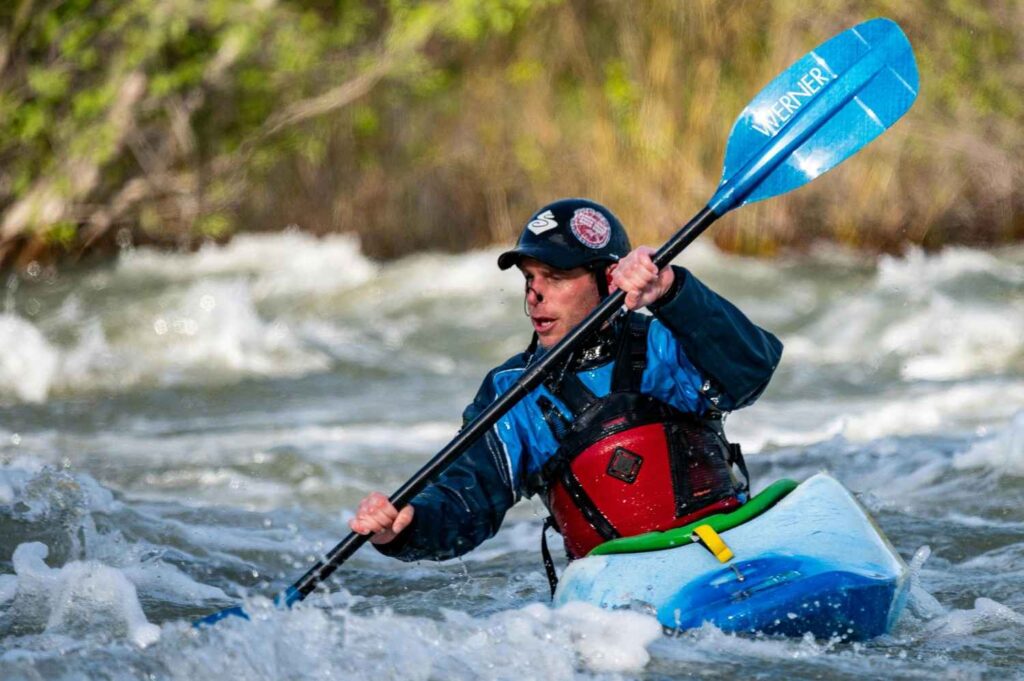
Common with:
- Touring paddlers
- Fitness paddlers
- Sea kayaking
Go slightly shorter if this is your style.
Low-Angle Paddling
Relaxed strokes.
Paddle stays lower and wider.
Common with:
- Casual lake paddling
- Recreational kayaking
- Long relaxing trips
Go slightly longer here.
Small adjustment. Usually 10 cm difference.
But it matters.
Fishing Kayak Owners: Your Setup Changes Everything
Fishing kayaks break the normal rules.
Seriously.
Most have:
- Wider frames
- Elevated seats
- Gear in the way
- Standing options
You often need 250 cm to 280 cm paddles, even if you’re not particularly tall.
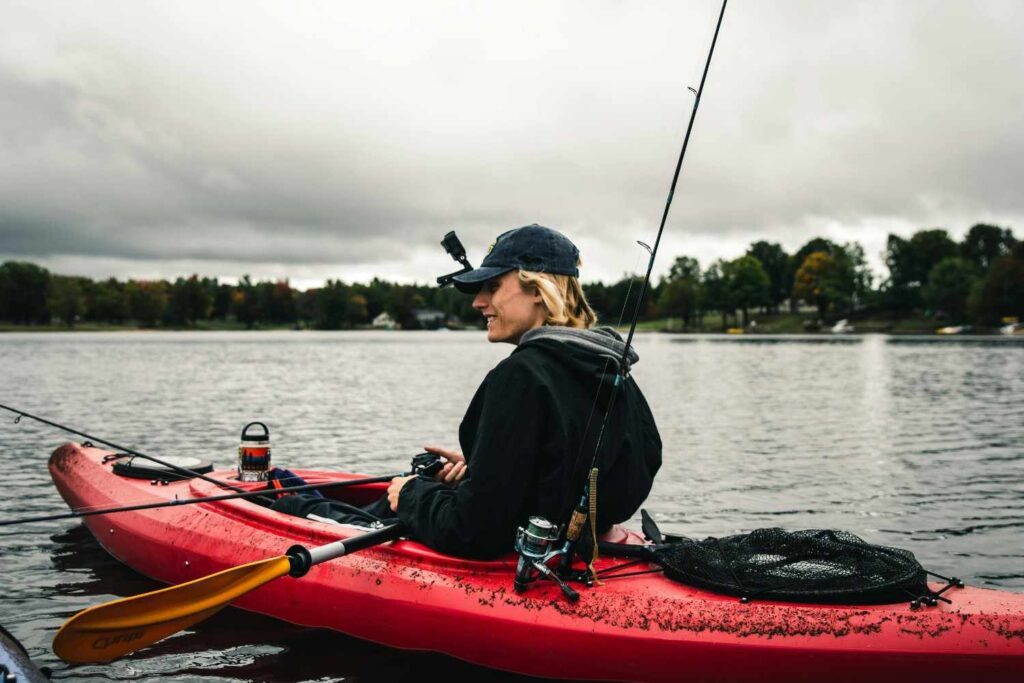
People buy regular recreational paddle lengths and wonder why every stroke feels awkward.
The seat height is what gets them.
Sitting higher means you need more reach to hit the water efficiently.
Picture trying to paddle while sitting on a bar stool versus a kitchen chair. Same arms. Totally different reach.
Adjustable Paddles Save a Lot of Regret
If you’re unsure, get an adjustable paddle.
Especially if:
- You’re brand new to kayaking
- You switch between kayaks
- You’re sharing equipment
- You fish and recreational paddle
A paddle adjustable between 230–250 cm solves a lot of headaches.
After a few trips, your body tells you what feels right.
Trust that feedback.
Your shoulders know before your brain does.
Carbon, Fiberglass, or Aluminum? Weight Matters More Than People Expect
Here’s something beginners overlook:
A heavy paddle feels heavier every hour.
Big difference over a full day.
Quick breakdown:
| Material | Feel | Best For |
| Aluminum | Cheap, durable, heavier | Beginners, casual use |
| Fiberglass | Lighter, balanced | Regular paddlers |
| Carbon Fiber | Extremely light, expensive | Long-distance or serious paddlers |
People obsess over kayak price.
Meanwhile, the paddle—the thing you move thousands of times a day—gets ignored.
That’s backwards.
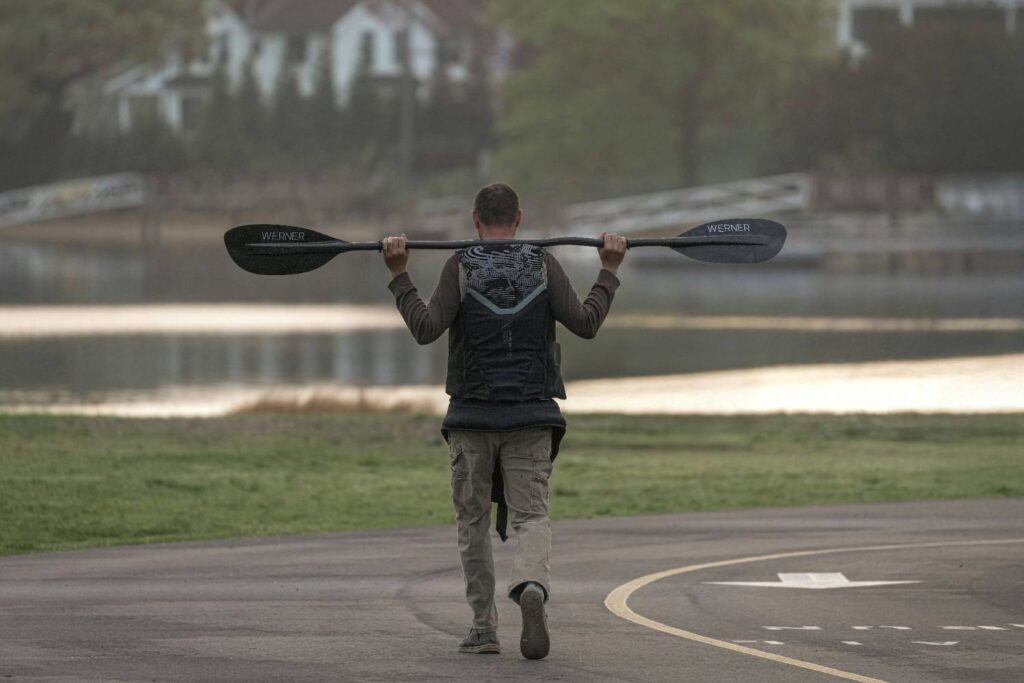
“A good paddle changes the whole experience , just like the right kayak accessories do.”
The Weird Edge Case Nobody Talks About
Got unusually long arms?
Short torso?
High seat position?
Mobility limitations in shoulders?
Charts start falling apart.
This happens more than people think.
When standard sizing feels “almost right but weird,” adjust by 10 cm at a time.
Tiny changes matter.
Twenty centimeters can completely transform how the kayak feels.
Still Unsure? Here’s the Safest Bet
If I had to pick one starting point for most recreational paddlers:
- Average adult in standard recreational kayak → 230 cm
- Wider recreational kayak → 240 cm
- Fishing kayak → 250 cm+
Then adjust based on how your body feels after an hour on the water.
Not five minutes.
Anybody feels fine for five minutes.
The truth shows up after real paddling.
Get the length right and kayaking suddenly feels smooth. Easier. Natural.
No fighting the boat.
No sore shoulders.
Just paddle, glide, repeat.