Recent Posts

Best Kayak Anchor for River Fishing: 2026 Buyer’s Guide


A man wearing a blue life jacket paddling a red kayak down a calm river surrounded by lush green forest banks

Most kayak anglers don’t lose fish because of bad bait.

They lose fish because they can’t stay where the fish are.

I’ve watched it happen hundreds of times.

A guy finds a perfect river seam. Fish are clearly feeding. He casts once.

Then the current pushes him ten feet downstream.

Second cast?

Fifteen feet away.

Third cast?

He’s out of the strike zone completely.

Frustration starts creeping in.

The funny part?

The problem wasn’t his fishing skills.

It was his anchor.

And here’s the thing I wish every river angler understood from the start:

The best kayak anchor isn’t the heaviest one.

It’s the one that holds securely, releases easily, and doesn’t turn your kayak sideways in current.

That last part matters more than people think.

A lot more.

The Quick Answer If You Want The Best River Anchors

AnchorBest ForWeightBiggest Strength
Folding Grapnel AnchorMost River Anglers1.5-3.5 lbVersatile and compact
YakAttack LeverLoc Anchor TrolleyControlled positioningN/ASafer anchor placement
Brush GripperSmall riversN/AQuiet and simple
Mushroom AnchorSlow currents3-8 lbGood on muddy bottoms
Stake-Out PoleShallow riversN/AFastest setup

If someone asks me:

“I fish rivers, I’m new, and I want one setup.”

I tell them:

Buy a folding grapnel anchor and pair it with an anchor trolley.

Simple.

Reliable.

Safe.

That’s the combination I’ve seen work again and again.

A solo paddler in a small kayak on a calm green lake surrounded by dense forest hills

The Biggest Mistake River Anglers Make

They anchor from the side.

Please don’t.

I know it seems harmless.

The kayak stops moving.

Everything feels fine.

Until the current gets stronger.

Suddenly the water pushes against the broad side of the kayak.

The boat tilts.

The current grabs harder.

Panic starts.

This isn’t rare.

I’ve seen experienced paddlers make this mistake.

Always anchor from the bow or stern.

Never the side.

That’s why anchor trolleys exist.

They allow you to shift the anchor point safely without standing up or leaning dangerously.

This is the part everyone misses.

The anchor isn’t the safety system.

The anchor setup is.

A kayaker paddling a green kayak positioned in a calm river flowing through a dramatic limestone canyon

Folding Grapnel Anchors: Why They’re So Popular

There’s a reason you see these everywhere.

Actually, several reasons.

What Makes Them Great

  • Compact when folded
  • Grabs rocks surprisingly well
  • Works on gravel and mud
  • Affordable
  • Easy to store

The right kayak accessories can make a compact setup even more practical, helping you stay organized, comfortable, and prepared for a better day on the water.

The four little flukes open like claws.

Drop it into rocky current and those claws catch cracks and crevices.

Sometimes too well.

That’s the downside.

I’ve seen people spend twenty minutes trying to free one.

Which brings me to a trick old river anglers use.

Attach the rope to the bottom of the anchor first.

Then secure it loosely near the top with a zip tie.

If the anchor gets stuck?

Pull hard.

The zip tie breaks.

Now you’re pulling from the opposite direction.

Most anchors pop free instantly.

Simple trick.

Huge difference.

A blue and white kayak resting on a rocky pebble shore beside a calm river with a bridge in the background

River Bottom Changes Everything

People ask:

“Which anchor is best?”

My answer?

“Best for what bottom?”

Because river bottoms aren’t all the same.

Bottom TypeBest Anchor
RocksFolding Grapnel
GravelFolding Grapnel
MudMushroom Anchor
SandGrapnel or Sand Spike
VegetationBrush Gripper

An anchor that holds perfectly in rocks might slide uselessly across mud.

That’s not poor quality.

It’s physics.

Think of shoes.

Running shoes are fantastic.

On pavement.

Try climbing icy stairs in them.

Different surface.

Different tool.

Same idea.

Stake-Out Poles Are Secret Weapons In Shallow Water

This is probably my favorite river fishing tool.

And beginners almost never buy one.

A stake-out pole is basically a long pole that pushes into the river bottom.

That’s it.

No ropes.

No knots.

No dragging anchors.

You stop.

Push the pole down.

Done.

Why They’re Amazing

  • Silent
  • Extremely fast
  • No tangled rope
  • Perfect for shallow rivers
  • Easy repositioning

If you fish water less than six feet deep regularly?

A stake-out pole might outperform an anchor entirely.

Seriously.

I’ve watched anglers spend half the day adjusting anchors while another guy quietly sticks a pole into the mud and starts catching fish.

Guess who’s smiling.

A man paddling a yellow kayak away from the camera on a calm grey lake surrounded by forested hills under overcast skies

Team A Vs Team B: River Fishing Humbles Everyone

Team A

Buys:

  • Heavy anchor
  • Cheap rope
  • No trolley
  • Anchors from the side

First trip:

  • Kayak swings constantly
  • Rope tangles
  • Anchor sticks
  • Fishing becomes frustrating

Team B

Buys:

  • Folding grapnel
  • Anchor trolley
  • Proper rope
  • Quick-release setup

First trip:

  • Controls position easily
  • Faces current safely
  • Repositions quickly
  • Focuses on fishing

The difference isn’t gear quality.

It’s understanding how rivers work.

Current never stops pushing.

Your setup has to work with it.

Not against it.

Fast Water Doesn’t Care How Heavy Your Anchor Is

This surprises people.

A five-pound anchor isn’t automatically better than a two-pound anchor.

Sometimes it’s worse.

Why?

Because holding power comes from:

  • Anchor shape
  • Bottom type
  • Rope angle
  • Current speed

Weight helps.

Shape matters more.

I’ve seen tiny grapnel anchors hold beautifully.

I’ve watched heavy mushroom anchors slide helplessly downstream.

Bigger isn’t always stronger.

Same goes for kayaks.

Same goes for fishing rods.

Same goes for anchors.

The Weirdest Anchor Failure I’ve Ever Seen

Years ago, I watched a guy anchor perfectly.

Everything looked right.

Strong anchor.

Good rope.

Proper trolley.

Then he clipped the rope directly to his kayak.

No quick release.

A sudden rise in current changed everything.

The kayak swung aggressively.

He couldn’t unclip fast enough.

Nothing terrible happened.

But it easily could have.

Since then, I tell everyone:

Always use a quick-release anchor setup.

Always.

Because rivers change quickly.

Sometimes in minutes.

Safety gear feels unnecessary.

Until it suddenly isn’t.

First-person view from a green kayak looking down a calm muddy river toward another kayaker paddling in the distance

Wind And Current Together Create Chaos

Most beginners prepare for current.

Few prepare for wind.

The two combined?

Different story.

Wind pushes the kayak one direction.

Current pushes another.

Your kayak starts rotating.

Fishing becomes annoying.

The fix?

  • Use an anchor trolley
  • Deploy extra rope scope
  • Face into current
  • Avoid overly windy days
  • Reposition frequently

Safety matters just as much as boat control. Choosing the best kayak life jacket for women can improve comfort, mobility, and confidence during long days on the water.

This isn’t failure.

Experienced anglers move constantly.

They adapt.

The river demands it.

Common Mistakes That Cost River Anglers Fish

Avoid these and your fishing improves immediately.

  • Anchoring from the side
  • Using rope that’s too short
  • Ignoring current direction
  • Choosing anchors only by weight
  • Forgetting a quick-release system
  • Anchoring in extremely fast current
  • Using the wrong anchor for the river bottom

Choosing the right anchor setup is important, but so is knowing how to pick the perfect kayak for fishing, since the wrong kayak can make boat control and positioning much more difficult on the water.

And here’s another mistake.

People stay anchored too long.

Fish move.

Current changes.

Water levels rise.

Sometimes the best anchor decision is pulling it up and moving fifty yards.

Mobility catches fish.

Frequently Asked Questions

What’s the best kayak anchor for river fishing?

For most anglers:

A folding grapnel anchor paired with an anchor trolley.

It’s versatile, affordable, and works on many river bottoms.

What size anchor do I need for a kayak?

Most kayak anglers use:

  • 1.5 to 3 pounds for rivers
  • Up to 5 pounds for stronger currents

Heavier isn’t always better.

Holding design matters more.

Are anchor trolleys necessary?

Not technically.

But they dramatically improve safety and positioning.

I’d never fish rivers without one.

Knowing how to transport a kayak properly is just as important, since damage often happens on the road long before you ever reach the river.

Can I anchor in fast current?

You can.

But caution matters.

Very strong currents increase risk significantly.

Many experienced paddlers avoid anchoring in heavy current altogether.

Is a stake-out pole better than an anchor?

In shallow rivers?

Often yes.

They’re faster, quieter, and easier to reposition.

Final Thoughts

River fishing teaches patience.

It also teaches humility.

You can have expensive rods.

Fancy electronics.

Premium lures.A reliable fish finding setup helps you put those lures where the fish actually are.

None of it matters much if the kayak keeps drifting away from the fish.

That’s why experienced anglers obsess over positioning.

Because the perfect cast starts long before the lure hits the water.

It starts with staying exactly where you want to be.

Get your anchor system right.

Learn how current behaves.

Respect moving water.

And one day you’ll notice something.

You’re no longer fighting the river.

You’re working with it.

That’s when river fishing becomes addictive.

Not because the fish suddenly got bigger.

Because you finally stopped chasing them.

And started meeting them exactly where they live.

A kayaker in a green kayak paddling toward distant misty mountains on a calm river surrounded by autumn forest

Best Sit-On-Top Kayak for Ocean Beginners Guide


Two people wearing red life jackets paddling a green sit-on-top kayak through shallow turquoise water near a tropical island resort

The ocean is honest.

Too honest sometimes.

A lake forgives mistakes.

The ocean remembers them.

That’s why I get nervous when beginners tell me:

“I just want the fastest kayak.”

Or worse:

“I found a cheap one online.”

No.

Speed isn’t your problem.

Price isn’t your problem.

Your first ocean kayak needs to make mistakes feel small.

Because mistakes will happen.

You’ll paddle at the wrong angle.

A wave will surprise you.

You’ll lean farther than you meant to.

The kayak should forgive all of that.

And that’s exactly why most beginners are happier in a sit-on-top kayak.

You fall off?

Climb back on.

Water comes aboard?

Scupper holes drain it.

Panic a little?

Take a breath.

You’re still floating.

Simple.

The Quick Answer If You Want The Best Options

KayakBest ForLengthBiggest Strength
Ocean Kayak Malibu 11.5Best Overall11’5″Stable and beginner friendly
Perception Tribe 11.5Stability11’5″Extremely forgiving
Wilderness Systems Tarpon 120Performance12′Smooth ocean tracking
Ocean Kayak Prowler 13Speed + Fishing13’4″Handles chop beautifully
Vibe Yellowfin 120Versatility12′Great balance of speed and stability

If I had to recommend one kayak to a complete beginner?

Perception Tribe 11.5.

Not because it’s the fastest.

Because it’s the kayak that scares beginners the least.

That matters.

More than most people realize.

A woman wearing a sun hat paddling a blue sit-on-top kayak across crystal clear turquoise ocean water

The Biggest Mistake Ocean Beginners Make

They shop like they’re buying a lake kayak.

The ocean laughs at that.

Out there, three things matter immediately:

  • Stability
  • Tracking
  • Self-rescue ability

That’s it.

Cup holders?

Nice.

Storage hatches?

Cool.

Among all kayak accessories, the ones that improve comfort, organization, and convenience often make the biggest difference on the water.

Bluetooth speakers?

Nobody cares when waves are hitting sideways.

A beginner’s ocean kayak should prioritize confidence over excitement.

This is the part everyone misses.

The kayak that feels “a little boring” on day one often becomes your favorite kayak six months later.

Because boring usually means stable.

Stable means fun.

Fun means you paddle more.

And paddling more is how people get good.

Why Sit-On-Top Beats Sit-Inside For Most Ocean Beginners

I know.

Sit-inside kayaks look sleek.

Fast too.

But the ocean changes the equation.

I’ve watched beginners capsize in both.

The sit-inside paddler?

Panic.

Wet exit.

Confusion.

The sit-on-top paddler?

Laughs.

Climbs back on.Learning the basics of getting into a kayak is part of what makes these boats so beginner-friendly.

Keeps going.

That’s a massive difference psychologically.

Sit-On-Top Advantages

  • Easier self-rescue
  • Better stability
  • Drains water automatically
  • More freedom of movement
  • Less intimidating

Sit-Inside Advantages

  • Faster
  • Drier in cold weather
  • Better protection from wind

For beginners?

I’d still choose sit-on-top every time.

Confidence is worth more than speed.

A man and young boy wading into ocean waves carrying paddles toward a yellow sit-on-top kayak on a cloudy beach

The Perception Tribe 11.5: The Kayak I Recommend Most Often

This kayak has something I love.

Predictability.

Nothing about it surprises you.

You lean?

It responds calmly.

Small waves?

No problem.

A boat wake appears unexpectedly?

Still manageable.

The Tribe isn’t flashy.

That’s the point.

Why Beginners Love It

  • Wide hull
  • Stable platform
  • Comfortable seat
  • Good ocean manners
  • Easy to re-enter

I’ve seen nervous first-timers relax within fifteen minutes.

That’s not luck.

That’s design.

The best beginner kayak doesn’t make you feel brave.

It makes bravery unnecessary.

Ocean Waves Feel Bigger Than They Look

This catches almost everyone.

From shore?

The ocean looks calm.

Once you’re sitting inches above water?

Everything feels larger.

A one-foot wave suddenly feels like a wall.

A passing boat wake feels dramatic.

Good news?

Your brain adapts quickly.

Here’s What Helps

  • Keep paddling through waves
  • Look toward the horizon
  • Stay loose in your hips
  • Let the kayak move naturally

Beginners try to fight waves.

Experienced paddlers move with them.

Think of it like riding a horse.

If you stiffen up, everything feels rougher.

Relax.

Trust the boat.

 Two people paddling a yellow sit-on-top kayak through calm turquoise ocean water framed by dramatic limestone rock formations

Width Vs Speed: Why Slow Is Sometimes Faster

People obsess over speed.

I understand.

Nobody wants to feel sluggish.

But here’s something I’ve learned:

The fastest kayak is the one you’re comfortable paddling confidently.

Not the one with the highest top speed.

Here’s why.

Wide KayakNarrow Kayak
More stableFaster
Easier for beginnersLess forgiving
Better in rough waterMore efficient
Easier self-rescueRequires more skill

A nervous paddler in a fast kayak moves slowly.

A confident paddler in a stable kayak keeps moving.

Guess who arrives first?

Exactly.

Team A Vs Team B: The Ocean Teaches This Lesson Fast

Team A

Buys the sleek kayak.

Focuses on:

  • Speed
  • Appearance
  • Narrow hull
  • Marketing hype

First ocean trip:

  • Feels unstable
  • Gets nervous
  • Stays close to shore
  • Doesn’t enjoy the experience

Team B

Chooses:

  • Stability
  • Comfortable seat
  • Easy self-rescue
  • Beginner-friendly design

First ocean trip:

  • Explores confidently
  • Learns faster
  • Handles waves calmly
  • Starts planning the next trip

The difference isn’t courage.

It’s comfort.

Comfort creates confidence.

Confidence creates experience.

Experience creates skill.

Wind Changes Everything

This deserves its own section.

Because wind ruins more beginner trips than waves.

Seriously.

I’ve watched perfectly calm water transform in twenty minutes.

Suddenly:

  • The kayak drifts sideways
  • Paddling feels exhausting
  • Returning to shore takes forever

The ocean doesn’t need big waves to become difficult.

Wind alone can do it.

Small Wind Tips That Matter

  • Paddle early morning
  • Stay close to shore
  • Check wind forecasts before launching
  • Paddle into the wind first, not last
  • Turn back earlier than you think

Wind conditions matter even more when using an inflatable kayak, as lighter boats can be affected more noticeably by changing weather and strong gusts.

This is the habit experienced paddlers develop.

They don’t ask:

“Can I keep going?”

They ask:

“Will getting back still be easy?”

Very different question.

Much smarter.

Two men paddling an orange and black inflatable kayak across choppy open ocean water with splashing waves

The Weirdest Beginner Mistake I’ve Ever Seen

A guy bought an expensive ocean kayak.

Top-tier model.

Carbon paddle.

Premium gear.
Launched straight into shoulder-high surf.

No lessons.

No practice.

No clue.

Three waves later he was swimming.

He sold the kayak a month later.

Said ocean kayaking wasn’t for him.

It wasn’t true.

He skipped the boring part.

The learning part.

The confidence-building part.

I’ve seen seventy-year-olds learn ocean kayaking.

I’ve seen teenagers struggle.

Skill matters.

Patience matters.

Ego hurts.

The ocean is funny that way.

A man and woman paddling a yellow sit-on-top kayak in a relaxed manner across calm turquoise water near rocky cliffs

Common Mistakes Ocean Beginners Make

Avoid these and you’ll learn faster.

  • Buying for speed
  • Launching in rough conditions
  • Ignoring wind forecasts
  • Paddling too far offshore
  • Skipping self-rescue practice
  • Wearing uncomfortable life jackets
  • Going alone too early

afety should always come first, especially for new paddlers. Choosing the best kayak life jacket for women is one of the simplest ways to stay protected and paddle with more confidence.

And here’s one nobody talks about.

People stay out too long.

The paddle back is always harder.

Always.

Save energy.

Future you will appreciate it.

Frequently Asked Questions

What’s the best sit-on-top kayak for ocean beginners?

For most beginners:

Perception Tribe 11.5.

Stable.

Forgiving.

Easy to learn.

Is sit-on-top safer than sit-inside?

For beginners in the ocean?

Usually yes.

They’re easier to re-enter after capsizing and less intimidating overall.

How long should an ocean kayak be?

Most beginners do well between:

  • 11 to 13 feet

Long enough for tracking.

Short enough to remain manageable.

Can beginners handle ocean waves?

Absolutely.

Start small.

Choose calm days.

Build confidence gradually.

What’s more important: speed or stability?

Stability.

Always.

Speed becomes fun later.

Confidence comes first.

Final Thoughts

Here’s something I wish every beginner understood.

The ocean isn’t testing you.

It isn’t trying to embarrass you.

It doesn’t care whether you’re experienced or brand new.

It’s simply asking:

“Did you prepare?”

A stable kayak is part of that preparation.Just as important is knowing how to transport a kayak safely, since poor transportation can damage your boat before it even reaches the water.

So is patience.

So is humility.

Pick a kayak that forgives mistakes.

Launch on calm mornings.

Stay closer to shore than your ego wants.

Learn slowly.

And one day you’ll notice something strange.

The waves that once scared you…

Are now the reason you paddle.

That’s when you know.

You stopped being a beginner.

Not because the ocean changed.

Because you did.

A kayaker silhouetted against a warm sunset paddling across calm reflective water with mountains in the background

Best Kayak Dry Bag Waterproof 2026: Top Picks & Guide


A man holding a yellow-green dry bag on a rocky beach with kayaks beside him and mountains across calm turquoise water

A dry bag doesn’t feel important.

Until it fails.

I’ve seen people lose phones, cameras, car keys, fishing licenses, spare clothes, even insulin, because they trusted a bag that claimed to be “water-resistant.” That’s why in real kayaking safety, having reliable gear like a best kayak life jacket for women matters as part of overall preparedness on the water.

That phrase should make you nervous.

Water-resistant means:

“We’ll try.”

Waterproof means:

“Bring on the rain.”

There’s a difference.

A big one.

And here’s the thing most beginners don’t realize:

The best dry bag isn’t the one that keeps water out.

Almost all decent bags do that.

The best one is the bag you’ll still trust after getting tossed around a kayak for three years.

That’s a completely different test.

The Quick Answer If You Just Want The Best Options

Dry BagBest ForCapacityBiggest Strength
YETI PangaBest Overall28L-100LTruly bombproof
Sea to Summit Big RiverMost Kayakers5L-65LDurability + flexibility
Earth Pak Waterproof Dry BagBudget Choice10L-55LGreat value
NRS Bill’s BagExpeditions65L-110LMassive storage
Osprey Ultralight Dry SackLightweight Gear3L-35LCompact design

If someone asked me:

“I want one dry bag and I don’t want to think about it again.”

I’d say:

Buy the YETI Panga if budget isn’t an issue.

Otherwise?

Sea to Summit Big River.

That bag has survived things most kayakers wouldn’t willingly do to their gear.
A green dry bag and paddle resting on top of an orange kayak parked on a lake shore

The Biggest Lie Printed On Cheap Dry Bags

“100% Waterproof.”

I hate this phrase.

Because sometimes it’s technically true.

And completely misleading.

A dry bag isn’t magic.

Its waterproof ability depends on:

  • Fabric thickness
  • Seam construction
  • Closure system
  • How tightly it’s rolled
  • How long it stays underwater

This is the part everyone misses.

The roll-top closure matters more than the material itself.

A premium PVC bag rolled once?

Water can sneak in.

A mid-range bag rolled correctly three times?

Usually bone dry.

Think of it like closing a ziplock bag.

The bag isn’t the problem.

The seal is.

Roll Top Vs Zipper: Which One Actually Keeps Water Out?

People love waterproof zippers.

They look premium.

And honestly?

They’re impressive.

Until sand gets inside.

Or salt builds up.

Or the zipper starts feeling stiff.

Roll tops are boring.

But boring gear survives.

Roll Top Bags

Pros:

  • Simpler design
  • Easier to repair
  • Extremely reliable
  • Lower cost

Cons:

  • Slightly slower access
  • Need proper rolling technique

Waterproof Zippers

Pros:

  • Faster access
  • Cleaner look
  • Premium feel

Cons:

  • Expensive
  • Can wear over time
  • Sensitive to sand and dirt

For kayaking, I’d still choose roll tops.

Every time.

They’re not exciting.

They’re dependable.

And dependable gear wins long-term.

A man wearing a blue life jacket securing the roll top closure of a black dry bag while sitting in a kayak surrounded by lily pads

What Size Dry Bag Do You Actually Need?

People either buy too small…

Or ridiculously large.

Nothing in between.

Here’s the simplest breakdown I know.

SizeBest For
5LPhone, wallet, keys
10LExtra clothes, snacks
20LDay trips
30LFull-day kayaking
40L+Camping and overnight trips

Most kayakers are happiest with a 20L or 30L dry bag.Among all kayak accessories, a quality dry bag is one of the best investments for protecting valuable gear.
Enough room.
Not too bulky.

Easy to secure.

Simple.

Cheap Vs Premium: Where The Money Goes

People ask:

“Why does one dry bag cost $30 and another cost $300?”

Fair question.

Here’s the answer.

BudgetWhat You Usually GetBiggest Weakness
$20-$40Basic PVCAverage durability
$50-$100Better materialsSlightly heavier
$150-$300+Premium constructionHigher price

The extra money buys:

  • Stronger seams
  • Better buckles
  • Thicker materials
  • Improved abrasion resistance
  • Longer lifespan

Not better waterproofing.

That’s important.

A $50 bag can keep gear dry.

A $250 bag can keep gear dry for years of abuse.

Different goal.For anglers on a budget, exploring a fishing kayak under $1500 can be a more practical starting point for getting on the water without overspending.

Team A Vs Team B: I’ve Seen This Story Too Many Times

Team A

Buys the cheapest dry bag online.

The description says:

  • Waterproof
  • Heavy duty
  • Military grade
  • Adventure ready

Sounds impressive.

Three months later:

  • Shoulder strap breaks
  • Buckles crack
  • Seams start peeling
  • Trust disappears

Now every splash feels stressful.

Team B

Buys a proven bag.

Looks for:

  • Welded seams
  • Thick PVC or TPU
  • Reliable roll top
  • Good brand reputation

Three months later:

They stop thinking about their dry bag entirely.

That’s the dream.

Because outdoor gear should disappear into the background.

The best equipment is the equipment you forget exists.

TPU Vs PVC: The Material Debate Nobody Explains Properly

This question comes up constantly.

PVC or TPU?

PVC is tough.

Thick.

Affordable.

TPU is lighter.

More flexible.

Usually more environmentally friendly.

PVC

  • Cheaper
  • Extremely durable
  • Slightly heavier
  • Stiffer in cold weather

TPU

  • Lighter
  • Softer feel
  • Packs smaller
  • More expensive

Most casual kayakers?

PVC is perfectly fine.

Frequent travelers?

TPU becomes interesting.

Either material can last years.

Construction quality matters more.

Always.

Saltwater Is Brutal On Gear

Freshwater forgives mistakes.

Saltwater remembers them.

I’ve watched beautiful dry bags deteriorate because owners skipped one simple habit.

Rinsing.

That’s it.

After every saltwater trip:

  • Rinse buckles
  • Wash the closure
  • Dry completely
  • Store unrolled

Five minutes of care.

Years of extra life.Proper maintenance also includes learning how to store a kayak correctly, especially during the off-season or between trips.

An orange dry bag resting on a sandy beach next to a Baram 200 inflatable kayak with a man preparing gear in the background

Ignore this and even premium bags age faster.

Salt doesn’t destroy gear overnight.

It does it quietly.

The Weirdest Dry Bag Failure I’ve Ever Seen

Years ago, a paddler insisted his expensive dry bag was defective.

Everything inside kept getting wet.

He was furious.

Swore the bag leaked.

We filled it with air.

Pressed gently.

Nothing.

Perfect seal.

Then I watched him close it.

He rolled the top once.

Once.

That was the problem.

Dry bags need at least three tight rolls.

Sometimes four.

Think of it like folding the top of a paper lunch bag.

One fold?

Not enough.

Several folds?

Now it’s secure.

The bag wasn’t failing.

The seal was.

He laughed.

I laughed.

His phone survived future trips.

Everybody won.

A man wearing a red and white life jacket paddling a teal kayak through a marshy waterway with a blue dry bag secured in front of him

Common Mistakes That Ruin Dry Bags

Avoid these and you’ll save money.

  • Overstuffing the bag
  • Rolling only once
  • Leaving gear wet inside
  • Dragging it on rocks
  • Storing it folded for months
  • Ignoring saltwater residue
  • Trusting cheap buckles

And here’s another one.

People assume waterproof means sink-proof.

It doesn’t.

Some dry bags float.

Some don’t.

If protecting expensive electronics, use:

  • Inner zip pouches
  • Waterproof phone cases
  • Secondary dry sacks

Redundancy feels excessive.

Until the day it isn’t.That’s why many anglers rely on a proper fish finding setup to avoid missing key opportunities on the water.

Frequently Asked Questions

What’s the best kayak dry bag in 2026?

For overall quality:

YETI Panga.

For most paddlers:

Sea to Summit Big River.

Are cheap dry bags worth buying?

Some are.

But durability varies wildly.

A good mid-range bag often becomes cheaper in the long run because you buy it once.

Is PVC or TPU better?

Neither is universally better.

PVC wins on price.

TPU wins on weight and flexibility.

Construction quality matters more than material alone.

How many times should I roll a dry bag?

At least three.

Four if conditions are rough.

Anything less reduces waterproof performance.

What size dry bag is best for kayaking?

Most paddlers are happiest with:

  • 20L for day trips
  • 30L for longer outings
  • 40L+ for camping

Final Thoughts

The first time your kayak tips unexpectedly…

The first time rain appears out of nowhere…

The first time a wave crashes across your deck…

You’ll stop caring about colors.

You’ll stop caring about logos.

And you’ll care deeply about one thing.

Whether the gear inside that bag stays dry.

That’s why experienced paddlers become strangely loyal to their dry bags.

Because trust is hard to earn on the water.

A good dry bag earns it quietly.

Trip after trip.

Year after year.

Eventually you stop checking if your phone is dry.

You stop worrying about your spare clothes.

You stop thinking about the bag at all.

And honestly?

That’s probably the highest compliment outdoor gear can receive.

A kayaker paddling across calm water at sunset with dramatic orange and blue clouds and a flock of birds flying overhead

Best Kayak Life Jacket for Women: Tested on Water


A woman wearing a blue life jacket paddling a kayak through a scenic waterway surrounded by lush green limestone mountains

I still remember the first time a customer handed me her brand-new life jacket and said:

“I know it’s safe. I just hate wearing it.”

Too bulky.

Rubs under the arms.

Pushes against the chest.

Rides up around the neck every time she paddles.

A month later she stopped wearing it altogether.

That scared me.

Because a life jacket only works if you’ll actually keep it on.

And here’s the truth most reviews dance around:

The best kayak life jacket for women isn’t the one with the most features. It’s the one you’ll forget you’re wearing.

Comfort matters.

Fit matters.

Body shape matters.

Especially for kayaking, where repetitive paddle strokes expose every bad design decision.

Let’s make this easier.

The Quick Answer For Women Who Just Want The Best Options

Life JacketBest ForTypeBiggest Strength
Astral LaylaBest OverallType IIIOutstanding comfort
NRS NoraLong Paddling TripsType IIIExcellent back support
Stohlquist FloBudget ChoiceType IIILightweight design
Kokatat HustleRActive KayakersType IIIFreedom of movement
Onyx MoveVent DynamicValue For MoneyType IIIBreathability

If I had to recommend only one?

Astral Layla.

I’ve watched women wear it for six hours and forget they even had it on.

That’s rare.

A woman wearing an orange life jacket paddling a solo kayak on open turquoise water with a clear sky in the background

The #1 Reason Women Hate Their Life Jackets

Most of them buy a unisex model.

Sounds harmless.

It’s not.

Unisex usually means:

“We designed it around an average male torso and hoped everyone else would adapt.”

Women shouldn’t have to adapt.

The life jacket should.

Women’s kayaking PFDs—Personal Flotation Devices—are shaped differently.

They usually have:

  • Higher back panels
  • Better chest accommodation
  • More flexible foam placement
  • Adjustable side straps
  • Shorter torso lengths

These little details change everything.

Because kayaking involves thousands of paddle strokes.

A tiny annoyance becomes a major frustration by hour three.

Fit beats features every single time.

Why The Astral Layla Keeps Winning

I’ve recommended a lot of life jackets.

Few receive as many happy follow-up messages as the Astral Layla.

The first thing women notice?

It moves with the body.

Not against it.

The foam panels wrap naturally instead of feeling stiff.

Nothing digs into the ribs.

Nothing pushes awkwardly against the chest.

And the high-back design works beautifully with kayak seats.

This is the part many people overlook.

A bulky lower back panel feels awful when pressed against a kayak seat all day.

The Layla avoids that problem.

What I Love

  • Extremely comfortable
  • Great chest shaping
  • Soft foam construction
  • High-back design
  • Large arm openings
  • Excellent adjustability
A woman wearing a blue life jacket paddling a kayak through a scenic bay surrounded by dramatic limestone mountains with other kayakers in the background

What I Don’t Love

  • Premium price
  • Slightly warm in very hot weather

Honestly?

Most owners stop caring about the price after the first few trips.

Comfort has a way of doing that.

The Hidden Battle: Chest Fit Versus Paddle Movement

This conversation comes up constantly.

Women worry:

“Will it fit comfortably?”

Manufacturers worry:

“Will it pass safety standards?”

Sometimes those goals collide.

The result?

A jacket that’s technically safe but annoying to wear.

Here’s what actually matters.

You should be able to:

  • Rotate your torso freely
  • Raise your arms overhead
  • Lean forward comfortably
  • Sit naturally in your kayak

If any of those feel restricted, the fit isn’t right.

Simple.

The safest life jacket is the one you happily wear all day.

A woman wearing a blue life jacket paddling a solo inflatable kayak on a calm river with green trees and blue sky in the background

Cheap Vs Premium: What An Extra $50 Really Buys

People ask this all the time.

“Do I really need a $150 life jacket?”

Maybe.

Depends what annoys you.

BudgetWhat You Usually GetBiggest Compromise
$40-$70Basic flotationBulkier fit
$80-$130Better comfortFewer premium materials
$140-$200+Premium fit and mobilityHigher price

The extra money doesn’t buy extra safety.

Every certified Type III PFD is designed to save lives.

What it buys is comfort.

Breathability.

Freedom of movement.

And trust me.

After four hours paddling in summer heat, those things matter.It’s one reason why many paddlers are turning to inflatable kayaks, as newer models offer impressive comfort, portability, and performance without taking up much storage space.

A lot.

Team A Vs Team B: The Difference I See Every Summer

Team A

Buys the cheapest life jacket.

They think:

“It’s just a safety item.”

First trip:

  • Too bulky
  • Neck rubs
  • Arms feel restricted
  • Ends up sitting behind the seat

Second trip?

They don’t wear it.

Team B

Spends more time choosing.

Looks for:

  • Women’s-specific fit
  • Adjustable straps
  • Breathable mesh
  • High-back design

A month later:

  • Wearing it becomes automatic
  • Longer trips feel easier
  • Safety isn’t a chore anymore

The difference isn’t money.

It’s willingness to wear the gear.

And that’s everything.

High Back Or Low Back? Most Women Choose Wrong

Kayak seats are taller now.

Especially fishing kayaks.This is even more noticeable in the best fishing kayak for big guys, where elevated seating often requires a longer paddle for comfortable and efficient paddling.

If your life jacket has thick foam on the lower back, you’ll feel it immediately.

The seat pushes forward.

Your posture changes.

Eventually your back gets tired.

A high-back life jacket avoids this.

The foam sits above the seat.

Pressure disappears.

Comfort improves.

High Back Is Best If You:

  • Use a fishing kayak
  • Have an elevated seat
  • Paddle for hours
  • Struggle with lower back discomfort

This sounds like a small detail.

It isn’t.

I’ve watched people replace perfectly good life jackets because they ignored it.

A woman wearing a high back Ocean Kayak PFD paddling through a tropical river with lush jungle vegetation on both sides

Breathability Matters More Than You Think

Summer kayaking gets hot.

Really hot.

Foam traps heat.

Sweat builds up.

Suddenly a life jacket feels like wearing a winter coat.

The best women’s PFDs solve this with:

  • Mesh ventilation
  • Thin foam panels
  • Open side designs
  • Moisture-resistant lining

The difference becomes obvious halfway through the day.

Cooler paddlers paddle longer.

Simple.

A Story I Still Remember

Years ago a woman came into the shop frustrated.

She’d tried kayaking twice.

Hated the life jacket.

Thought maybe kayaking wasn’t for her.

I asked what bothered her.

“Everything,” she said.

Too hot.

Too bulky.

Constant rubbing.

We switched her into a women’s-specific PFD with a high back.

Five minutes later she smiled.

Not because the life jacket was magical.

Because the discomfort disappeared.

Months later she came back.

Bought a fishing kayak.

Then a paddle upgrade.

Then a roof rack.Learning how to transport a kayak safely becomes the next challenge, and it’s one expense many first-time buyers never include in their original budget.

Funny how quickly hobbies grow once the equipment stops getting in the way.

A smiling woman wearing a red and black life jacket paddling a red kayak confidently on open water

Common Mistakes Women Make When Buying A Kayak Life Jacket

Avoid these and you’ll save yourself a headache.

  • Buying a unisex model without trying it on
  • Choosing based on appearance alone
  • Ignoring back panel design
  • Wearing the wrong size
  • Assuming expensive automatically means comfortable
  • Forgetting to test arm movement

Another thing I see all the time is paddlers spending hours comparing life jackets while completely overlooking essential kayak accessories. A well-fitted PFD matters, but so do the small pieces of gear that improve safety, comfort, and efficiency on the water.

And here’s a weird one.

Many women tighten shoulder straps too much.

That pulls the jacket upward.

Then they complain it rubs the neck.

Loosen the shoulders slightly.

Tighten the torso instead.

Problem solved.

Frequently Asked Questions

What’s the best kayak life jacket for women overall?

The Astral Layla.

It’s comfortable, lightweight, and designed specifically around a woman’s body.

Are women’s life jackets really different?

Yes.

They typically offer:

  • Better chest accommodation
  • Higher back panels
  • Shorter torso lengths
  • Improved comfort while paddling

Is a Type III PFD good for kayaking?

Absolutely.

It’s the most popular choice for recreational and kayak paddling because it balances safety with mobility.

Should I buy a high-back PFD?

If your kayak seat is elevated or has a tall backrest, yes.Comfort and seating position can make a big difference on long trips, which is why understanding how to pick the perfect kayak for fishing is important before investing in a model that matches your needs and paddling style.

You’ll probably never want to go back.

Can I use a cheaper life jacket?

Of course.

Just make sure you’ll actually wear it.

Because comfort affects consistency.

And consistency affects safety.

Final Thoughts

I’ve watched women spend weeks researching kayaks…

Then buy the first life jacket they see.

That’s backwards.

Your paddle touches the water.

Your kayak touches the lake.

But your life jacket touches you.

Every second.

Every paddle stroke.

Every hour.

So don’t buy the one with the most pockets.

Don’t buy the prettiest color.

And don’t buy something uncomfortable because somebody online said you’ll “get used to it.”

You won’t.

The right life jacket disappears.

You stop adjusting it.

You stop noticing it.

You stop thinking about safety gear and start thinking about sunsets.

About quiet water.

About where you’ll paddle next weekend.

And that’s when you know you found the right one.

Not because it saved your life.

Because it quietly became part of the adventure.

A woman sitting on a paddleboard holding a paddle watching a stunning orange sunset reflected on a calm open lake

Best Inflatable Kayaks Under $300 – Real Honest Review


First-person view from inside a blue kayak paddling through a calm green waterway surrounded by mangrove trees

A cheap inflatable kayak can either open the door to a lifelong hobby… or kill the experience before it even starts.

I’ve seen both outcomes.

Same lake. Same weather. Different kayaks.

One person comes back smiling, already planning the next trip. The other one is frustrated, back sore, saying kayaking “isn’t really for them.”

Funny thing?

It’s almost never the person.

It’s the kayak.

Under $300, the gap between a good experience and a bad one is massive. Not because you need expensive gear, but because this price range sits right between “toy-like inflatables” and “proper entry-level kayaks.”

Choose wrong, and everything feels like hard work.

Choose right, and it feels effortless.

Let’s make this simple.

The Quick Answer (No Overthinking)

KayakBest ForCapacityWhat It Really Excels AtPrice Range
Intex Excursion Pro K1Solo paddlers220 lbsBest all-round performance$220–$300
Intex Excursion Pro K2Two people / gear400 lbsSpace + stability$250–$300
Sevylor QuikPak K1Portability400 lbsEasy transport$180–$250

If you want one clear answer:

The Intex Excursion Pro K1 is the safest buy under $300.

Not perfect. Just consistently good.

That matters more than anything else here.

The Mistake That Quietly Ruins Most First-Time Buyers

People obsess over the wrong things.

Length. Color. Storage straps. Cup holders.

None of that matters if the kayak flexes like a balloon on water.

A kayak lives and dies on structure:

  • Floor rigidity
  • Seam strength
  • PVC thickness
  • Tracking design
  • Air chamber stability

If those are weak, everything else falls apart.

You won’t notice it in your room.

You’ll notice it halfway across the lake when every paddle stroke sends you slightly off course—especially if the kayak wasn’t transported properly, which is why learning how to transport a kayak the right way really matters.

That’s the moment most beginners blame themselves.

It’s not you.

It’s the build.

What An Extra $50–$100 Actually Buys You

People often sit at this exact decision:

“Should I go for the $150 one or stretch to $300?”

Here’s the honest breakdown.

BudgetWhat You GetReal-World Feeling
~$150Thin PVC, soft floorWorks… but fights you
~$200Decent build, average trackingOkay for casual use
~$300Reinforced frame, better floor, stabilityFeels controlled

The jump isn’t about luxury.

It’s about reducing frustration.

A cheap kayak doesn’t fail immediately.

It slowly drains enjoyment until you stop using it.

A better kayak does the opposite.

It disappears under you and lets you focus on the water.

The Kayak I’d Personally Choose: Intex Excursion Pro K1

This is the one I keep coming back to.

Not because it’s flashy.

Because it behaves like a real kayak should.

Why It Feels Different

The floor is the key.

It’s firmer than most inflatables in this range.

That changes everything:

  • Paddle energy transfers properly
  • Less wobble in the middle
  • Easier balance
  • Better tracking
Two young men paddling solo sit-on-top kayaks on a calm river wearing life jackets surrounded by lush green vegetation

Think of it like standing on a solid wooden floor vs a soft mattress.

Same movement. Completely different control.

What It Gets Right

  • Stable even for beginners
  • Predictable steering
  • Durable laminated PVC
  • Easy inflation system
  • Good water balance

What It Doesn’t Do Perfectly

  • Paddle is basic
  • Seat support is average for long sessions
  • Not ultra-light for carrying long distances

But none of these break the experience.

Need More Space? The K2 Makes Sense

The K2 is where things change.

Extra length doesn’t just mean “more room.”

It changes how the kayak behaves.

Longer hull = better straight-line movement.

That alone makes a big difference.

Where It Works Best

  • Couples
  • Fishing setups
  • Camping gear transport
  • Parent + child trips

The Real Advantage

You don’t feel cramped.

And that alone makes longer trips more enjoyable.

A person sitting in a white kayak fishing on a calm river with lush green ferns and wildflowers along the bank

The Portable Option: Sevylor QuikPak K1

This one solves a different problem.

Not performance.

Transport.

It packs into a backpack-style bag.

A man paddling a Sevylor Big Basin inflatable kayak on a calm mountain lake at dusk with snow-capped peaks in the background

For people in apartments or small cars, this matters more than speed, especially when choosing inflatable kayaks, since they are easier to store, carry, and transport in tight spaces.

Best For

  • Casual paddlers
  • Travelers
  • Storage-limited users

Tradeoff

Wind affects it more.

It’s lighter, which sounds good… until the wind pushes you sideways.

Wind Changes Everything (Most Reviews Skip This)

Calm water hides problems.

Wind exposes them instantly.

Here’s what actually happens:

  • Light kayaks drift sideways
  • You constantly correct direction
  • Energy drains fast
  • Distance feels harder than it should

A better kayak doesn’t “beat” wind.

It reduces how much you have to fight it.

What Actually Helps In Wind

  • Use the skeg (always)
  • Keep weight centered
  • Inflate to correct pressure
  • Paddle early morning (calmer water)
  • Stay near shoreline when possible
A kayaker paddling on a glassy lake at golden sunset with paddle dipping into still water creating ripples

Here’s the real insight:

A good kayak doesn’t remove wind. It reduces correction work—helping you stay on course more efficiently—and understanding how to store a kayak properly is just as important to keep it in good condition over time.

That’s the difference you feel after 30 minutes.

Team A vs Team B: I’ve Seen This Pattern Too Many Times

This is where buying decisions really show their impact.

Team A (Cheaper Choice)

  • Buys lowest price option
  • Focuses on discounts and extras
  • Excited at first

After a few uses:

  • Kayak feels unstable
  • Tracking gets frustrating
  • Usage drops
  • Eventually stored away

Team B (Slightly Higher Quality)

  • Pays a bit more upfront
  • Focuses on stability and structure

After a few uses:

  • Paddling becomes routine
  • Trips increase
  • Confidence grows
  • They actually keep using it

Same activity.

Different outcome.

That difference is structure quality.

Not motivation.

Common Mistakes That Ruin First-Time Experiences

Most issues start before the kayak even hits water.

  • Buying only based on price
  • Ignoring storage space
  • Overlooking weight distribution
  • Leaving kayak inflated in heat
  • Skipping life jacket use
  • Not checking wind conditions

This is one key factor to consider—especially when planning long-term use and comfort. Along with that, choosing the right kayak accessories can improve safety, stability, and overall performance.

A parent and young child paddling together in a green kayak on a calm misty lake, child wearing an orange life jacket

That last one hurts more people than they admit.

Durability Reality Check

Inflatable doesn’t mean fragile anymore.

Modern kayaks handle:

  • Rocks
  • Branches
  • Regular lake use
  • Fishing gear pressure
A man paddling a red inflatable kayak through rocky river water wearing a helmet and navigating around large boulders

But they do fail in predictable ways:

  • Seams under heat stress
  • Overinflation in hot weather
  • Dragging on rough ground

Treat it properly, and it lasts years.

Ignore it, and it won’t matter what brand you bought.

Frequently Asked Questions

What’s the best inflatable kayak under $300?

The Intex Excursion Pro K1.

Balanced, stable, and consistent across conditions.

Is inflatable kayaking safe?

Yes.

If you use a life jacket and respect weather conditions.

Is K1 good for beginners?

Yes.

Probably one of the easiest entry points available.

Can I fish from it?

Yes, especially the K2 because of space—storing longer tandem kayaks can be tricky in tight garages or apartments, which is why planning ahead is important, just like knowing how to pick the perfect kayak for fishing before you buy one.

How long does it last?

5–10 years with proper care.

Final Recommendation (No Confusion)

If you’re solo → K1
If you need space → K2
If you need portability → QuikPak K1

That’s it.

No overthinking needed.

Pick based on how you’ll actually use it, not how you imagine using it.

Because most kayaks don’t fail in theory.

They fail in real life use patterns.

The hardest part isn’t choosing the kayak.

It’s realizing how long you waited to start.

A person paddling an inflatable kayak on a quiet lake surrounded by tall pine trees with lily pads in the foreground

Best Kayak for Fishing: What Actually Matters


Three kayakers paddling sit-on-top kayaks on a choppy mountain lake surrounded by pine trees and granite rocks

Yeah, I know the feeling.

You search “best fishing kayak” and everything starts sounding the same. Same models. Same specs. Same copied advice.

Then you actually get on the water… and reality feels completely different.

Because the “best kayak” isn’t one perfect model. It’s a match between your body, water type, and how you actually fish for hours — not minutes.

Let’s break it down like someone who’s been fixing, adjusting, and testing these setups for years.

Why Most People Pick the Wrong Kayak First Time

Here’s the honest mistake.

People decide based on:

  • looks
  • brand hype
  • YouTube reviews
  • price tag

But water doesn’t care about any of that.

What actually decides comfort is:

stability, tracking, and long-session fatigue control

And this is where kayaks either feel amazing… or start fighting you.

Bearded man in sun hat paddling a green Jackson fishing kayak with a dog standing on the front deck on open water

The Real Categories of Fishing Kayaks (Forget Marketing Labels)

Sit-On-Top Fishing Kayaks

Most common choice for a reason.

  • easy entry and exit
  • stable fishing posture
  • self-draining scupper holes
  • works in lakes, rivers, coastal water

But here’s what people underestimate:

wind pushes these harder than expected

Small mistake in positioning becomes big drift over time.

Man and woman paddling separate sit-on-top kayaks on a calm lake under cloudy sky with forested hills behind

Pedal Drive Fishing Kayaks

Now you’re hands-free.

Systems you’ll see:

  • Hobie MirageDrive (fin system)
  • Old Town PDL (prop system)
  • Perception pedal setups (entry-level systems)

What changes instantly:

  • no paddle fatigue
  • better positioning near structure
  • easier control in wind

But also:

your seat setup and balance suddenly become critical, especially if you’re using a fishing kayak with pedal drive, where higher seating positions and added gear weight can completely change how stable the kayak feels on the water.

Small imbalance = big steering frustration.

Man in life vest paddling a green sit-on-top kayak on a wide river with gear loaded on deck

Motor-Ready Fishing Kayaks

Now you’ve added power.

Good for:

  • long distance travel
  • trolling setups
  • windy water conditions

But here’s the truth nobody tells beginners:

motor doesn’t fix a bad kayak choice — it exposes it faster, especially when you’re using a fishing kayak with trolling motor, where poor stability, weak tracking, or bad weight distribution becomes obvious the moment you start moving across open water.

If hull balance is wrong, motor just speeds up the problem.

The #1 Thing Nobody Explains Properly: Stability Types

This is where most confusion starts.

Primary Stability (Still Water Feel)

How stable it feels when you sit still at the dock.

Wide hull = feels solid here.

This is the “first impression” stability.

Secondary Stability (Real Water Behavior)

This is what actually matters when:

  • wind hits
  • you lean to cast
  • you turn under movement
  • fish pulls weight to one side

Here’s the line people remember:

A kayak can feel stable at dock… and still perform poorly on water.

That’s the mistake.

Real Kayak Models People Actually Use

Hobie Mirage Pro Angler Series

  • extremely stable platform
  • premium fin pedal system
  • built for standing + heavy gear
  • expensive but very refined

Best for:

serious anglers who fish long hours in varied conditions

Old Town Sportsman PDL Series

  • prop pedal drive system
  • strong wind tracking
  • feels like a compact fishing boat
  • heavier but very controlled

Best for:

lakes, rivers, and windy open water

Perception Outlaw / Crank Series

  • budget-friendly pedal entry
  • wide stable base
  • simple setup
  • less refined but effective

Best for:

beginners stepping into pedal fishing

Basic Sit-On-Top Kayaks

  • cheapest entry point
  • paddle-based
  • lightweight but limited features

Best for:

short trips and calm water fishing

Price Reality (What Nobody Mentions Honestly)

A fishing kayak is never just the kayak.

Real-world range:

  • Basic paddle kayak: $300 – $900
  • Mid fishing kayak: $900 – $2,000
  • Pedal systems: $2,000 – $4,000+
  • Premium setups: $4,000 – $6,000+

But here’s the hidden part:

Extra gear adds up fast:

  • seat upgrade
  • rod holders
  • anchor system
  • cart for transport
  • battery (for motor setups)

Real cost often ends up 15–25% higher than expected, especially if you start shopping for a best fishing kayak under $500 and later realize you still need upgrades like a better seat, paddle, rod holders, anchor system, or safety gear.

The Hidden Problem: Comfort Over Time

First 30 minutes? Almost everything feels fine.

Hour 3 is where truth shows up.

What starts happening:

  • lower back pressure
  • seat heat buildup
  • leg fatigue (especially pedal systems)
  • posture shifting without noticing

This is where better kayaks separate themselves.

Not speed.

Not brand.

long-session comfort decides everything. That matters even more if you’re looking for the best fishing kayak for big guys, where seat support, weight capacity, legroom, and overall stability can make or break an entire day on the water.

Summer Reality (Most People Ignore This)

Heat doesn’t just affect you — it changes how you fish.

What happens:

  • fatigue builds faster
  • hydration drops quietly
  • decision-making slows
  • seat discomfort becomes constant

Simple fixes:

  • fish early morning or late evening
  • use breathable seat padding
  • take short glide breaks
  • avoid continuous high-effort pedaling

Comfort = control. Always.

 Man in orange life vest fishing from a yellow pedal kayak with rods deployed on warm open water

Fin vs Prop Drive (Deep Real Comparison)

FactorFin Drive (Hobie style)Prop Drive (Old Town style)
Water feelsmooth glidedirect push
Wind controlmoderate drift resistancestrong tracking control
Fishing stealthhighmedium
Speed responsegradualinstant
Maneuveringsoft turnsfast response
Fatiguelowerslightly higher
Maintenancelowmoderate
Learning curveeasiermore technical

Simple version:

  • Fin = smooth flow fishing
  • Prop = direct control power

Stability Reality (The Line That Matters Most)

Listen carefully.

Primary stability is what tricks beginners. Secondary stability is what saves your fishing day.

Because:

  • dock feels = fake confidence
  • water movement = real performance

And here’s the truth:

A kayak that feels stable at dock can still become unstable in real fishing conditions.

That’s where people get surprised.

Real Water Story (What Actually Changes Everything)

I still remember this one.

Guy came in with a pedal + motor hybrid setup. Looked solid on paper.

First 10 minutes on water:

“Why am I constantly correcting this thing?”

Problem wasn’t power.

It was:

  • uneven pedal rhythm
  • slight motor misalignment
  • over-correction instinct

We fixed one thing first:

stop reacting instantly — let the kayak settle

Next run… different story.

He said:

“Now it feels like it’s following me… not fighting me.”

That’s the moment everything clicks.

Back view of experienced kayaker in red life vest paddling confidently toward a rocky pine-lined mountain shoreline

3-Beat Control Method (Pedal + Motor Reality Technique)

Most people over-control kayaks.

This fixes that.

Beat 1 — Set Direction

Small controlled input. Not full force.

Goal: line the kayak, don’t rush it

Beat 2 — Let It Glide

Stop touching controls for 2–3 seconds.

Let the hull settle into its natural track.

This is where most people mess up.

Beat 3 — One Clean Correction

One adjustment only.

Then pause again.

If you correct more than twice in 5 seconds, you’re over-steering.

Simple. Very effective.

Success vs Failure (Real Setup Difference)

Team A — Wrong Setup

  • uneven balance
  • early full throttle use
  • constant steering corrections

Result:

  • drift under load
  • fatigue quickly
  • short fishing time

“It feels harder than paddling.”

Team B — Correct Setup

  • balanced weight distribution
  • low throttle control
  • calm correction habits

Result:

  • smooth tracking
  • predictable movement
  • longer sessions

“I don’t think about control anymore.”

Happy young man in sun hat sitting comfortably in a green fishing kayak with rod deployed on a calm green river

Common Beginner Mistakes

  • choosing speed instead of stability
  • ignoring seat comfort
  • wrong battery placement (motor setups)
  • over-steering constantly
  • treating kayak like a small boat
  • starting full throttle too early

Battery placement matters more than most beginners realize, especially in a kayak trolling motor setup, where even small weight shifts can affect tracking, balance, and overall control on the water.

Biggest one:

thinking motor removes the need for balance awareness

It doesn’t. It increases it.

Quick Decision Guide

If you want:

Stability + standing fishing

→ Hobie Pro Angler style

Balanced control + power

→ Old Town PDL series

Budget pedal entry

→ Perception pedal kayaks

Cheapest start

→ basic sit-on-top kayak

FAQ

Is a fishing kayak with motor worth it?

Yes — if your setup balance is correct. Otherwise it just makes mistakes faster.That becomes even more obvious when choosing the best fishing kayak with motor, because speed and added weight tend to expose poor stability or bad setup much quicker on the water.

What size kayak is best?

12–13.5 ft range works for most fishing conditions.

Fin or prop system?

Fin = smooth glide
Prop = stronger directional control

Biggest beginner mistake?

Over-controlling and ignoring weight balance.

Final Thought

There is no single “best kayak for fishing.”

But there is a pattern in every good setup:

  • stable without effort
  • predictable in wind
  • comfortable after hours
  • easy to correct without fighting it

If you feel like you’re fighting the kayak…

It’s not your skill.

It’s the mismatch.

Fix that, and everything else becomes simple.

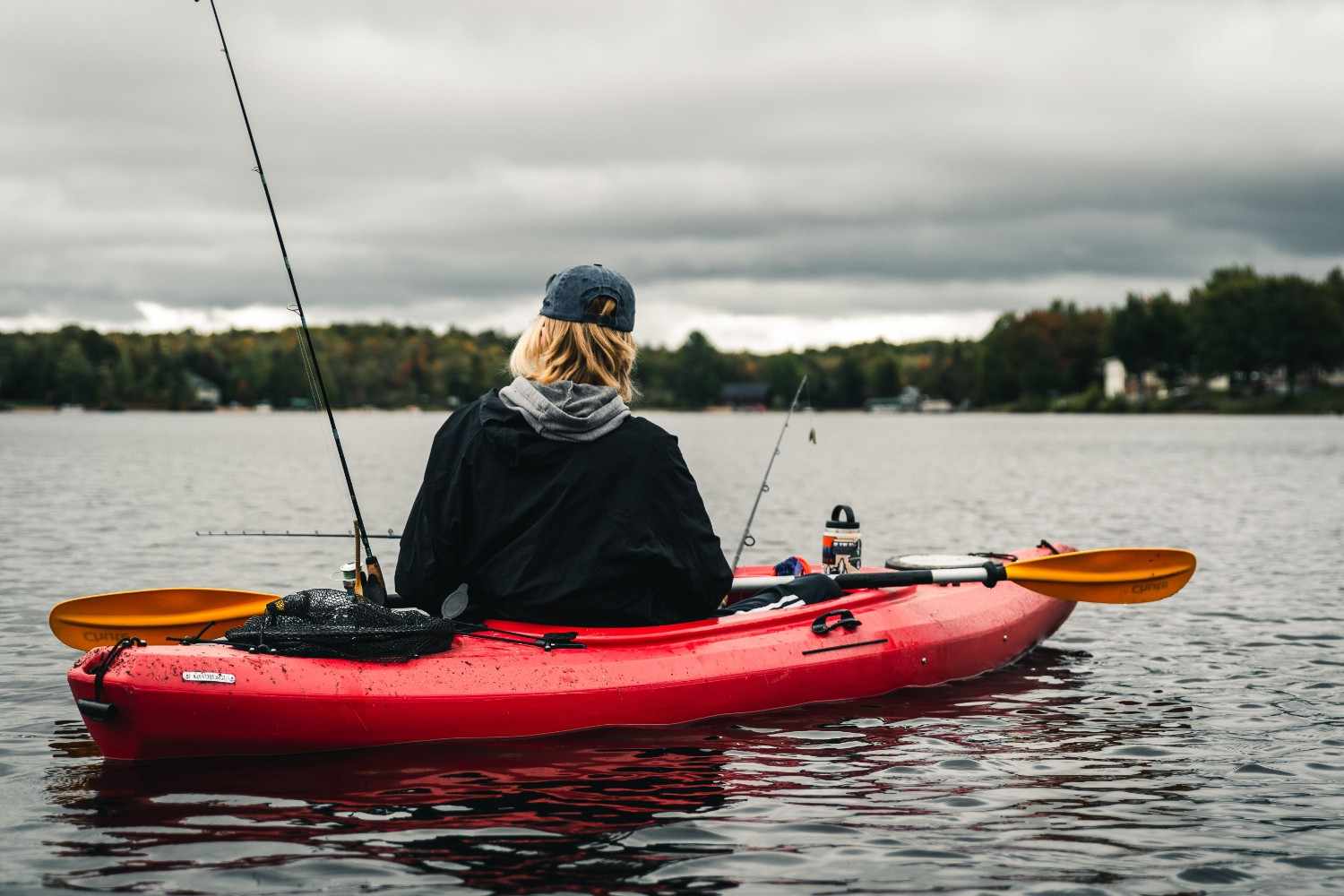
Back view of angler in red fishing kayak with multiple rods set up waiting on a calm overcast lake