Quick Answer
If you mainly fish on warm lakes, slow rivers, or calm coastal water, a sit-on-top kayak is the better choice for most anglers. It’s easier to get on and off, far more stable while casting, and much simpler to recover from if you accidentally end up in the water.
A sit-inside kayak shines when you’re dealing with cold weather, long paddles, or windy conditions. The enclosed cockpit keeps you drier, protects you from the elements, and usually paddles faster with less effort.
Here’s the simple version:
| If you want… | Choose… |
| Maximum stability while fishing | Sit-On-Top |
| Better protection from cold water | Sit-Inside |
| Easy entry and exit | Sit-On-Top |
| Long-distance paddling | Sit-Inside |
| Standing to cast | Sit-On-Top |
| Warm winter fishing | Sit-Inside |
| Carrying lots of fishing gear | Sit-On-Top |
| Better speed and efficiency | Sit-Inside |
The mistake I see over and over? People buy the kayak that looks cooler instead of the one that matches how they actually fish. Six months later they’re trying to sell it because it doesn’t fit their style.
I’ve Watched This Mistake Happen for 25 Years
The first time someone asked me whether a sit-on-top or sit-inside kayak was better for fishing, I gave the same answer most beginners hear:
“It depends.”
Technically, that wasn’t wrong.
Practically, it was useless.
Years later, after watching thousands of anglers launch from tiny ponds, crowded boat ramps, rocky rivers, tidal marshes, and saltwater flats, the answer became much simpler.
The best fishing kayak isn’t the one with the most features. It’s the one that disappears beneath you while you fish.
When you’re thinking about your lure, reading the water, and watching your fish finder instead of worrying about tipping over, you’ve picked the right kayak.
Everything else is secondary.
Team A vs. Team B
Think of these as two completely different personalities.
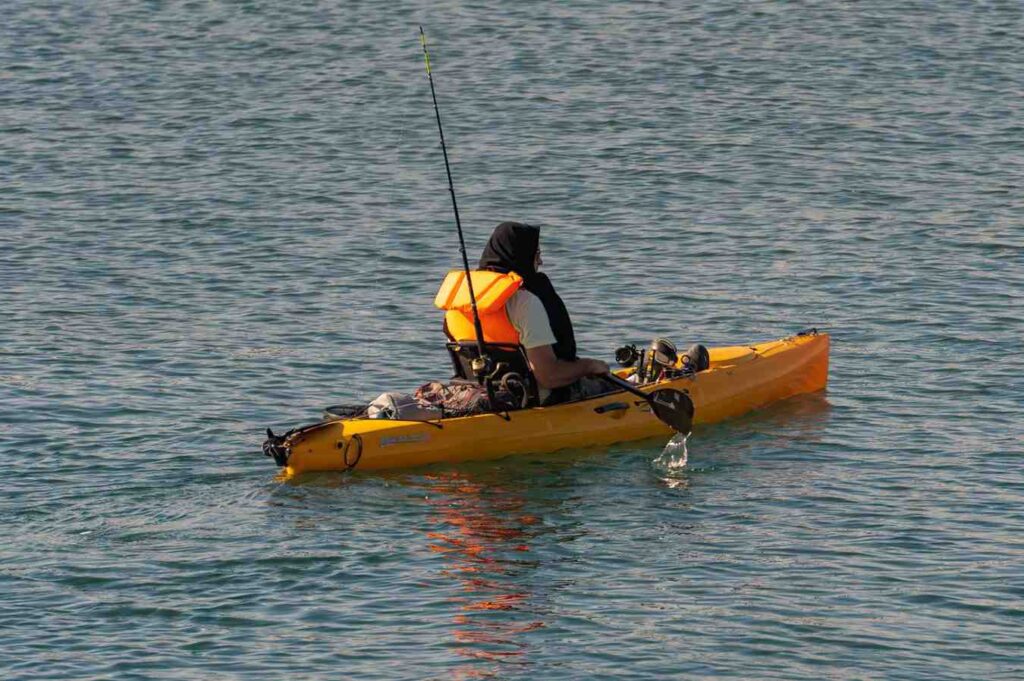
Team A: Sit-On-Top Kayak Anglers
These are the anglers who want freedom.
They move around a lot.
They carry multiple tackle boxes.
They often stand to cast.
Landing a fish usually means reaching behind the seat for a net without worrying about flipping over.
Many launch from places where there’s no proper dock. Sometimes it’s a muddy bank. Sometimes it’s a sandy beach. Sometimes they’re sliding into the water beside a gravel road.Learning how to launch a kayak from a rocky shore prepares you for uneven and more challenging launch sites, making it easier to handle a wider range of real-world conditions with confidence.
A sit-on-top handles that lifestyle beautifully.
Team B: Sit-Inside Kayak Anglers
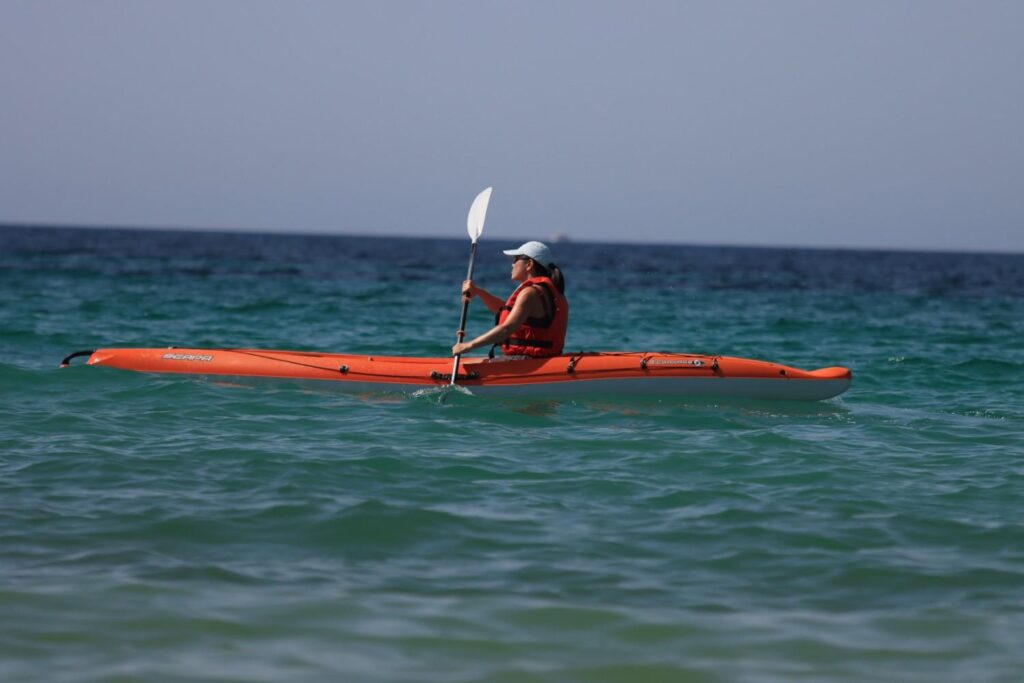
These anglers usually value efficiency.
They may paddle several miles before making the first cast.
Cold mornings don’t bother them because their lower body stays protected inside the cockpit.
Wind affects them less.
Long crossings feel easier because the kayak tracks straighter and wastes less energy.
Neither team is wrong.
They’re simply solving different problems.
The Biggest Difference Nobody Explains Properly
People love talking about stability.
They rarely explain why one kayak feels more stable than another.
Here’s what’s actually happening.
A sit-on-top places your seating position higher above the waterline, but it’s built with a much wider hull. That wider footprint creates impressive primary stability—the feeling you get when sitting still.
That’s why beginners often feel confident within minutes.
A sit-inside kayak usually has a narrower hull.
At first, it may feel a little “tippy.”
But something interesting happens once you start moving.
It settles.
Experienced paddlers call this secondary stability.
Think of riding a bicycle.
Standing still feels awkward.
Moving forward suddenly feels natural.
A sit-inside kayak behaves much the same way.
That’s why someone who’s paddled for years may actually feel more comfortable in a sit-inside than a beginner ever would.
Side-by-Side Comparison
| Feature | Sit-On-Top | Sit-Inside |
| Stability while fishing | Excellent | Good |
| Speed | Good | Excellent |
| Standing to cast | Excellent | Rarely practical |
| Gear storage | Excellent | Moderate |
| Cold-weather comfort | Fair | Excellent |
| Re-enter after falling out | Very easy | More difficult |
| Beginner friendly | Excellent | Good |
| Long-distance paddling | Good | Excellent |
Don’t read this table as “one wins.”
Read it as different strengths for different fishing styles.
Stability Isn’t Just About Falling In
Here’s something I wish every first-time buyer understood.
Most anglers never actually capsize.
What wears them out is constantly feeling like they might.
That little voice in your head changes everything.
You stop reaching for gear.
You hesitate before making a sidearm cast.
Landing a five-pound bass suddenly becomes stressful instead of exciting.
A stable kayak doesn’t just keep you upright.
It lets you fish naturally.
That’s a much bigger advantage than most people realize.
The Story I Still Remember
A father and his teenage son showed up at a local lake one spring morning.
The father had bought a sleek sit-inside kayak because it was lighter and faster.
His son chose a wide sit-on-top fishing kayak.
Halfway through the morning, the son was standing comfortably, flipping soft plastics under overhanging trees, laughing every time he hooked another bass.
The father?
He caught himself every few minutes with the paddle because he didn’t trust leaning far enough to reach his tackle box.
Neither kayak was defective.
Neither paddler lacked skill.
They simply had different priorities without realizing it.
By the end of summer, the father sold his kayak and bought a sit-on-top.
His fishing improved almost immediately—not because the new kayak was “better,” but because it matched the way he actually liked to fish.That’s exactly why learning how to pick the perfect kayak for fishing is so important, since the right kayak should fit your fishing style rather than forcing you to adapt to it.
Comfort Changes After the First Hour
Walking around a kayak showroom can be misleading.
Almost every seat feels comfortable for five minutes.
Fishing for four or five hours tells a completely different story.
That’s where the differences between these two kayak styles really become obvious.
Sit-On-Top Comfort
Modern fishing sit-on-top kayaks have come a long way. Many now include raised, lawn-chair-style seats with adjustable back support.
That higher seating position gives your knees a more natural bend, making it easier to:
- Change positions throughout the day.
- Stretch your legs.
- Reach tackle boxes behind your seat.
- Stand up when conditions allow.
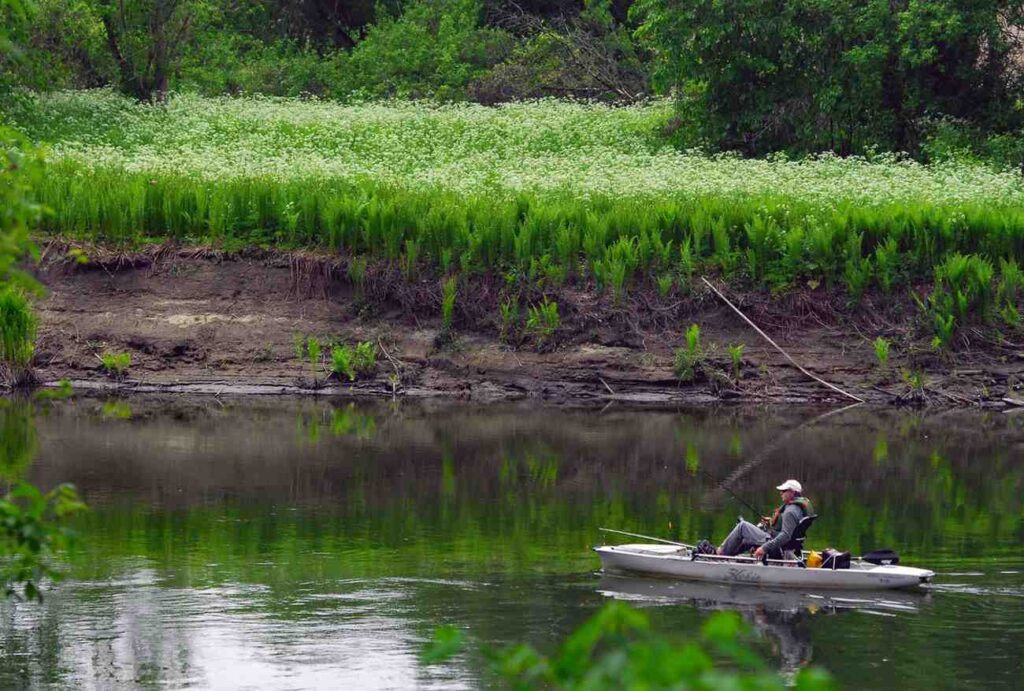
If you’re someone who likes to move while fishing instead of staying locked in one position, this design feels much less restrictive.
Sit-Inside Comfort
A sit-inside kayak supports your lower body differently.
Your legs rest inside the cockpit, helping shield you from cold wind and spray. During chilly spring mornings or late fall fishing trips, that extra protection can make a huge difference.
The trade-off?
Getting in and out isn’t as easy, especially if you need to stretch often or reach gear stored behind the seat.
Speed Matters More Than Most People Think
Imagine your favorite fishing spot is two miles away.
That’s a four-mile round trip before you even count the distance you’ll paddle while searching for fish.
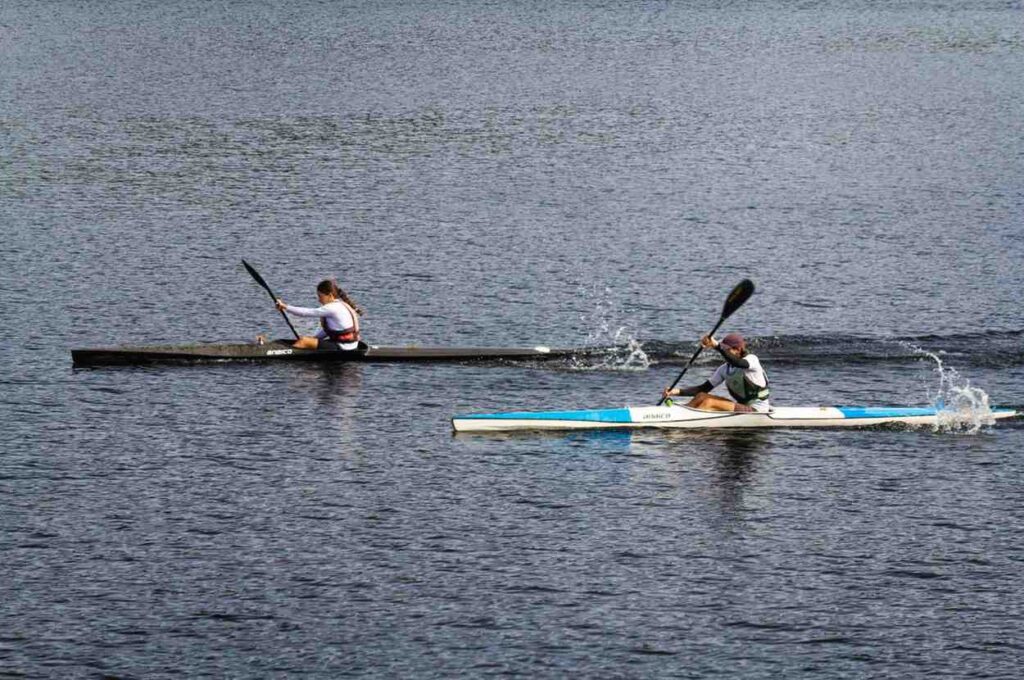
A sit-inside kayak usually covers that distance with less effort.
Its narrower hull slices through the water more efficiently, allowing you to maintain speed without feeling exhausted.
A sit-on-top isn’t slow.
It’s simply built with different priorities.
That wider hull creates excellent stability, but it also creates more resistance in the water.
If most of your fishing happens within a short paddle from the launch, you’ll probably never notice the difference.
If you’re regularly covering several miles, you definitely will.
Storage: Where Does All Your Gear Go?
Fishing has a funny way of expanding.
You start with one tackle box.
Soon there’s another.
Then a landing net.
A small cooler.
Extra rods.
Electronics.
Before long, you’ve packed enough equipment for an entire weekend.Choosing the right kayak accessories helps you stay organized, carry only what you need, and avoid clutter that can get in the way while you’re on the water.
This is where a sit-on-top kayak clearly shines.
Sit-On-Top Storage Advantages
Most fishing models include:
- Large rear tank wells for crates or coolers.
- Open deck space for quick access.
- Multiple rod holders.
- Mounting tracks for fish finders and cameras.
- Easier access to gear without twisting awkwardly.
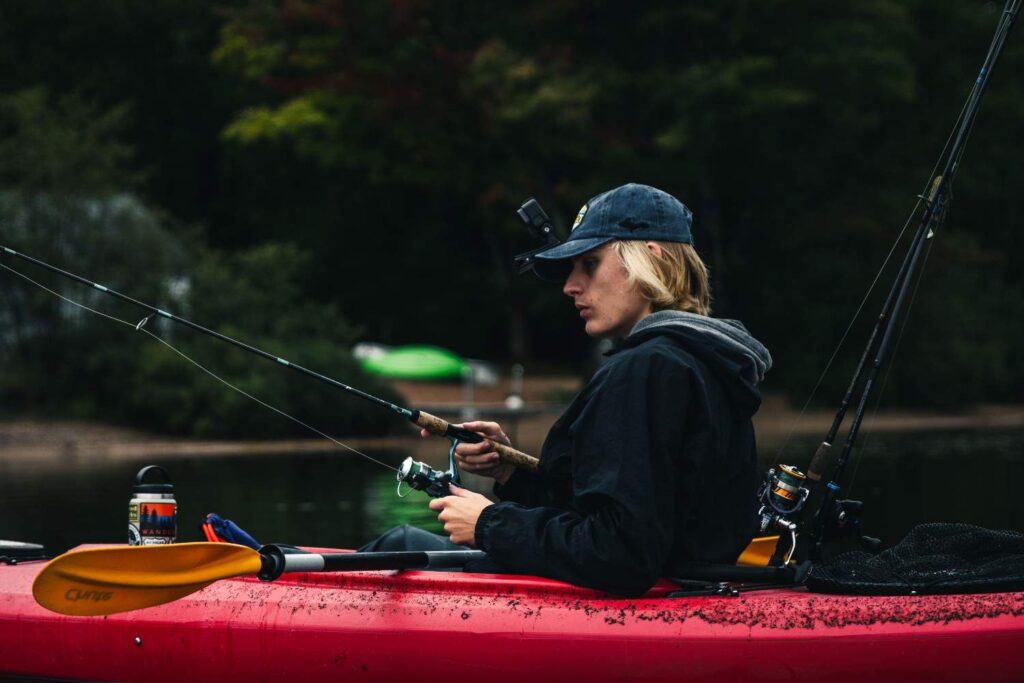
Everything stays within reach, which means less time searching for equipment and more time fishing.
Sit-Inside Storage
A sit-inside kayak often provides excellent internal storage through sealed hatches.
The downside?
Access isn’t always convenient while you’re on the water.
Many anglers end up planning ahead, keeping only essential tackle beside them while storing everything else inside the hull.
For minimalist anglers, that’s perfectly fine.
For anglers carrying lots of gear, it can feel limiting.
Which One Handles Different Fishing Conditions Better?
The answer depends less on the kayak and more on where you spend most of your time fishing.
| Fishing Environment | Better Choice | Why |
| Small lakes | Sit-On-Top | Stable, easy casting and gear access. |
| Large reservoirs | Either | Choose based on distance and weather. |
| Slow rivers | Sit-On-Top | Easier to maneuver and recover if needed. |
| Fast-moving rivers | Depends on experience | Skill matters more than kayak style. |
| Coastal bays | Sit-On-Top | Popular for saltwater fishing and handling gear. |
| Cold lakes in early spring | Sit-Inside | Better protection from cold water and wind. |
Safety Is About More Than Staying Upright
One lesson I’ve learned over the years is that every angler ends up in the water eventually.
Maybe you leaned too far while netting a fish.
Maybe another boat’s wake caught you off guard.
Maybe you simply lost your balance.
The important question isn’t whether it happens.
It’s how easy recovery will be.
A sit-on-top kayak usually makes re-entry much simpler because there’s no enclosed cockpit to climb back into.
With a sit-inside kayak, recovery can be more challenging, particularly if the cockpit fills with water.
No matter which style you choose:
- Always wear a properly fitted personal flotation device (PFD).
- Practice getting back into your kayak in shallow water before your first serious fishing trip.
- Secure expensive gear with leashes if you’re fishing deep water.
Regularly practicing getting into a kayak in calm, shallow water helps build confidence and makes re-entry feel much more natural if you ever capsize during a fishing trip.
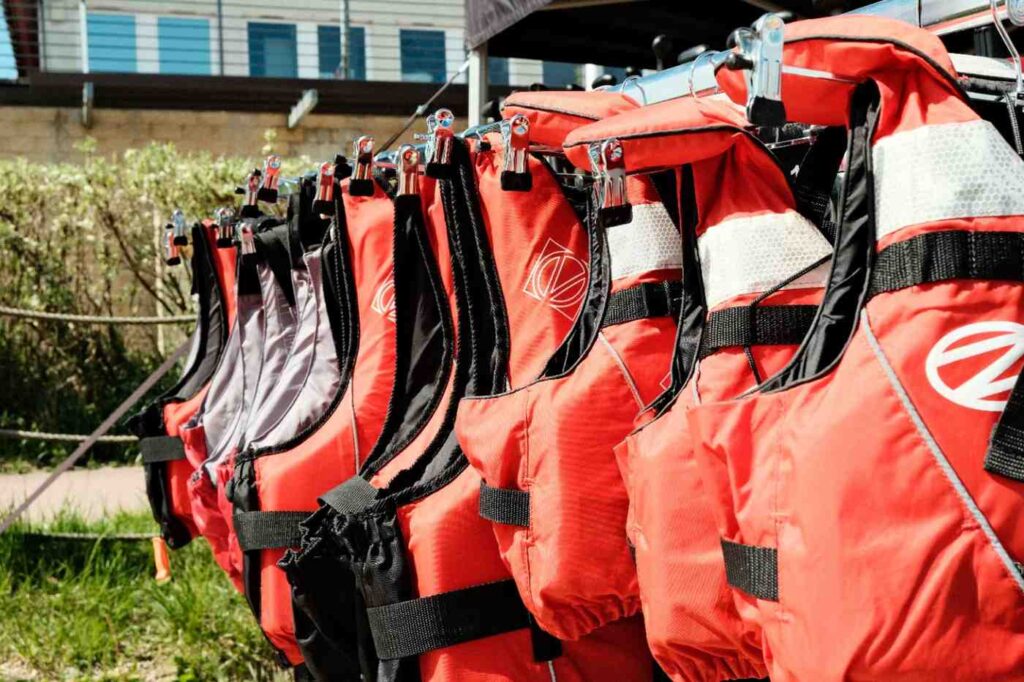
Those simple habits prevent a minor accident from becoming a major problem.
So, Which One Should You Buy?
Here’s the advice I give friends when they ask the same question.
Choose a sit-on-top kayak if you:
- Want the most stable platform for fishing.
- Like carrying plenty of gear.
- Fish mostly in warm weather.
- Plan to stand while casting.
- Are buying your first fishing kayak.
Choose a sit-inside kayak if you:
- Frequently paddle long distances.
- Fish during colder months.
- Want better speed and efficiency.
- Prefer lighter recreational paddling alongside fishing.
- Already have experience handling narrower kayaks.
There’s no universally “better” kayak.
There’s only the kayak that fits the way you actually fish.
Frequently Asked Questions
1. Is a sit-on-top kayak better for beginners?
Yes. Most beginners appreciate its stability, simple entry and exit, and easier recovery if they accidentally fall into the water.
2. Can you fish from a sit-inside kayak?
Absolutely. Many anglers successfully fish from sit-inside kayaks, especially on longer trips or in colder climates.
3. Which kayak is more stable for standing?
A sit-on-top fishing kayak is the clear winner. Many are specifically designed with wide hulls that support standing and casting.
4. Are sit-on-top kayaks slower?
Generally, yes. Their wider hulls create more drag, while sit-inside kayaks are usually faster and more efficient for longer paddles.
5. Which kayak is better in cold weather?
A sit-inside kayak offers better protection from wind, spray, and cold water, making it more comfortable during chilly conditions.
6. Do sit-on-top kayaks sink?
No. They’re built with sealed hulls and scupper holes that allow water to drain while keeping the kayak buoyant.
7. Which kayak carries more fishing gear?
Most sit-on-top fishing kayaks offer more accessible storage, making them ideal for anglers who carry multiple rods, tackle boxes, and electronics.
8. Is a sit-inside kayak safer?
Both can be safe when used appropriately. Wearing a PFD, checking weather conditions, and practicing recovery techniques are far more important than the kayak style itself.
9. Which kayak is best for bass fishing?
For most bass anglers fishing lakes and ponds, a sit-on-top kayak provides the stability and deck space that make casting and managing gear much easier.
10. Can I use one kayak for both fishing and recreation?
Yes. Both styles can do double duty, but if fishing is your primary activity, choose the model that best matches the environments and conditions where you spend most of your time on the water.
Final Thoughts
After spending years watching anglers launch from lakes, rivers, and coastal waters, one pattern keeps repeating itself.
The happiest kayak owners aren’t the ones with the most expensive boats.
They’re the ones who chose a kayak that matched their fishing style from day one.
If fishing means standing, casting, moving around, and bringing plenty of gear, a sit-on-top kayak will probably feel like home.
If your trips involve covering miles of water in cooler weather and efficiency matters just as much as fishing, a sit-inside kayak may serve you better.
Pick the kayak that supports the way you enjoy being on the water. Whether that means choosing the best kayak for fishing or another style that fits your needs, you’ll spend more time catching fish instead of wishing you’d bought something different.