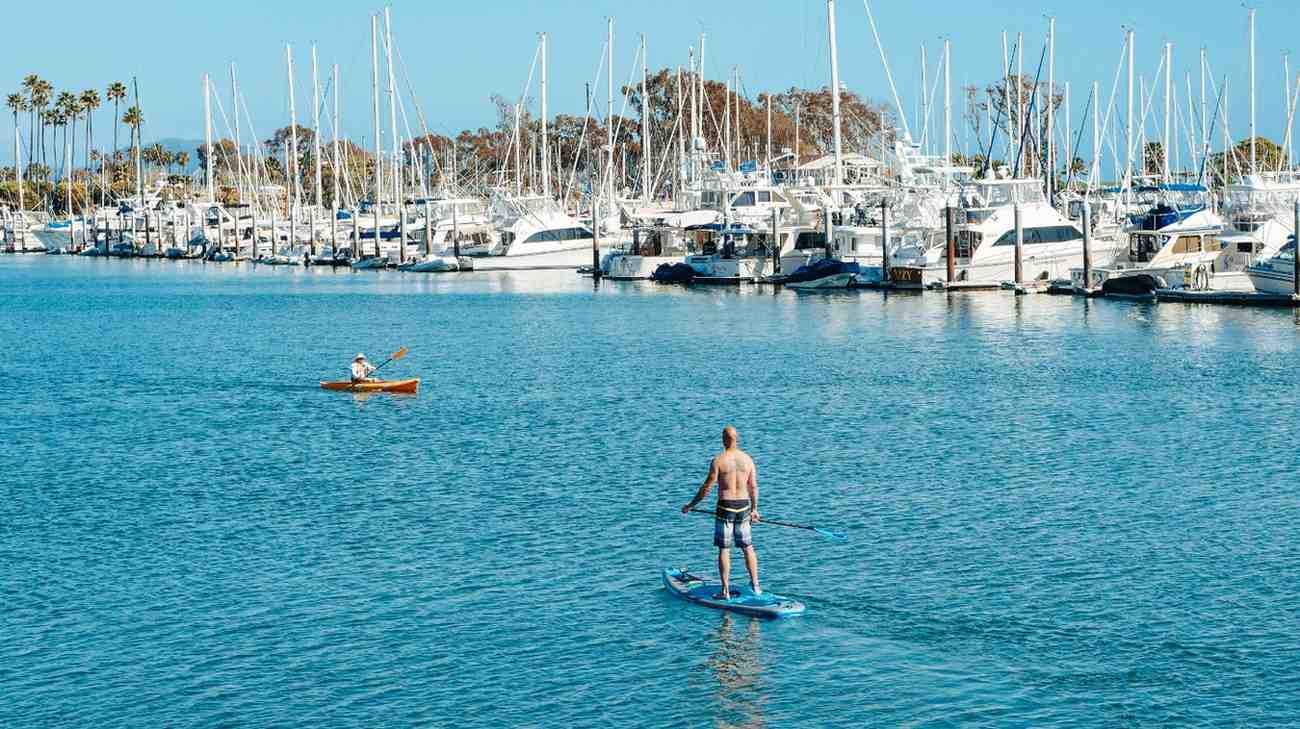
A friend asked me this after spending nearly an hour standing on a paddleboard without falling in. He climbed back onto the dock, looked exhausted, and said, “So… was that actually a workout, or was I just trying not to embarrass myself?”
Fair question.
I’ve coached people who wanted to lose weight, recover from injuries, train for endurance races, or simply stay active without pounding their knees on pavement. Almost every one of them eventually asked the same thing:
“Should I buy a kayak or a paddleboard if exercise is my goal?”
The answer isn’t as simple as one burns more calories than the other. It depends on how you want to exercise, how often you’ll go, and whether you’ll actually enjoy doing it enough to keep showing up.
Let’s settle it.
Quick Answer: Which One Wins?
| If your goal is… | Better Choice | Why |
| Burn more calories in shorter sessions | Paddleboard | Constant balance recruits your legs, core, and stabilizer muscles. |
| Longer cardio workouts | Kayak | Easier to maintain steady effort for an hour or more. |
| Build upper-body endurance | Kayak | Every stroke works the back, shoulders, arms, and core. |
| Improve balance | Paddleboard | You’re standing the entire time. |
| Exercise with bad knees or ankle problems | Kayak | Seated position reduces impact and joint stress. |
| Total-body fitness challenge | Paddleboard | Legs, hips, core, shoulders, and arms stay engaged together. |
| Consistent workouts in windy conditions | Kayak | Less affected by wind and chop. |
Neither is “better” for everyone.
The best workout is the one you’ll still be doing six months from now.
The Biggest Mistake People Make
People compare calories before they compare consistency.
I’ve watched beginners buy a paddleboard because someone online claimed it burned hundreds more calories per hour.
Three weeks later?
The board was hanging in the garage because every windy afternoon felt frustrating.
Meanwhile another paddler quietly kept taking a recreational kayak onto the lake three evenings every week.
Guess who became fitter?
The person who actually kept paddling.That’s usually the paddler who also took the time to master getting into a kayak, making every launch and re-entry smoother, safer, and far less stressful.
That’s something calorie charts never mention.
Team Kayak vs. Team Paddleboard
Let’s make this practical.
Team Kayak
This group usually enjoys:
- Long, steady workouts
- Covering distance
- Exploring rivers and lakes
- Fishing during breaks
- Less worry about balance
- Exercising in cooler weather
- Multi-hour paddles
Making the most of short fishing sessions starts with the right setup. Learning how to pick the perfect kayak for fishing helps ensure your kayak matches the type of water, gear, and fishing style you enjoy most.
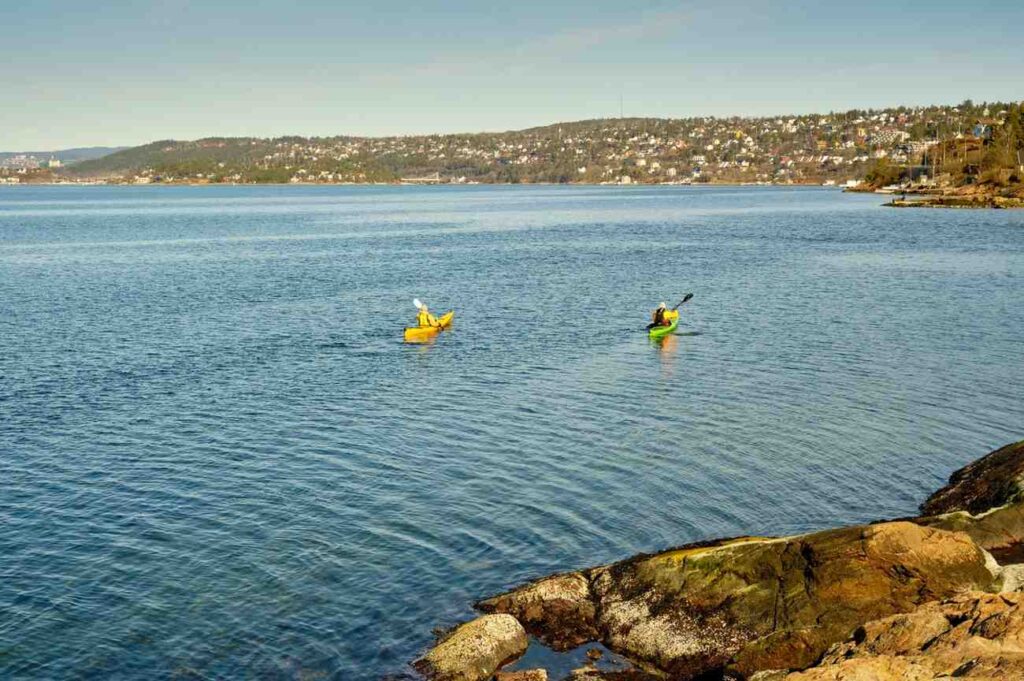
Think of kayaking like cycling.
Once you establish a rhythm, you can keep moving for a very long time.
Team Paddleboard
This group usually prefers:
- Shorter but tougher sessions
- Core-focused exercise
- Balance challenges
- Mixing paddling with yoga or stretching
- Swimming breaks
- Beach workouts
- Full-body engagement
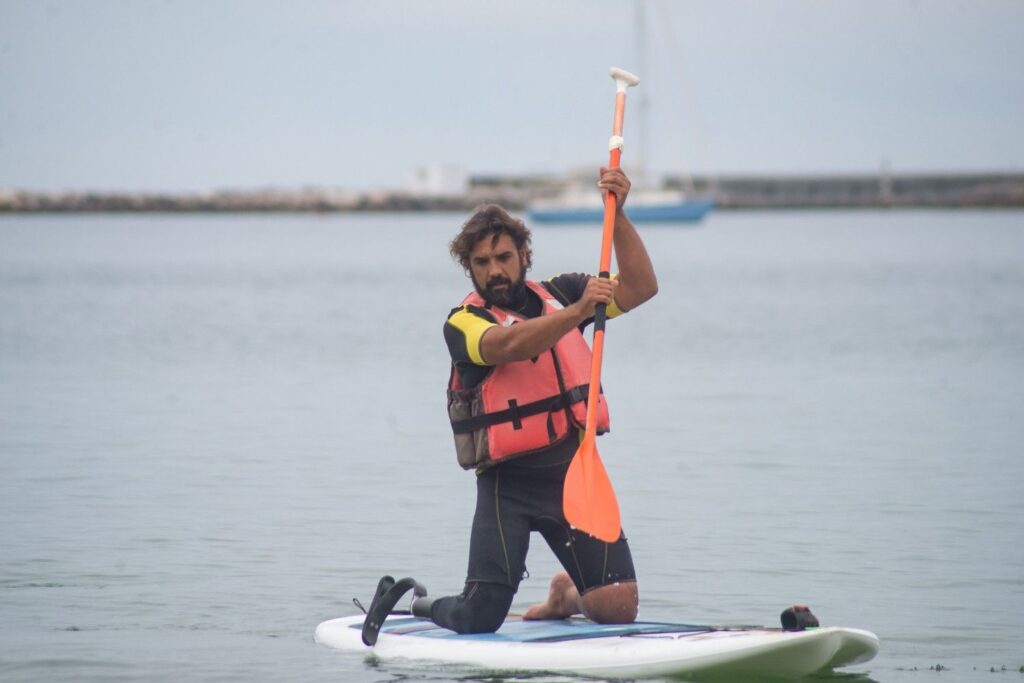
Paddleboarding feels more like standing on a giant balance trainer while performing repetitive movements.
Your muscles never completely relax.
The Workout Feels Completely Different
People expect the difference to be small.
It isn’t.
A kayak supports your body. Your seat provides stability while your torso rotates with every stroke.
That rotation matters.
Beginners often think kayaking is an arm workout. After a proper lesson they realize the power comes from the hips, core, back, and legs pushing against the foot braces.
Good paddlers finish tired in places they didn’t expect.
A paddleboard removes that support.
Standing means your ankles constantly make tiny corrections.
Your knees stay slightly bent.
Your hips stabilize every ripple.
Your abdominal muscles never really switch off.
Even calm water becomes part of the workout.
A Story I’ll Never Forget
One spring we ran an introductory fitness clinic where participants could alternate between kayaks and paddleboards.
There was one guy—I’ll call him Dave—who spent half his life lifting weights. Huge shoulders. Strong arms. Confident.
He climbed onto the paddleboard smiling.
Twenty seconds later he was in the water.
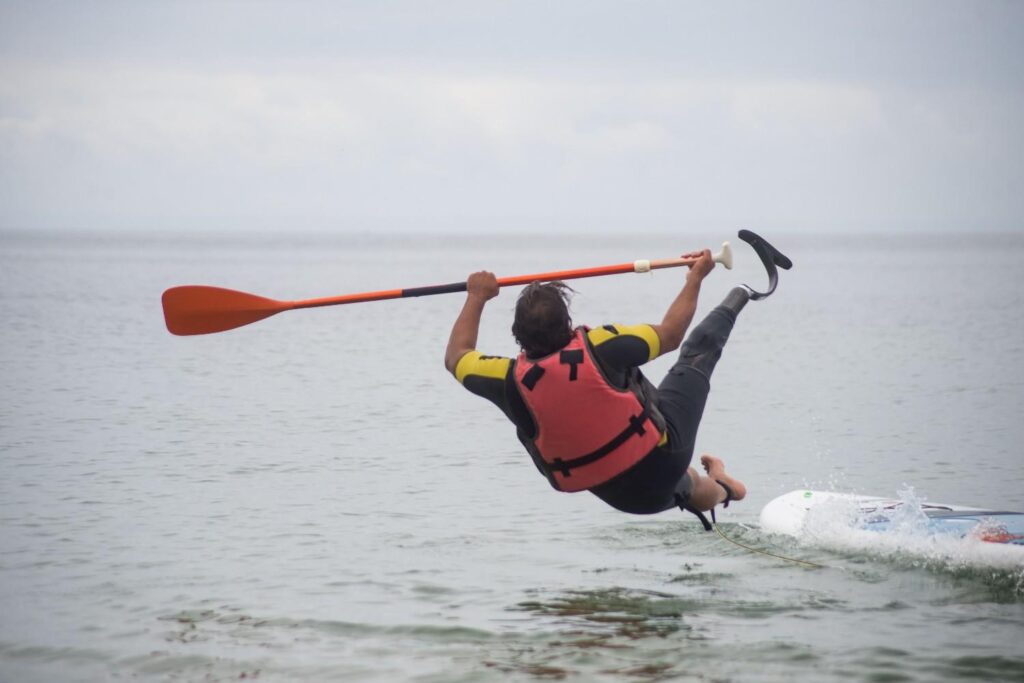
Three attempts later he finally stayed upright.
After fifteen minutes he admitted something that still makes me laugh.
“My abs hurt more than my arms.”
Exactly.
Strength wasn’t the issue.
Balance was.
The opposite happened with another participant who practiced yoga several times a week. She looked comfortable on the paddleboard almost immediately, but after forty minutes in the kayak her upper back and lats were completely spent because she’d never trained those muscles that way.
Different sports.
Different demands.
Which Burns More Calories?
People love numbers.
Real life isn’t that tidy.
Here’s the pattern I’ve seen.
| Activity | Typical Intensity |
| Easy recreational kayaking | Moderate |
| Fast touring kayak | High |
| Casual paddleboarding | Moderate |
| Fast SUP paddling | High |
| SUP in wind or waves | Very High |
Notice something?
Effort matters more than equipment.
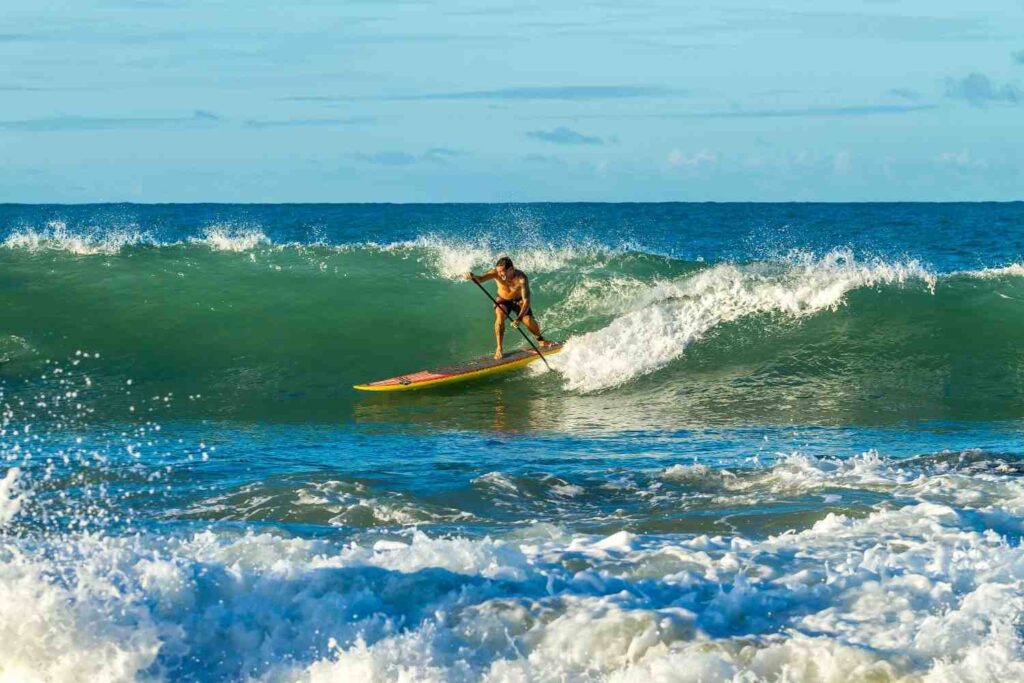
A relaxed kayak trip with snack breaks won’t beat an aggressive paddleboard workout.
But an experienced kayaker covering ten miles at a strong pace can absolutely outwork someone casually drifting on a paddleboard.
Which Builds More Muscle?
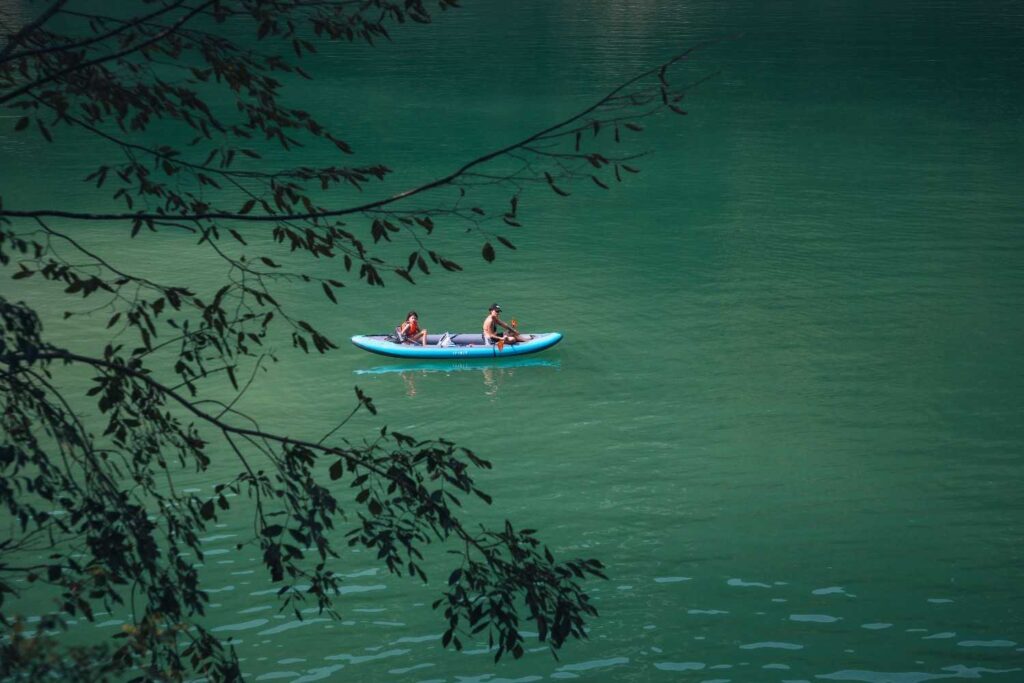
Kayaking develops pulling strength.
Expect improvements in:
- Lats
- Rear shoulders
- Biceps
- Core rotation
- Grip endurance
Paddleboarding develops stabilization.
You’ll notice gains in:
- Core endurance
- Legs
- Glutes
- Ankles
- Balance muscles
- Shoulder endurance
Neither replaces a gym.
Both build functional strength most gym routines ignore.
Cardio: Which Keeps Your Heart Rate Higher?
Here’s where experience changes everything.
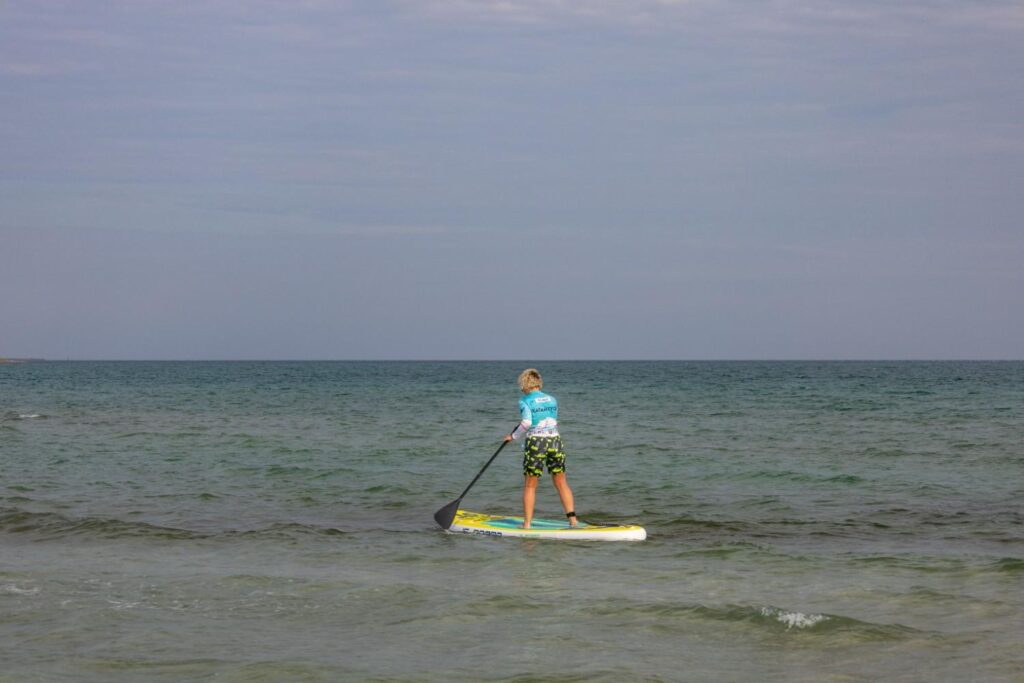
Most beginners spend half their paddleboard session recovering from balance corrections.
Experienced paddleboarders glide efficiently and can maintain a surprisingly high heart rate.
Kayakers usually settle into aerobic exercise much faster because stability isn’t consuming energy.
That’s why endurance athletes often prefer kayaks for long-distance training.
The effort becomes predictable.
The Weirdest Comparison I Ever Saw
Years ago, two brothers joined our weekly paddles.
One bought a paddleboard because he wanted “the hardest workout possible.”
The other picked a recreational kayak because he enjoyed exploring.
Six months later everyone assumed the paddleboard owner would be fitter.
Wrong.
The kayaker had logged nearly four times as many outings.
His brother admitted he’d skipped plenty of windy weekends because standing in rough water wasn’t fun anymore.
The lesson stuck with me.
Intensity loses to consistency almost every time.
Which Is Easier on the Body?
Neither involves pounding joints like running.
Still, they’re different.
Choose kayaking if you have:
- Knee pain
- Balance concerns
- Recent ankle injuries
- Trouble standing for long periods
Choose paddleboarding if you want to improve:
- Balance
- Core stability
- Functional movement
- Coordination
Existing back problems deserve extra thought.
Some people find the seated kayak position uncomfortable after an hour, while others dislike standing on a board for that long.
Rent both before buying.If portability is one of your priorities, it’s also worth trying the best lightweight kayak under 40 pounds to see how much easier it is to carry, load, and handle both on and off the water.
One afternoon can answer questions months of online research can’t.
What Beginners Usually Notice First
The surprises come quickly.
Kayakers often say:
- “I didn’t realize my back would work this hard.”
- “Using my core makes paddling much easier.”
- “Long workouts feel comfortable.”
Paddleboarders usually say:
- “My legs are shaking.”
- “Balancing is harder than paddling.”
- “Every small wave changes everything.”
Neither reaction is wrong.
They’re simply different sports.
Which One Should You Buy?
Here’s the simplest test I know.
Choose a kayak if you smile at the idea of spending two quiet hours exploring a lake.
Choose a paddleboard if standing, moving, balancing, and treating the water like an outdoor gym sounds exciting.
Still undecided?
Rent both on the same weekend.

Thirty minutes in each tells you more than fifty reviews ever will.That hands-on experience is especially valuable when comparing the best sit-on-top kayak for ocean beginners, since comfort, stability, and confidence are much easier to judge from the seat than from online opinions.
Frequently Asked Questions
Does paddleboarding burn more calories than kayaking?
Usually, yes. Standing and balancing recruit more muscle groups, especially during casual paddling. That gap gets smaller when kayaking becomes faster and more aggressive.
Is kayaking good enough for weight loss?
Absolutely. Weight loss depends on regular activity and overall calorie balance. A kayak used three times a week beats a paddleboard collecting dust in the garage.
Which is safer for complete beginners?
A stable recreational kayak is generally easier to learn because you’re seated and less likely to fall into the water.
Which builds a stronger core?
Paddleboarding challenges the core continuously because your body is balancing the entire time. Kayaking also builds a strong core, but through rotational power instead of constant stabilization.
Can I switch between both?
That’s actually one of the best combinations. Kayaking develops endurance and upper-body strength, while paddleboarding improves balance, coordination, and core stability.
One Final Thought
People spend weeks debating which sport is “better.”
Meanwhile, experienced paddlers are already on the water.
I’ve seen people transform their fitness in both kayaks and paddleboards. The common thread wasn’t the equipment. It was that they found something they genuinely looked forward to doing every weekend.
Buy the craft that makes you want to launch again tomorrow.And if you plan to paddle year-round, knowing what to wear kayaking in cold weather will help you stay comfortable, safe, and eager to get back on the water no matter the season.
That’s the one that changes your health.