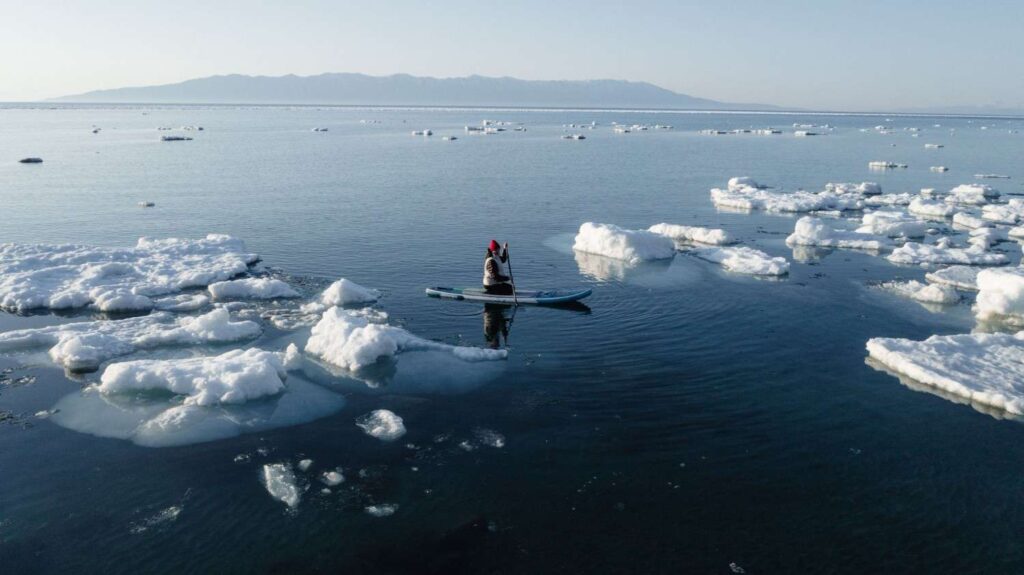
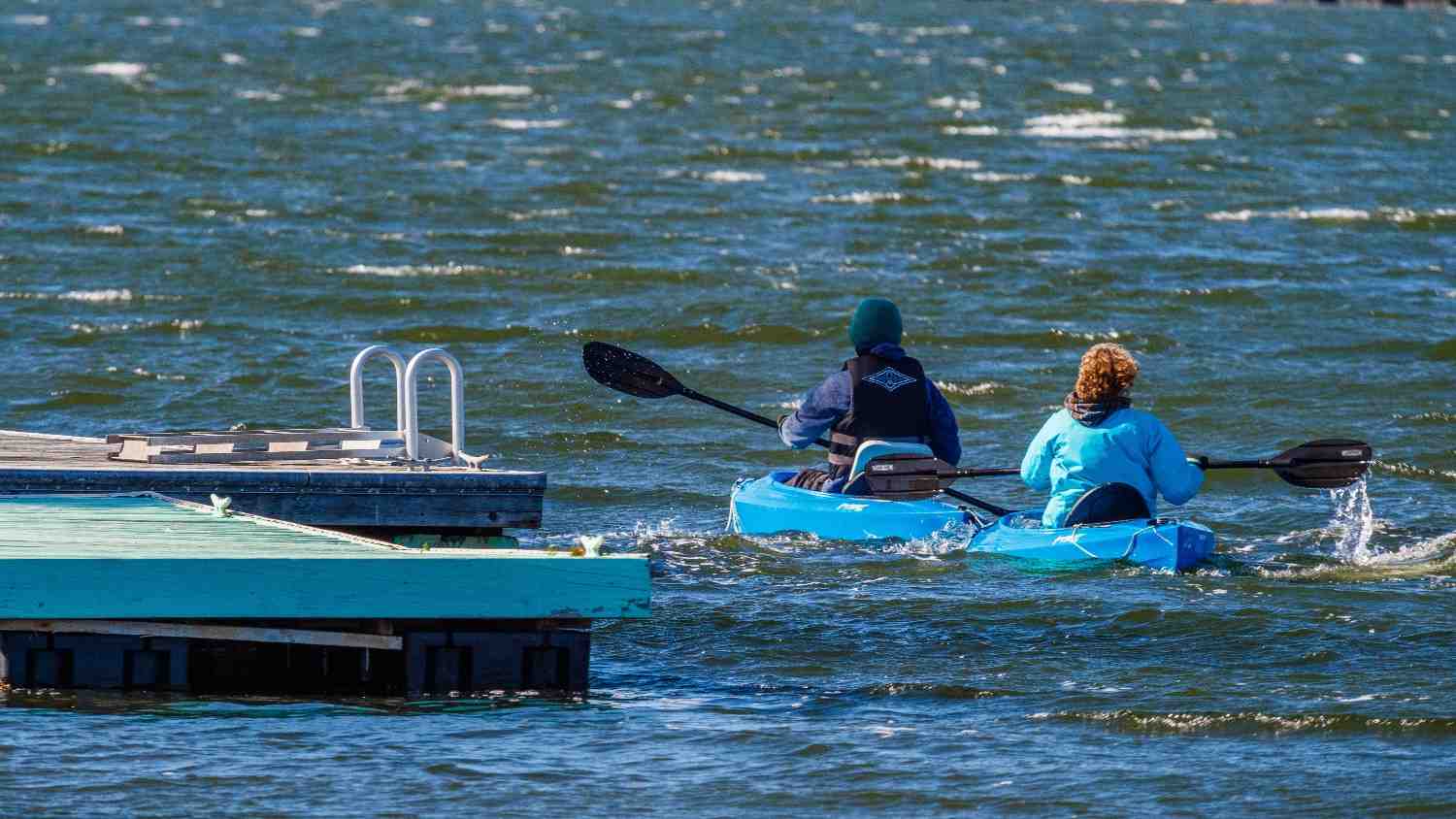
| Water Temperature | What I Recommend | What I Would Never Wear |
| Above 65°F (18°C) | Synthetic layers + splash jacket | Cotton hoodie |
| 55–65°F (13–18°C) | Wetsuit or paddling jacket with layers | Jeans and sneakers |
| 45–55°F (7–13°C) | Farmer John wetsuit + dry top or semi-dry gear | Sweatpants |
| Below 45°F (7°C) | Dry suit with insulating layers | Anything cotton |
I’ve heard this question thousands of times.
“What should I wear kayaking if it’s cold?”
Most people are actually asking a different question.
“How do I stay warm?”
Wrong question.
Dress for the water, not the air.
That’s the rule I wish someone had drilled into my head when I started.
Because cold-weather kayaking isn’t dangerous because the air is chilly. It’s dangerous because water steals heat from your body incredibly fast.
A sunny 55-degree day feels pleasant standing in a parking lot.
Fall into 45-degree water wearing jeans and a sweatshirt?
Whole different story.
And that’s where beginners get fooled.
The First Time I Learned This Lesson, I Was Shivering So Hard I Couldn’t Buckle My PFD
Early spring.
Small river in Pennsylvania.
Air temperature around 60°F. Bright sun. Hardly any wind.
I thought I was being smart.
Wore a hoodie over a thermal shirt and figured I’d warm up once I started paddling.
Then I tipped.
Nothing dramatic.
One second upright.
Next second underwater.
I climbed back in quickly. Maybe thirty seconds in the water.
Didn’t matter.
Within minutes my hands stopped cooperating.
My fingers felt thick.That’s when simple tasks become much harder, especially how to launch a kayak from a rocky shore, where cold hands and uneven footing can quickly turn a routine launch into a challenge.
Couldn’t buckle my life jacket properly.
Paddle felt slippery.
And I remember sitting on shore thinking:
“How the hell am I this cold? It’s sixty degrees outside.”
Because the river was 47°F.
Cold water doesn’t care that the weather app says it’s a nice day.
That afternoon changed how I dress forever.
The One Rule Everyone Needs to Remember
Imagine you’re riding a motorcycle.
You don’t dress for the weather.
You dress for the crash.
Cold-weather kayaking works the same way.
You don’t dress for paddling.
You dress for swimming.
Ask yourself:
“If I fall in right now and spend ten minutes in the water, am I okay?”
If the answer is no, change your clothes.
Simple.
Not always comfortable to hear.The same goes for safety gear—choosing the best kayak life jacket for women may not seem exciting, but a comfortable, well-fitting PFD is something you’ll actually wear every time you paddle.
But simple.

Start With Layers, Not One Thick Jacket
Beginners love bulky jackets.
Makes sense.
Big coat equals warm.
Except kayaking doesn’t work that way.
Paddling generates heat.
Wind cools you down.
Spray soaks sleeves.
Conditions change constantly.
You need layers you can adjust.
My basic system looks like this:
Base Layer
This sits directly against your skin.
Wear:
- Merino wool
- Synthetic thermal shirts
- Polyester leggings
- Moisture-wicking fabrics
Avoid:
- Cotton T-shirts
- Cotton underwear
- Sweatpants
Cotton is the enemy in cold weather.
It absorbs water like a sponge.
Then it steals heat from your body.
People say, “Cotton kills.”
Sounds dramatic.
I’ve seen enough hypothermia cases to say it’s not dramatic at all.
Your Middle Layer Is Your Furnace
Think of this layer as insulation.
Its job is trapping warm air.
Depending on temperature, I wear:
- Fleece jacket
- Grid fleece hoodie
- Synthetic insulated jacket
- Thick wool sweater
Some paddlers use down jackets.
I don’t.
Down is wonderful until it gets wet.
Then it becomes an expensive wet towel.
Synthetic insulation keeps working even after splashes and spray.
That’s why guides love it.
Dry Suit vs Wetsuit: Team A vs Team B
People ask this every winter.
Which one should I buy?
Here’s how I explain it.
Team A: The Wetsuit Crowd
They say:
“I’ll probably stay upright.”
And honestly?
Most of the time they’re right.
Wetsuits trap a thin layer of water against your body.
Your body warms that water.
You stay reasonably comfortable.
Great for:
- Mild winters
- Short trips
- Beginners on calm lakes
- Budget-conscious paddlers
Not great if:
- Water is extremely cold
- You’re paddling far offshore
- Rescue might take time
Team B: The Dry Suit Crowd
Their attitude is:
“I don’t plan to swim. But if I do, I want to laugh about it later.”
Dry suits keep water completely out.
Underneath, you wear insulating layers.
You stay dry.
You stay warmer.
You stay functional longer.
More expensive?
Absolutely.
Worth it?
The first time you accidentally flip in near-freezing water, you’ll answer that question yourself.
If water temperatures drop below about 45°F, I reach for a dry suit every single time.

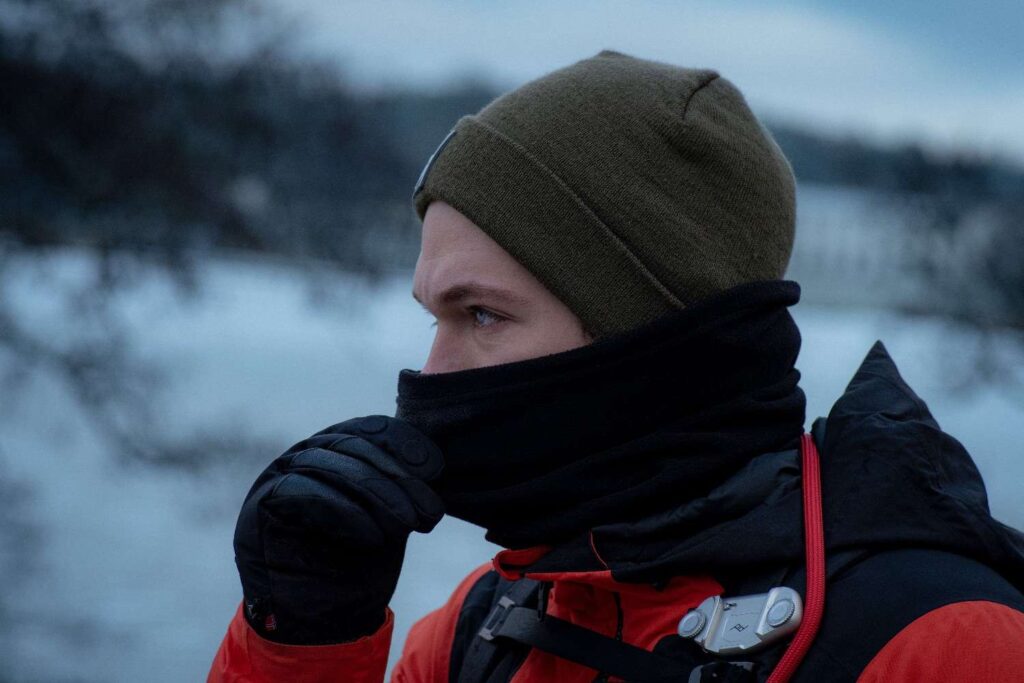
Hands: The Body Part Everyone Forgets
Cold fingers ruin kayaking faster than cold feet.
Paddling becomes awkward.
Buckles become impossible.
Fishing lures become tiny torture devices.
Options:
- Neoprene gloves
- Pogies that attach to your paddle
- Thin wool liner gloves
- Lobster gloves for extreme cold
Pogies look ridiculous.
I’ve accepted this.
Because warm hands beat looking cool.
Every time.
Feet Get Wet. Accept It.
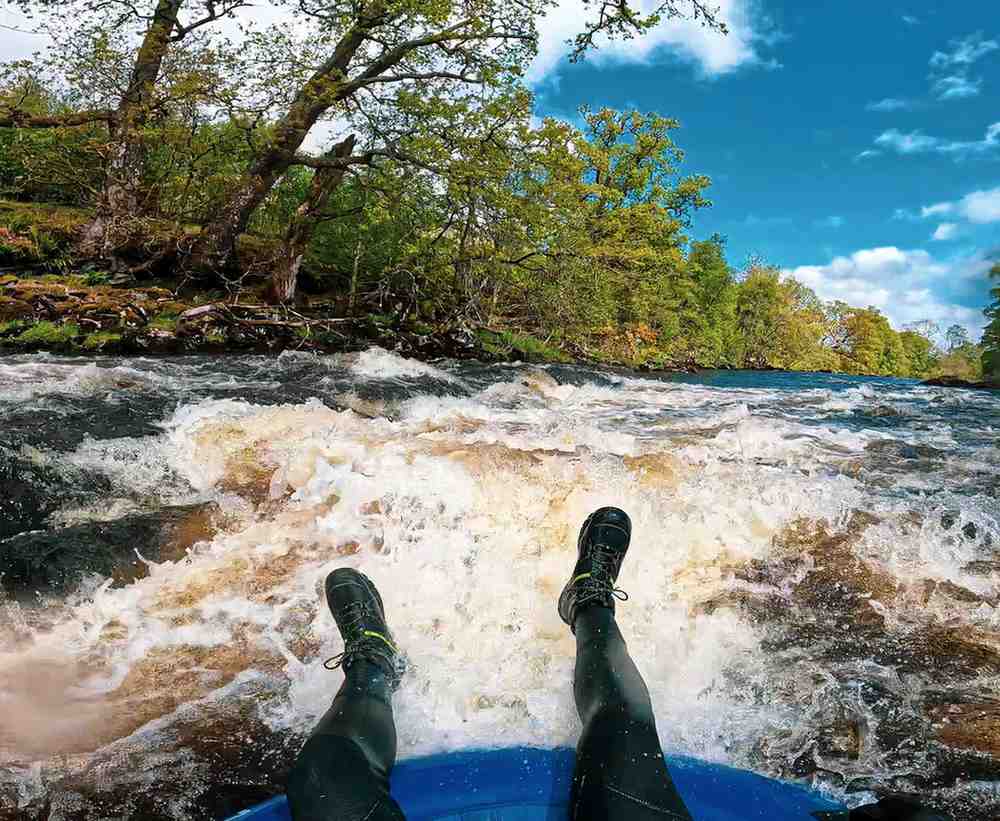
I spent years trying to keep my feet perfectly dry.
Waste of energy.
Instead, keep them warm.
Wear:
- Neoprene boots
- Wool socks
- Waterproof paddling boots
- Thick neoprene socks inside dry suits
Avoid:
- Running shoes
- Cotton socks
- Flip-flops
- Bare feet
And please.
Don’t wear old sneakers thinking you’ll save money.
Wet sneakers become ice boxes.
I’ve watched grown men end trips early because their toes went numb.Comfort affects every part of your time on the water, including getting into a kayak, where good balance and stable footing become much harder when your feet are tired or numb.
The Weirdest Thing I’ve Ever Seen
A guy showed up one January morning wearing ski gear.
Expensive stuff.
Waterproof pants.
Insulated jacket.
Fancy gloves.
Looked like he was about to ski in Colorado.
I asked:
“What are you wearing underneath?”
He grinned.
“Jeans.”
Actual denim jeans.
Said they’d keep him warm.
Twenty minutes later he slipped while launching.
Not even a full swim.
Just waist deep.
Those jeans soaked up river water instantly.
He spent the next hour shivering beside a heater in the parking lot.
Never made it onto the water.
That’s the weird thing about cold-weather paddling.
The dangerous choices usually don’t look dangerous.
They look normal.
Jeans.
Hoodies.
Cotton socks.
Regular winter clothes.
The problem is they were designed for snow.
Not immersion.
The Clothing Setup I Recommend Most Beginners
If you’re just starting, don’t overcomplicate it.
Here’s a setup I’ve recommended for years.
Cool weather (55–65°F water):
- Synthetic base layer
- Fleece mid-layer
- Splash jacket
- Neoprene gloves
- Neoprene boots
- PFD
Cold weather (45–55°F water):
- Thermal base layer
- Farmer John wetsuit
- Dry top
- Neoprene gloves
- Wool socks
- Neoprene boots
- PFD
Very cold water (below 45°F):
- Dry suit
- Fleece underneath
- Wool socks
- Thick neoprene boots
- Gloves or pogies
- PFD
- Spare dry clothes in a dry bag
That’s it.
No magic.
No secret gear.
Just layers designed to work when wet.
The Small Thing Almost Everyone Overlooks
Bring extra clothes.
Seriously.
A complete dry set.
Shirt.
Pants.
Socks.
Hat.
Towel.
Seal everything inside a dry bag.Choosing the best kayak dry bag gives your phone, spare clothes, food, and other essentials the protection they need if your kayak takes on water or you capsize.
I’ve changed clothes in parking lots.
Under bridges.
Inside truck beds.
Once behind a bait shop heater after a surprise snowstorm.
Never once regretted carrying spare clothes.
The emergency gear you never use feels unnecessary.
Until the day it saves your trip.
FAQ
Is a wetsuit enough for winter kayaking?
Sometimes.
If water is moderately cold and you’re close to shore, a wetsuit can work well.
For very cold water or remote trips, a dry suit offers much better protection.
Can I wear a ski jacket kayaking?
You can.
I wouldn’t.
Ski jackets are built for snow and cold air.
Kayaking gear is built for water.
Huge difference.
Why is cotton so bad?
Because it absorbs water and loses insulation.
Wet cotton pulls heat away from your body.
Synthetic fabrics and wool keep insulating even when damp.
Are waterproof socks worth it?
For some paddlers, yes.
But good neoprene boots and wool socks solve the problem for most people.
What’s more important: air temperature or water temperature?
Water temperature.
Every time.
That’s the number experienced paddlers check first.
Final Thoughts
Cold-weather kayaking is one of the most beautiful experiences you’ll have.
Quiet rivers.
Empty lakes.
Steam rising off the water at sunrise.
No crowds.
No buzzing jet skis.
Just you and the sound of your paddle dripping into still water.
But cold conditions demand respect.
Dress for the swim.
Pack extra layers.
Accept that staying comfortable is really about staying prepared.
Get those things right and winter stops feeling like an obstacle.The same preparation and mindset are essential when learning how to kayak safely in the ocean, where changing conditions demand the right skills and equipment all year round.
It becomes your favorite season to paddle.
I’ve watched that happen to hundreds of people.
There’s no reason it can’t happen to you too.