Recent Posts

Fishing Kayak With Pedals: What Actually Breaks


Aerial view of two solo kayakers paddling yellow and red kayaks on a vibrant green lake

Why Pedal Kayaks Feel “Weird” at First

The first 20 minutes on water is where most people get confused.

You expect smooth forward motion. Instead you get:

  • kayak speeding up in bursts
  • slight zig-zag tracking
  • over-steering near structure
  • legs tiring faster than expected

Here’s what’s actually happening.

Your legs are now your throttle.That’s exactly why a fishing kayak with pedal drive feels more efficient for anglers who want hands-free movement while staying focused on fishing.

Not your hands. Not wind. Not current.

And most beginners don’t have “pedal control memory” yet — so they unknowingly overpush or underpush.

That mismatch creates instability.

Person in a white kayak sitting alone on a calm dark mountain lake surrounded by autumn forested hills

The #1 Reason People Struggle (It’s Not Fitness)

People think it’s stamina.

It’s not.

It’s cadence mismatch between pedals and hull response.

Kayak hulls don’t respond instantly like a bicycle. They glide.

So when you push pedals like a bike, this happens:

  • kayak overshoots intended line
  • steering correction comes late
  • fish spot positioning becomes messy
  • constant micro-adjustments drain energy

You’re basically “chasing the kayak” instead of guiding it.

The Fix Nobody Teaches: 3-Beat Control Method

This is the simple control loop experienced anglers use without thinking.

1 push → 2 glide → 3 correct

That’s it.

  • Push: short controlled pedal burst
  • Glide: let kayak travel naturally
  • Correct: tiny steering adjustment if needed

Most beginners skip glide.

Big mistake.

Glide is where kayak tells you what it’s doing.

If you remove glide, you remove feedback.

Pedal Drive Types You’ll Actually Encounter

Not all pedal systems behave the same.

System TypeReal Behavior on WaterStrengthWeak Point
Propeller DriveDirect forward thrust, fast responseSpeed + tight controlMore drag in weeds
Fin DriveSmooth glide, natural trackingEfficiency + stealthSlight delay in turns
Hybrid AssistPedal + electric boostLong range fishingMechanical complexity

Simple truth:

Prop feels sharper. Fin feels smoother. Hybrid feels powerful but heavier mentally.

Real Kayak Options (What People Actually Buy)

Now the part most articles avoid — real models that show up in the field.

Hobie Mirage Series

  • Pro Angler / Outback type platforms

Best for serious pedal fishing control

  • MirageDrive fin system = smooth glide + stealth approach
  • Expensive but proven in real fishing pressure
Man standing and fishing on a motorized pedal platform on a perfectly calm misty lake at dawn with rod deployed

Old Town Sportsman Series

  • PDL pedal drive system (prop style)

Strong all-round control + stability

  • Feels more “boat-like” under power
  • Great for wind and larger water
Young man holding fishing rod in a red kayak with multiple rods set up on a cloudy autumn lake

Perception Kayaks (Outlaw / Crank style)

  • Entry to mid-level pedal platforms

Budget-friendly pedal learning platform

  • Less refined but very usable
  • Good for first-time pedal users before upgrading
Aerial view of a woman paddling a yellow sea kayak alone on deep green water

Simple breakdown:

  • Hobie = refinement + stealth
  • Old Town = power + control
  • Perception = learning + affordability

Price Reality (Nobody Tells Beginners This)

Let’s be real.

A pedal kayak setup is not just kayak cost.

You’re buying a system.

Typical full setup cost:

  • Entry pedal kayak: $1,200 – $2,000
  • Mid-range (Old Town / Perception upgraded): $2,000 – $3,000
  • Premium (Hobie Mirage): $3,500 – $5,500+

But that’s not all.

Add-ons people forget:

  • seat upgrade: $100 – $300
  • anchor system: $50 – $150
  • safety gear: $100+
  • transport cart: $80 – $200

Real truth:

Most “budget kayaks” become mid-budget after setup.That’s why exploring the best fishing kayak under $1500 can often give you a better balance of quality, features, and long-term value from the start.

The Missing Skill: Pedal Control Memory

This is where experience actually separates anglers.

Your body learns:

  • how hard to push
  • when to stop pushing
  • how kayak reacts in wind
  • how glide behaves under load

After 3–5 trips, something changes.

You stop thinking about pedals.

Your legs start “auto-adjusting.”

That’s pedal control memory.

Until that kicks in, everything feels slightly unstable.

Summer Heat Reality (Big Guys Don’t Escape This)

Hot weather changes everything.

Especially on pedal kayaks.

What happens:

  • seat heat builds up fast
  • legs fatigue quicker under resistance
  • dehydration reduces control accuracy
  • long pedal sessions feel heavier than they are

Quick field fixes:

  • breathable seat cushion (mesh style)
  • frequent short glide breaks
  • early morning or late evening fishing
  • light clothing, not heavy gear load

Simple truth:

Heat doesn’t reduce kayak performance — it reduces your control precision.For larger anglers spending long hours on the water, choosing the best fishing kayak for big guys can improve comfort, stability, and overall control during extended sessions.

Shirtless man paddling a camo fishing kayak with gear loaded on a warm hazy summer day on calm water

Fin vs Prop Under Real Pedal Use (Full Field Table)

FactorFin Drive (Hobie style)Prop Drive (Old Town style)
Start responseSmooth gradual pushInstant thrust
Long drift controlExcellentGood but sharper
Wind stabilityMedium-highVery high
Weed performanceClean flowCan clog
Fatigue over timeLowerSlightly higher
Fishing stealthExcellentModerate
Tight maneuveringSmooth arc turnsSharp turns

The Missing Reality: Pedal Doesn’t Fix Bad Balance

This part breaks setups more than anything.

If balance is wrong:

  • kayak pulls sideways under pressure
  • steering feels delayed
  • battery drain increases
  • constant correction fatigue builds

Rule:

If you’re correcting constantly, your system is unbalanced — not your skill.

Success vs Failure Setup (Real Water Behavior)

Team A (Struggled Setup)

  • full pedal force from start
  • rear-heavy battery
  • no glide awareness
  • over-steering constantly

Result:

  • fatigue fast
  • unstable fishing position
  • frustration builds

Team B (Controlled Setup)

  • controlled pedal cadence
  • balanced weight
  • glide use built-in
  • light steering corrections

Result:

  • stable tracking
  • longer fishing sessions
  • better catch positioning

Same kayak.

Different control system.

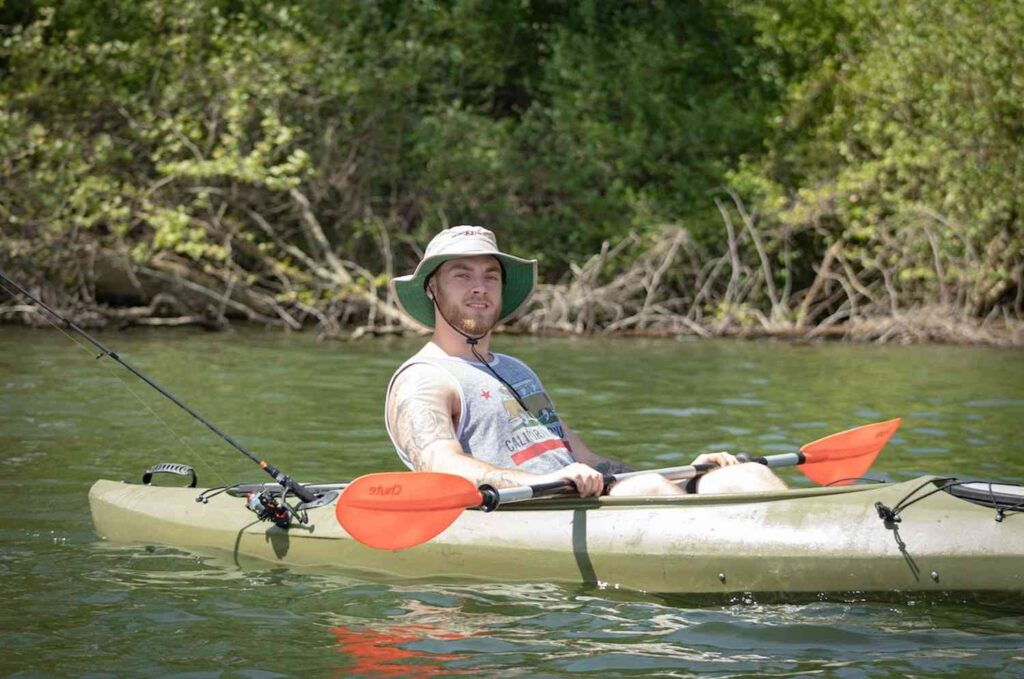
Happy young man in sun hat sitting comfortably in a green fishing kayak with rod deployed on a calm green river

Common Mistakes That Kill Performance

  • treating pedals like bicycle speed control
  • ignoring glide phase completely
  • poor weight distribution
  • over-correcting steering
  • full power use too early
  • skipping learning phase of control

Biggest mistake:

thinking pedal system replaces skill — it doesn’t. It amplifies it.That becomes even more noticeable in a 2 person fishing kayak with pedals, where coordination and rhythm between both anglers can make a big difference on the water.

FAQ

Do I need a pedal kayak for fishing?

No — but it gives better positioning control in wind and structure fishing.

Which brand is best?

Hobie for finesse, Old Town for power, Perception for budget entry.

Is pedal fishing hard?

First 1–2 trips feel awkward. After that it becomes natural.

Is it worth the money?

If you fish often — yes. Control improvement is real.That’s why learning how to pick the perfect kayak for fishing matters, especially if you want a setup that matches your skill level and fishing style.

Final Thought

A fishing kayak with pedals is not about speed.

It’s about learning how a floating system reacts to your legs instead of your hands.

Once you get cadence, glide, and balance right — everything becomes predictable.

Before that, it feels unstable.

Same water.

Same kayak.

Different control understanding.

Back view of solo kayaker in a green kayak paddling toward misty forested mountains on a calm moody lake

Best Fishing Kayak With Motor: What Actually Works


Silhouette of solo angler on a kayak paddling across a calm lake with a glowing orange sunset reflection

Yeah, this is where things stop being “kayak fishing” in the traditional sense.

You’re no longer just paddling or pedaling.

Now you’ve added electric thrust, battery systems, wiring, and control delay factors into a very small floating platform.

And that changes everything.

I’ve seen people assume a motor makes fishing easier.

It does.

But it also exposes every small mistake instantly.

First Thing First: What a Motor Really Changes on a Kayak

A motor doesn’t just push you forward.
It turns your kayak into a low-speed fishing boat with kayak-level stability limits.

That means:

  • constant thrust instead of manual motion
  • battery dependency becomes critical
  • steering response becomes delayed under load
  • weight distribution becomes more sensitive
  • wind resistance matters more than people expect

Simple truth:
Motor removes effort, but increases system complexity.That’s why understanding a proper kayak trolling motor setup matters before adding power to your kayak, especially when balancing weight, battery placement, and control.

The #1 Problem People Hit Immediately

Not speed.
Not installation.

It’s control mismatch between thrust and kayak stability.

What happens:

  • kayak moves faster than expected
  • steering feels slightly laggy
  • anglers over-correct direction
  • small wind pushes become amplified

And suddenly it feels “harder to control than expected.”
That’s the shock moment.

A Real Situation I Still Remember

Guy installed a 55 lb thrust trolling motor on a 12 ft fishing kayak.

First launch.
Flat water.
Zero wind.

First reaction:
“This should feel easy… why am I correcting so much?”

Problem wasn’t the motor. It was:

  • motor mounted slightly off center
  • battery placed too far rear
  • no rudder assist system
  • throttle set too high at start

We fixed three things:

  • centered motor alignment
  • battery moved mid-ship
  • throttle limited to low cruise

Same kayak. Completely different behavior.

His exact words:
“Now it feels like it listens.”

That’s the key.

Man in life vest paddling a red and yellow fishing kayak along a calm green forest river

Motor Types You’ll Actually See on Fishing Kayaks

Trolling Motors (Most Common)

  • 30–70 lb thrust range
  • simple forward/reverse control
  • good for lakes and calm water
  • external mount or transom style

Weak point: wind can overpower light setups.

Integrated Pedal + Motor Hybrids

  • pedal system + electric assist
  • better long-distance control
  • reduced fatigue
  • smoother positioning near structure

Weak point: more mechanical complexity.

Bow-Mount Style (Rare in kayaks)

  • stronger directional control
  • better tracking in wind
  • closer to small boat behavior

Weak point: space and balance issues.

Real Fishing Kayak Recommendations (What Actually Works)

Budget Tier (Under $1500 setup-ready)

  • Lifetime Yukon Angler 116
  • Pelican Catch Mode 110

Good entry point, but you must respect weight limits with motors.

Person paddling a yellow inflatable kayak with fishing rod on a calm mountain lake surrounded by rocky slopes

Mid Range (Best balance zone)

  • Vibe Shearwater 125
  • Perception Outlaw 11.5

These are the “DIY motor-friendly” platforms.
Stable enough for trolling motor use without feeling sketchy.

Person in red shirt fishing from a red kayak on a perfectly calm forest lake with green tree reflections

Premium Tier (What serious anglers use)

  • Old Town Sportsman PDL 106 / 120
  • Hobie Pro Angler series

They handle motor systems + gear load without fighting back.

Man in fishing vest paddling an orange Wilderness Systems Pungo 120 kayak through a narrow dark forest creek

Simple rule:
More stability = less correction = longer fishing time.

Price Reality (Nobody Likes This Part)

Here’s the real breakdown:

  • Kayak: $600 – $3,500
  • Trolling motor: $120 – $1,000
  • Battery (lithium recommended): $200 – $900
  • Mounting hardware: $50 – $300
  • Wiring + safety gear: $50 – $150
  • Real working setup: $1,000 – $4,500

Under $1,000 total?
You’ll feel compromises instantly.If you want a better balance between quality and affordability, exploring the best fishing kayak under $1500 can give you far more reliable real-world performance.

Motor + Kayak Stability Reality (Most Ignored Factor)

Real issue is not thrust.

It’s where force is applied vs where the kayak naturally balances.

If misaligned:

  • kayak pulls sideways under power
  • constant steering correction
  • battery drains faster
  • fatigue increases even while “not paddling”

Simple rule:
If balance is off, motor fights the kayak instead of moving it.

The 3-Count Control Method (Simple But Powerful)

This is the missing technique most beginners never learn.

When moving under motor + occasional pedal assist:

  • 1 count: engage direction (light input only)
  • 2 count: let kayak settle and track
  • 3 count: short correction burst (not constant steering)

Why it works:

Most anglers over-steer.
This rhythm stops “panic corrections.”

Key idea:
Steady direction beats constant adjustment.

Fin vs Prop System (FULL DETAIL COMPARISON)

FactorFin DriveProp Drive
Water resistance handlingBetter glide efficiency in low drag conditionsStronger push against resistance
Shallow water performanceExcellent, less snag riskModerate, prop can hit vegetation
Wind stabilitySlight drift under crosswindBetter resistance to drift
Low-speed fishing controlVery smooth micro-adjustmentsMore direct response
Energy efficiency (pedal + motor)Higher efficiency, longer endurance feelSlightly higher energy consumption
Tracking in straight lineSmooth but slower correctionTight, precise directional holding
Motor synergy behaviorFeels “floaty smooth” under assistFeels “locked-in controlled” under assist

Simple takeaway:

  • Fin = smooth, efficient, forgiving
  • Prop = precise, strong, controlled

Battery Reality (Where Most Beginners Fail)

Battery is not just power. It’s balance.That’s also why planning a proper fish finding setup matters, since electronics, batteries, and gear placement all affect stability on the water.

Common mistakes:

  • battery placed too far back
  • loose wiring causing voltage drop
  • no waterproof sealing
  • ignoring weight distribution

Result:

  • rear drift
  • unstable steering
  • motor strain increases

Success vs Failure Setup

Struggled Setup

  • off-center motor
  • rear-heavy battery
  • full throttle use immediately

Result:

  • drifting under power
  • constant correction
  • short fishing time

Clean Setup

  • centered motor
  • balanced battery placement
  • slow throttle learning

Result:

  • stable tracking
  • longer fishing sessions
  • less fatigue

Same water. Same motor. Different outcome.

Aerial view of solo angler in a kayak positioned perfectly in the center of a wide calm blue lake under clear sky

Seasonal Reality (Big Guys / Hot Weather Issue Included)

One thing people ignore: heat + seating + motor use together.

Summer conditions:

  • reduced seat comfort increases fatigue
  • sweat + long sitting reduces reaction timing
  • battery heats faster under load

For larger anglers especially, comfort becomes more important over long sessions, which is why choosing the best fishing kayak for big guys can make a major difference in support and overall stability on the water.

Fix:

  • breathable seat pad
  • early morning fishing windows
  • short throttle bursts instead of continuous run
Tired man in life vest lying on wooden dock next to his kayak after a long fishing session on a dark forest lake

Common Mistakes

  • motor not centered
  • battery thrown anywhere it fits
  • full throttle immediately
  • ignoring drift testing
  • over-correcting steering
  • treating kayak like a small boat

Many beginners expect too much from the wrong setup, which is why learning how to pick the perfect kayak for fishing matters before choosing a kayak that doesn’t match your fishing style or water conditions.

Biggest mistake:
thinking motor removes the need for balance awareness. It doesn’t.

FAQ

Is a motor good for fishing kayaks?

Yes. Especially for wind, distance, and structure fishing.

What size motor is enough?

30–55 lb thrust for most fishing kayaks.

Do motors make kayaks unstable?

Only when weight distribution is wrong.

Biggest beginner mistake?

Full throttle before learning hull behavior.

Final Thought

A fishing kayak with motor is not about power.
It’s about controlled thrust inside a very sensitive balance system.

When setup is right, it feels effortless.
When it’s wrong, you fight the kayak more than the water.

Same motor. Different outcome.
And that difference is everything.

Close up of angler paddling a blue kayak with paddle dipping into calm water against a golden sunset horizon

Fishing Kayak With Pedal Drive: What Actually Works


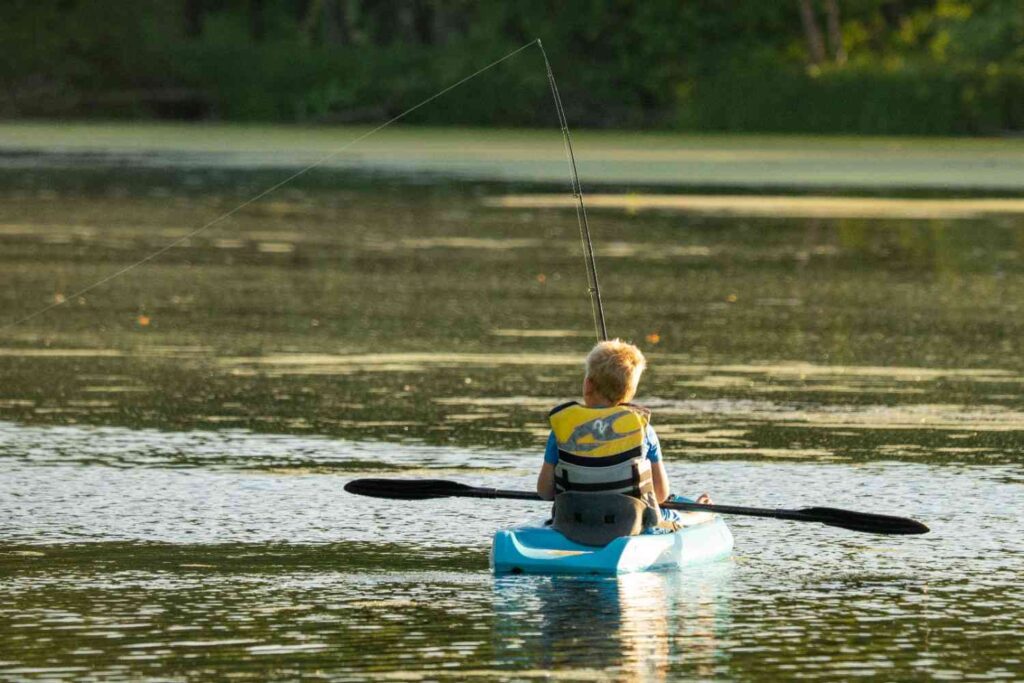
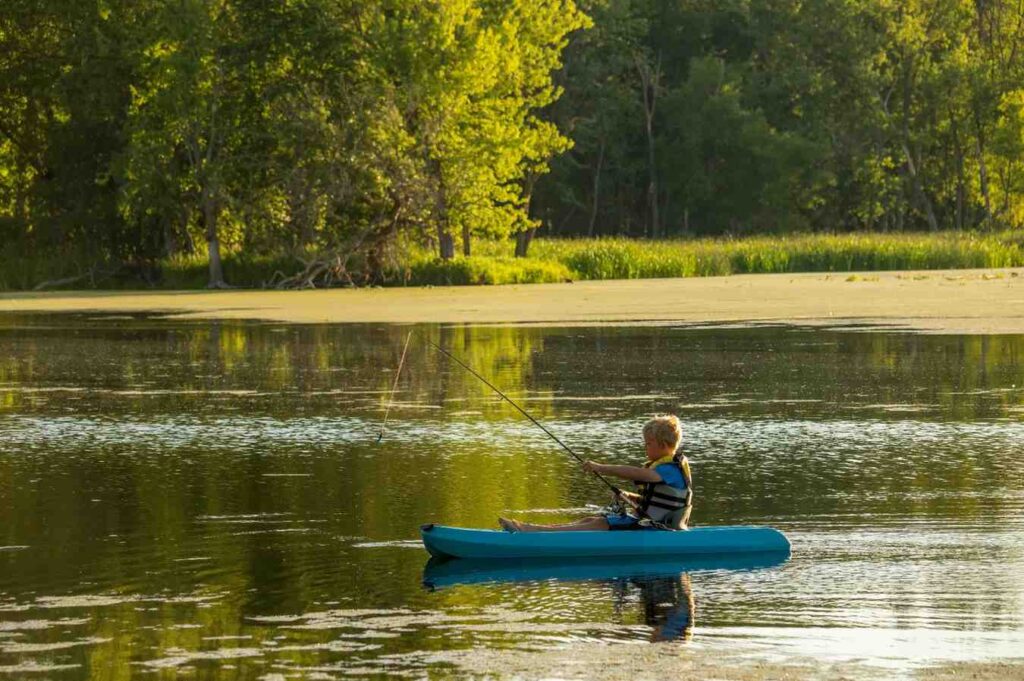
A boy fishing from a blue pedal kayak on a calm green lake surrounded by trees

Yeah… pedal kayaks look simple until you actually use them for fishing.

Hands free. Smooth movement. Easy control.

Then reality shows up — rhythm issues, steering lag, fatigue, and setup mistakes that quietly ruin the trip.

I’ve seen this pattern too many times.

First Thing First: What Pedal Drive Actually Changes

Pedal drive doesn’t make fishing easier.

It makes it continuous movement fishing instead of stop-and-go paddling.

What changes immediately:

  • constant leg engagement instead of short bursts
  • foot-based steering becomes primary control
  • heavier hull + drive system weight
  • sensitivity to seat + balance increases

For larger anglers, even small changes in seating position can affect stability, which is why choosing the best fishing kayak for big guys is important for maintaining comfort and control on the water.

Simple truth:

You’re no longer just moving the kayak — you’re balancing it while moving it.

The #1 Problem Most People Hit Early

Not speed.

Not power.

It’s rhythm mismatch + setup imbalance.

What you’ll notice:

  • pedals feel uneven at first
  • kayak drifts slightly off line
  • steering feels “delayed”
  • small corrections become constant

And people assume something is wrong.

Usually it isn’t.

It’s adaptation missing.

A Real Situation I Still Remember

New user. Fresh kayak. Calm water.

Back view of a person sitting in a red fishing kayak with two rods deployed on a calm overcast lake

First reaction:

“This feels harder than paddling.”

Problem wasn’t the system.

It was:

  • seat slightly too far back
  • cadence too fast
  • rudder not centered
  • no rhythm control

We adjusted three things:

Seat forward. Slow cadence. Reset rudder.

Same kayak.

Completely different feel:

“Now it’s smooth.”

Fin System vs Prop System (Real-World Difference Table)

This is where most confusion happens.

FeatureFin Drive (Hobie-style)Prop Drive (Old Town-style)
Movement feelSmooth gliding motionMore direct push feel
EfficiencyVery high in open waterStrong in mixed conditions
Weed/shallow waterCan snag in heavy vegetationHandles mixed water better
Reverse controlLimitedVery strong advantage
Learning curveSlightly harder at startEasier for beginners
Noise levelVery quietSlight mechanical sound
Best use caseOpen water fishing, long glideStructure fishing, tight control

Simple takeaway:

  • Fin system = glide efficiency
  • Prop system = control flexibility

Neither is “better” overall — just different fishing styles.

Two Anglers. Same Kayak Type. Totally Different Outcome

This is where real-world difference shows.

Team A (Struggled Trip)

  • uneven pedaling rhythm
  • poor seat alignment
  • gear loaded unevenly
  • constant steering correction

Result:

  • kayak drifting
  • fast fatigue
  • fishing focus lost
  • early exit

Their line:

“We’re fighting the kayak.”

Team B (Smooth Trip)

  • seat aligned before launch
  • balanced gear setup
  • steady cadence
  • minimal steering corrections

Result:

  • stable tracking
  • longer fishing session
  • better positioning near structure
  • low fatigue
Aerial view of two people in life jackets paddling a green tandem kayak together on clear teal water

Same water. Same conditions.

Setup made the difference.

Price Reality (No Marketing Talk)

Real ranges you’ll actually see:

Budget: $800 – $1,400

Mid-range: $1,500 – $2,800

Premium: $3,000 – $5,000+

Important truth:

Budget kayaks don’t fail instantly — they fail under long fishing pressure.That’s why learning how to pick the perfect kayak for fishing is important before choosing a setup that can handle real on-water conditions.

Short trips hide problems. Long sessions expose them.

Recommended Fishing Kayaks With Pedal Drive

Hobie Mirage Compass

Price: ~$3,500 – $4,500

Why it works:

  • ultra-smooth fin drive feel
  • excellent glide efficiency
  • strong fishing stability
  • predictable tracking

Weak point:

Price + weed sensitivity.

Best for premium open-water fishing control.

Man fishing from a white Hobie pedal kayak on a calm green river lined with ferns and wildflowers

Old Town Sportsman PDL Series (106 / 120)

Price: ~$2,500 – $3,800

Why it works:

  • prop drive gives strong directional control
  • easy reverse function
  • very stable fishing platform
  • beginner friendly steering

Weak point:

Slight drag in shallow vegetation zones.

Best all-round fishing pedal kayak system.

Man in orange life vest fishing from a yellow Hobie Mirage pedal kayak on calm water with rod raised

Perception Pescador Pilot 12

Price:~$1,800 – $2,500

Why it works:

  • balanced mid-range performance
  • stable hull design
  • easier learning curve
  • decent tracking

Weak point:

Less refined efficiency under heavy load.

Best mid-range entry point.

Man standing on a fishing kayak with several rods set up, casting on calm reflective water

Budget Option (Entry Level Pedal Kayaks)

Price: ~$900 – $1,400

Why it works:

  • affordable entry into pedal fishing
  • stable enough for calm lakes
  • simple mechanics

Weak point:

Efficiency drops in long sessions.

Best for testing pedal fishing before upgrading.

Cadence Control (Most Important Skill Nobody Talks About)

Pedaling is not “constant speed.”

That’s the mistake.

Real control looks like this:

  • slow steady cruise while searching
  • short bursts for repositioning
  • pause during casting accuracy
  • restart only after stabilizing direction

Think rhythm, not speed.

The 3-Count Sync Method (Game-Changer Technique)

This is what separates smooth anglers from struggling ones.

When starting or correcting drift:

  • both anglers pause pedaling
  • one person leads count
  • restart together on signal

Pattern:

“1… 2… 3… GO”

Then both resume pedaling together.

Why it works:

  • resets rhythm instantly
  • removes uneven pressure
  • stabilizes tracking quickly

This is especially powerful in wind or tandem setups.For anglers who fish with a partner, a 2 person fishing kayak with pedals can make coordination and control much more efficient on the water.

Why Kayak Keeps Turning Without Warning

Common causes:

  • uneven leg pressure
  • rudder slightly off center
  • wind catching seat or gear
  • over-correction response

Fix:

Stop correcting immediately. Reset cadence first.

Most people make it worse by over-steering.

Heat + Fatigue Factor

Pedal systems keep your legs active all the time.

That creates:

  • silent fatigue buildup
  • seat heat retention
  • hydration drop without noticing
  • slower reaction time
Person in a yellow kayak paddling toward a tree-lined shore under cloudy skies, with another kayak visible in foreground

Simple fixes:

  • light seat padding
  • planned short breaks
  • hydration discipline
  • avoid over-tight foot straps

Over-tight straps can reduce comfort and control over long sessions. Choosing the right kayak accessories helps improve fit, comfort, and overall paddling efficiency.

Common Mistakes

  • treating pedal kayak like a bicycle
  • ignoring seat alignment
  • uneven gear loading
  • constant steering correction
  • choosing kayak only by price

Focusing only on price often leads to missing important features like stability, storage, and performance. That’s why a proper fish finding setup becomes important when planning a more serious and functional fishing kayak system.

Biggest one:

thinking the kayak will handle rhythm for you. It won’t.

FAQ

Which is better: fin or prop pedal system?

Fin is smoother glide. Prop is better control in mixed conditions.

What budget should I plan for a good pedal kayak?

Minimum $1,500+ for reliable fishing performance.

Are pedal kayaks good for beginners?

Yes, especially prop systems with stable hulls.

Biggest mistake?

Wrong seat setup + no cadence control.

Final Thought

A fishing kayak with pedal drive isn’t about movement.

It’s about control under constant motion.

When seat, rhythm, and system align — it disappears under you.

And fishing becomes the only thing left in focus.

Silhouette of a person fishing from a kayak with rod raised against a glowing sunset over the lake

2 Person Fishing Kayak With Pedals: Honest Review


Two men in tandem kayak paddling together on calm lake with mountain backdrop

Yeah… this one looks simple until you actually put two anglers on one pedal kayak.

On paper: double power, double fishing.

On water: balance drift, rhythm mismatch, seat fatigue, heat buildup, and that constant “why are we turning again?” moment.

I’ve seen it enough times to know exactly where it breaks.

First Thing First: What a 2 Person Pedal Kayak Really Is

It’s not a long kayak with extra seats.

It’s a shared movement system that only works when both bodies behave like one unit.

What actually matters:

  • center balance (non-negotiable)
  • synchronized pedaling rhythm
  • seat symmetry
  • hull tracking stability
  • equal load distribution

And here’s the mistake:

Two-person kayak does NOT double performance. It doubles coordination needs.

The #1 Problem in Tandem Pedal Kayaks

Not speed.

Not power.

It’s micro-desync in pedaling + weight shift timing.

What happens:

  • one person pushes slightly harder
  • kayak starts drifting angle
  • second person over-corrects
  • rhythm breaks completely

Now you’re not fishing anymore.

You’re steering constantly.

A Real Situation I Still Remember

Two anglers, calm lake, perfect weather.

First 10 minutes felt smooth.

Then one guy reached back for gear.

Tiny shift.

That alone changed balance.

Then wind added pressure.

Now both were adjusting constantly:

  • pedal timing broke
  • steering corrections increased
  • fishing focus disappeared

One of them finally said:

“We’re working the kayak more than fishing.”

Group of anglers paddling fishing kayaks together through mangrove channel correcting course

That line says it all.

Summer Heat Reality (Tandem Makes It Worse)

Two anglers. One platform. No airflow gap.

Now add heat.

Things get heavy fast:

  • seat foam traps body heat on both sides
  • limited air movement between anglers
  • posture fatigue increases faster
  • coordination drops as fatigue rises

Simple truth:

Heat doesn’t just make you uncomfortable — it breaks sync faster.

Quick fixes:

  • breathable seat covers
  • light-colored padding
  • short shade breaks every hour
  • avoid thick foam cushions in peak summer
Angler in red fishing kayak shielding eyes under cloudy summer sky with rods deployed

The #1 Thing Most People Miss

It’s not pedal strength.

It’s rhythm control under shared balance pressure.

If rhythm breaks:

everything else becomes harder instantly.

What Actually Makes a Good 2-Person Pedal Kayak

Forget marketing terms.

Look for:

  • wide tunnel hull stability
  • independent or balanced pedal drives
  • adjustable seat alignment
  • strong straight tracking keel
  • high weight buffer

If carrying extra gear or staying well below the limit matters to you, exploring what kayak has the highest weight capacity can help you choose a setup with more room and better stability.

Simple rule:

If it doesn’t track straight solo, it won’t behave under dual load.

Seat Reality (This Controls Everything)

Seats decide coordination more than pedals.

You need:

  • equal seat height
  • adjustable spacing
  • strong lumbar support
  • enough elbow room for casting

Even small imbalance creates rhythm drift automatically.The right kayak accessories can help improve comfort and organization, but keeping your setup balanced matters just as much for smoother movement on the water.

Best 2 Person Fishing Kayaks With Pedals (Balanced Picks)

Hobie Mirage Compass Duo

Price: ~$3,500–$4,500
Length: ~13–14 ft
Capacity: ~600+ lbs

Why it works:

  • independent MirageDrive systems
  • smooth synchronization control
  • excellent hull stability
  • predictable tracking

Weak point:

Expensive and heavy.

Best for serious anglers who want precision tandem control.

Man and woman in life jackets paddling a green tandem kayak over clear turquoise water near a tropical island

Old Town Sportsman BigWater 132 PDL Tandem

Price: ~$4,000+
Length: ~13 ft
Capacity: ~650–700 lbs

What stands out:

  • extremely stable fishing platform
  • strong tracking under load
  • handles gear + anglers easily
  • solid pedal response

Summer note:

Seat area heats up faster in long sessions.If long-term comfort matters, especially for larger anglers, choosing the best fishing kayak for big guys can make a noticeable difference in seat support and overall comfort.

Best for heavy-duty all-day fishing trips.

Man and woman paddling a green tandem kayak along a peaceful river

FeelFree Lure II Tandem (Mid-Range Sweet Spot)

Price: ~$1,800–$2,500
Length: ~13.5 ft
Capacity: ~550–600 lbs

This is the missing balance point.

Why it matters:

  • better comfort than budget kayaks
  • stable enough for moderate chop
  • easier control for mixed experience anglers
  • more forgiving when rhythm is imperfect

Real feel:

Not premium-level precision…

But far easier to handle than entry-level tandems.

Best mid-range choice for most anglers.

Two people paddling a colorful tandem kayak on open blue water

Perception Tribe 13.5 Tandem (Budget Explanation Expanded)

Price: ~$900–$1,300
Length: ~13.5 ft
Capacity: ~500–600 lbs

Here’s the real reason it’s “not a high-efficiency pedal system”:

  • basic pedal mechanics (less optimized power transfer)
  • hull flex slightly reduces energy efficiency under load
  • tracking keel is shallow → small steering errors amplify
  • seat spacing limits perfect rhythm alignment

Result:

It works fine casually…

But under continuous dual pedaling, energy loss becomes noticeable.

Best for beginners or occasional tandem fishing.

A Success Story (When Everything Locks In)

Same lake. Same wind.

Three setups tested over time.

Budget team:

  • uneven pedaling
  • seat mismatch
  • heat fatigue
  • early exit

Mid-range team:

  • better seat balance
  • improved rhythm control
  • manageable heat load
  • longer fishing session

Premium team:

  • perfect synchronization
  • smooth tracking
  • stable seating
  • stayed out even in wind increase

Difference wasn’t strength.

It was coordination stability under real conditions.

Two men paddling a red tandem kayak across a calm lake

The Coordination Trick That Actually Works (Most Important Part)

This is the part most people never use properly.

When two anglers start pedaling, they don’t naturally sync.

So you force rhythm using a simple system:

The 3-Count Sync Method

Before moving:

  • both anglers sit ready
  • one person becomes the “timer”
  • start pedaling on a shared count

Pattern:

“1… 2… 3… GO”

Then both start pedaling on “GO”.

After that:

  • maintain natural rhythm
  • if drift starts, reset with a quick “pause + 3-count”
  • don’t fight corrections while moving

This prevents the biggest problem:

one person unknowingly overpowering the rhythm.

Simple Communication System (Game Changer)

Instead of constant talking or correcting:

Use 3 signals only:

  • “LEFT” → slight steering correction
  • “RIGHT” → opposite correction
  • “RESET” → stop, re-sync, 3-count restart

That’s it.

No overcommunication.

No confusion.

Just clean control.

Common Mistakes

  • assuming double pedals = double efficiency
  • ignoring seat alignment
  • uneven gear loading
  • skipping synchronization practice
  • not managing heat fatigue
  • over-correcting each other while moving

Long sessions become much harder when comfort starts breaking down. Learning how to pick the perfect kayak for fishing can help you choose a setup that stays comfortable and practical for extended time on the water.

Biggest one:

thinking kayak handles coordination for you. It doesn’t. It exposes it.

FAQ

Are 2 person pedal kayaks hard to control?

Only when rhythm and seating are not aligned.

What is the best 2 person fishing kayak with pedals?

Hobie Compass Duo and Old Town BigWater 132 PDL are top-tier options.

Is there a good mid-range option?

Yes, FeelFree Lure II Tandem offers the best balance of price and control.

Do tandem kayaks need coordination skills?

Yes, simple rhythm control makes a huge difference.If you plan to add powered movement later, understanding a proper kayak trolling motor setup can help improve efficiency and overall control on the water.

Biggest mistake?

Ignoring synchronization and seat alignment before fishing.

Final Thought

A 2-person pedal kayak is not about strength.

It’s about whether two anglers can become one rhythm system on water.

If coordination is right — everything feels smooth and controlled.

If it’s wrong — you spend your entire trip correcting movement instead of fishing.

That’s the real dividing line.

Silhouette of angler with fishing rods paddling kayak toward calm sunset horizon

Best Fishing Kayak for Big Guys: What Actually Works


A shirtless man paddling a wide Wilderness Systems Tarpon fishing kayak on a calm river with gear bags mounted in summer heat

Yeah… I’ve seen this exact problem more times than I can count.

Big angler walks in confident.

“Just give me a good fishing kayak.”

Then reality kicks in.

Too tippy. Seat feels like a plastic bench. Back starts hurting. And suddenly the kayak that looked fine on paper feels completely wrong on water.

Here’s the truth nobody says clearly:

For bigger anglers, comfort and stability matter more than speed, features, or fancy add-ons.

Let’s break it properly.

First Thing First: What “Big Guy Kayak” Actually Means

Forget marketing labels like “high capacity.”

Real-world fishing is different.

What actually matters:

  • real usable weight capacity (not max rating on sticker)
  • seat comfort over long sessions
  • wide hull stability under movement
  • balance when you shift or stand

And here’s the hidden part:

A kayak rated 500 lbs doesn’t mean it feels good at 500 lbs.

Sometimes it starts feeling unstable way earlier.

That’s where most people get surprised.

The #1 Problem Bigger Anglers Face

It’s not sinking.

It’s secondary instability + seat fatigue together.

Two things hit at once:

  • kayak rocks slightly when you shift weight
  • seat becomes uncomfortable after 1–2 hours

If you’re unsure whether that level of movement is normal or not, learning how to pick the perfect kayak for fishing can help you understand what stability actually feels like before buying.

That combo kills fishing sessions.

Not danger.

Just pure frustration.

Seat Comfort (This Is Where Most People Go Wrong)

Let’s talk about something nobody takes seriously at first.

Seat quality decides whether you enjoy fishing or count minutes to leave.

What matters for big anglers:

  • high-back support (not low plastic seat)
  • adjustable lumbar support if possible
  • breathable padding (heat builds fast)
  • raised seating position for knee comfort
  • solid frame (no flex under weight)

Here’s what I’ve seen too many times:

A guy buys a stable kayak…

But after 90 minutes, his back is done.

And that’s it.

Trip over mentally.

A young woman sitting in a red Sun Dolphin kayak on a dark lake shielding her eyes while looking into the distance

Because stability means nothing if you can’t stay comfortable.

Summer Reality (Most People Only Realize Too Late)

Here’s something that hits hard in hot months.

When temperature rises, everything gets worse:

  • seat foam heats up fast
  • back sweat builds pressure points
  • plastic seats feel sticky and uncomfortable
  • long sessions become shorter without you noticing

I’ve seen big anglers last 4–5 hours in spring…

And barely manage 2 hours in peak summer.

Not because kayak changed.

Because heat multiplies seat discomfort and fatigue.

Simple fix that helps a lot:

  • breathable seat covers
  • light-colored seat padding
  • more breaks in shade
  • avoid thick dark seat cushions in summer

Small adjustment. Big difference on water.

A woman lying back relaxed in a blue sit-on-top kayak on green algae covered water in summer heat wearing a visor and life vest

A Real Situation (Before vs After Difference)

I remember a guy around 270 lbs struggling with a narrow kayak setup.

First version:

  • tight seat
  • low stability
  • constant shifting
  • short fishing sessions

He barely lasted 2 hours before heading back.

Then he switched to a wider platform kayak with a better seat and pedal system.

Same lake.

Same fishing spot.

Different outcome.

Now:

  • sits longer without discomfort
  • holds position without thinking about balance
  • fishes 5–6 hour sessions easily

His exact words:

“I stopped thinking about the kayak and started thinking about fishing.”

A person in a yellow fishing kayak paddling on calm water at sunrise with a lighthouse pier and dramatic sky in the background

That’s the shift.

What Actually Matters for Big Anglers

Forget hype for a second.

Focus on:

  • width (34 inches or more ideal)
  • flat/tunnel hull stability
  • high-quality seat system
  • weight buffer (150–200 lbs above total load)
  • balanced seating position

Simple rule:

If it feels “slightly unstable” in first 10 minutes, it will annoy you all day.The right kayak accessories can help improve comfort and balance, but they won’t completely fix a kayak that doesn’t match your needs in the first place.

Best Fishing Kayaks for Big Guys (Real-World Picks)

Old Town Sportsman 120 PDL

Price: ~$2,500–$3,200
Length: 12 ft
Weight: ~116 lbs
Capacity: ~500–550 lbs

This one is a confidence machine.

Not flashy. Just solid.

What stands out:

  • pedal drive keeps weight centered
  • excellent seat comfort for long trips
  • extremely stable standing platform
  • handles big anglers without flex feeling

Seat reality:

You can sit here for hours without that lower-back fatigue most kayaks cause.

Summer note:

Even in heat, seat ventilation holds up better than most setups.

Weak point:

Heavy to move on land.That’s exactly why learning how to transport a kayak properly matters, especially if you’re dealing with larger or fully rigged fishing setups.

Best for big anglers who fish long sessions without breaks.

A woman paddling a wide inflatable kayak with a high-back supportive seat on a calm mountain lake with snow-capped peaks in the background

Bonafide P127

Price: ~$1,900–$2,400
Length: 12’7″
Weight: ~125 lbs
Capacity: ~500 lbs

This is the “tank feel” kayak.

Everything feels locked in.

Why people love it:

  • super rigid hull (no flex feeling)
  • wide standing stability
  • excellent weight distribution
  • strong seat support for heavier anglers

Seat note:

Not soft, but very supportive. It holds posture well for long sessions.

Summer reality:

Seat can feel warm in peak heat, so breathable cushion helps a lot.

Weak point:

Transport is heavy work.

Best for anglers who want maximum stability and structure.

Two anglers paddling wide sit-on-top fishing kayaks on calm open water with fishing rods mounted and life vests on

Vibe Shearwater 125 (Improved Real-World Breakdown)

Price: ~$1,500–$2,000
Length: 12’6″
Weight: ~82 lbs
Capacity: ~475 lbs

This kayak sits in a tricky middle zone.

Not ultra-wide like Bonafide. Not heavy-duty like Old Town.

But here’s the truth:

It works really well if you understand balance.

What stands out:

  • adjustable seating positions help big anglers find comfort
  • decent seat height reduces knee pressure
  • modular layout keeps weight flexible
  • handles moderate chop better than expected

Where people mess up:

They overload the rear storage and ruin balance.

Then blame the kayak.

Not the kayak problem.

Seat note:

Good for medium sessions, but not premium all-day comfort.

Summer note:

Needs extra ventilation support in hot weather.

Best for anglers who want flexibility and decent comfort without heavy weight.

Perception Outlaw 11.5 (Budget Reality Check)

Price: ~$900–$1,200
Length: 11’6″
Weight: ~77 lbs
Capacity: ~425 lbs

This is where many big anglers start.

And it actually surprises people.

Why it works:

  • wide platform for its size
  • stable sitting position
  • simple seat design
  • good short-trip comfort

But let’s be honest:

Seat comfort is basic.

In summer heat, fatigue shows up faster than expected.

Good for short sessions.

Not marathon fishing days.

Best for budget anglers or short fishing trips.

A Success Story (Balanced Reality Shift)

Same lake. Same conditions.

Two setups.

First guy:

  • basic narrow kayak
  • low seat comfort
  • short fishing window
  • constant repositioning

He left early.

Second guy:

  • Old Town Sportsman setup
  • high seat comfort
  • stable platform
  • better heat management with breathable seating

He stayed out for hours.

Wind picked up later in the day.

First guy struggled earlier.

Second guy just adjusted and kept fishing.

That’s the difference:

Not skill.

Not luck.

Equipment that supports your body instead of fighting it.

The Weird Truth About Big Guy Kayaks

It’s not weight capacity that matters most.

It’s how the kayak behaves under movement + how long you can stay comfortable in heat and pressure conditions.

If either one fails:

Session ends early.

Simple Setup Rules That Actually Work

  • prioritize seat comfort first
  • keep weight centered
  • avoid rear overload
  • choose width over speed
  • test sitting posture before buying
  • prepare for summer heat conditions early

Simple things.

Big difference.

Common Mistakes Bigger Anglers Make

  • buying narrow kayaks for “performance”
  • ignoring seat quality
  • trusting max capacity numbers blindly
  • overloading storage areas
  • skipping real sitting test
  • ignoring heat impact in summer

Many anglers focus on carrying more gear than necessary, but planning a proper fish finding setup can help you organize electronics and storage space more efficiently without creating extra clutter.

Biggest one:

thinking stability alone is enough. Comfort + temperature matter just as much.

Multiple narrow green and red recreational kayaks lined up on grass near a calm lake with paddles resting on them

FAQ

What is the best fishing kayak for big guys?

Old Town Sportsman 120 PDL and Bonafide P127 are the most stable and comfortable real-world options.If carrying more weight is a priority for your setup, it’s worth exploring what kayak has the highest weight capacity before making a final decision.

What weight capacity should I look for?

At least 150–200 lbs above your total body + gear weight.

Is seat comfort really that important?

Yes. For big anglers, seat fatigue is usually the reason trips end early, not instability.

Does summer heat affect kayak comfort?

Yes, heat makes seat fatigue worse and shortens fishing sessions significantly.

What’s the biggest mistake to avoid?

Ignoring seat comfort and heat conditions while choosing a kayak.

Final Thought

A good fishing kayak for big anglers isn’t just about holding weight.

It’s about holding you comfortably through real conditions — heat, movement, and long hours.

If you can sit, move, and fish without thinking about balance or back pain…

That’s the right kayak.

Everything else is just numbers on paper.

A fishing rod and reel silhouetted against a beautiful golden orange sunset over calm open water with mountain horizon

Fishing Kayak With Trolling Motor: What Works, What Breaks, and What Nobody Tells You


A man paddling a white kayak with a motor battery box mounted on the rear through calm foggy water wearing an orange life vest

Yeah, this one confuses a lot of people.

You buy a fishing kayak thinking it’s simple.

Then someone mentions trolling motors… batteries… thrust ratings… mounts… wiring…

Suddenly it feels like you accidentally stepped into boat engineering.

Same pattern every time:

Excitement → confusion → overbuying → frustration → “why is this so complicated?”

Let’s strip it back.

First Thing First: What A Trolling Motor Actually Does on a Kayak

A trolling motor is just quiet electric push instead of paddling all day.

It simply moves your kayak forward while you focus on fishing.

Basic setup includes:

  • electric motor (12V or 24V)
  • battery
  • mount (bow or transom)
  • steering control

Where people go wrong:

They assume every kayak can handle it. It can’t.

The #1 Mistake People Make

They buy the motor first.

Then try to “make it fit.”

That’s backwards.

What happens:

  • poor tracking
  • unstable balance
  • fast battery drain
  • steering frustration

Kayak and motor must be planned together.

A Real Situation I Still Remember

Guy on a lake. Clean setup. Everything looked perfect.

Five minutes in, wind picked up slightly.

Nothing extreme.

But kayak started drifting sideways.

Reason?

Motor alignment was just a little off-center.

Tiny mistake.

Huge impact.

He spent more time correcting direction than fishing.

That’s trolling motors in real life:

small errors become big problems on water.

Two people paddling an inflatable Intex Excursion kayak on a windy open reservoir with choppy water and a water tower visible in the background

Do You Even Need A Trolling Motor?

You need it if:

  • you fish large lakes
  • wind is constant
  • long distances are normal
  • you fish structure-heavy areas

Not needed if:

  • small ponds
  • short trips
  • lightweight fishing style

Truth most people miss:

Motor doesn’t improve fishing. It improves movement.If you’re considering adding one to your rig, understanding a proper kayak trolling motor setup can help you choose the right configuration for your fishing style.

Motor Types

Bow Mount

Better control, more stable tracking.

Transom Mount

Easier install, budget friendly.

Integrated Systems

Cleanest setup, most expensive.

A man operating a transom-mounted trolling motor on an Old Town fishing kayak on a calm lake with lily pads and fishing rods

Battery Reality (Most People Misjudge This)

Battery is not “just power.”

It decides everything:

TypeWeightRuntimeReality
Lead Acidheavyoktiring
AGMmediumstableold school
Lithiumlightbestexpensive but worth it

You feel battery weight more than motor power.That’s why planning a proper fish finding setup alongside your electronics matters, especially when balancing battery space and overall kayak weight.

A close-up of a solar charging panel and waterproof battery box strapped to the deck of an orange kayak on a calm lake

Full Setup Cost (Realistic Beginner Breakdown)

People always underestimate this.

Here’s what a real trolling motor kayak setup costs:

  • Trolling motor: $300 – $1,200
  • Battery: $150 – $900
  • Mount kit + wiring: $50 – $250
  • Charger + accessories: $50 – $150

Total realistic setup:

Price: $600 – $2,500+

Premium setups can go higher.

Best Fishing Kayaks That Handle Trolling Motors Well

Old Town Sportsman BigWater PDL (Full Detail)

Price: ~$2,500–$3,500
Length: 12–13 ft
Build: Heavy-duty build
Capacity: High capacity

This is not just a kayak.

It’s a full fishing platform designed for power systems.

What makes it different:

  • factory-level stability with motor load
  • tracks straight even in wind
  • handles heavy battery + gear easily
  • pedal drive + motor combination works smoothly

Real-world feel:

You don’t fight the kayak.

You guide it.

Where it shines:

  • big water fishing
  • long lake runs
  • heavy gear setups

Weak points:

  • heavy transport
  • expensive fully rigged setup

Best for serious anglers who want zero compromise stability.

A man fishing from an orange pedal fishing kayak on a calm lake surrounded by colorful autumn trees with a gear crate and fishing rod mounted

Bonafide P127

Price: ~$1,900–$2,400
Length: 12’7″
Hull: Very stable hull
Capacity: High capacity

Pure stability platform.

  • excellent DIY motor mounting base
  • handles weight well
  • stable in chop

But heavy once loaded.

Best for custom builders.

Perception Outlaw 11.5 (Budget Motor-Friendly Entry Platform)

Price: ~$900–$1,200
Length: 11’6″
Weight: ~77 lbs
Capacity: ~425 lbs

This is where most people start experimenting with trolling motors without spending big money.

It’s not built as a motor kayak, but it works well if you keep the setup simple.

The real strength is wide open deck + natural stability.

Good stuff:

  • wide deck makes DIY motor mounting easy
  • very stable for its price range
  • rear tankwell fits battery + gear cleanly
  • beginner-friendly handling
  • forgiving in calm water

Here’s what people don’t realize:

This kayak doesn’t hide mistakes.

It shows them instantly.

Bad battery placement? You’ll feel tracking issues.
Wrong motor alignment? You’ll feel drift immediately.

That sounds negative, but it actually helps beginners learn fast.

Another thing worth knowing:

It performs best when you don’t overload it. Keep setup clean and it behaves surprisingly well for small lakes and slow fishing zones.

Weak spots:

  • no factory motor integration
  • slower in wind compared to longer kayaks
  • loaded setups feel sluggish

Best for beginners who want a low-risk entry into trolling motor fishing.

A person sitting in a red fishing kayak on a cloudy lake with two fishing rods mounted and basic gear setup

A Success Story (Balanced Reality)

Not every motor story is about problems.

I’ve seen anglers completely change their fishing game.

One guy on a windy reservoir used a properly balanced motor setup on a Bonafide-style kayak.

Before motor:

  • constantly drifting
  • tired after short sessions
  • limited to shoreline fishing

After motor:

  • held structure spots for hours
  • covered more water
  • actually planned fishing instead of reacting to wind

He said something simple:

“Now I fish spots, not just water.”

A man holding a large red snapper fish with thumbs up while sitting in a heavily rigged tournament fishing kayak on open water with multiple rods and camera mounts

That’s the real upside when setup is right.

The Weird Thing About Motor Kayaks

Motor doesn’t make fishing easier.

It makes bad setup obvious faster.

But when everything is balanced?

It feels like control instead of effort.

Simple Installation Logic

  • stable mount first
  • center weight properly
  • test in calm water
  • adjust before real trip

Simple beats complicated.When building your setup, choosing the right kayak accessories often matters more than adding unnecessary gear.

Common Mistakes

  • buying motor before kayak
  • weak mounting system
  • bad battery placement
  • skipping test runs
  • overloading kayak
  • wrong motor size

Many beginners rush into upgrades too early, but practical things matter more than most people expect. That’s why learning how to transport a kayak before adding extra weight and gear can save you a lot of frustration later.

Biggest mistake:

thinking motor fixes kayak choice.

FAQ

Do I need a trolling motor for kayak fishing?

Only if wind, distance, or fatigue limits your fishing time.

Can every kayak handle a trolling motor?

No. Stability and structure matter a lot.That’s exactly why learning how to pick the perfect kayak for fishing matters before choosing a setup that doesn’t match your fishing style.

How fast is a kayak with trolling motor?

Usually 3–5 mph depending on load and wind.

What’s the biggest hidden cost?

Battery system. Most beginners underestimate it.

Is it worth it?

Yes—if kayak and motor are properly matched.

Final Thought

A trolling motor doesn’t replace paddling skill.

It replaces wasted energy.

When kayak, motor, battery, and balance all line up, it stops feeling like gear and starts feeling like control.

And that’s when fishing actually changes.

A silhouette of an angler paddling a fishing kayak with mounted rods toward a dramatic golden sunset on open water