
Most people ask this question after one of two things happens.😋
Either:
- They sat in a kayak that felt like a sinking bathtub
- Or they realized the advertised “500 lb capacity” didn’t mean what they thought it meant
That second one gets people all the time.
A kayak might technically float with 500 pounds inside it. Doesn’t mean it will paddle well. Doesn’t mean it will stay stable in wind. Doesn’t mean the scupper holes won’t start taking water over the deck.
Big difference between maximum flotation capacity and real-world usable capacity. Huge difference.
After dealing with heavy paddlers, fishing setups, camping loads, coolers, batteries, trolling motors, dogs, and some truly overloaded disaster setups over the years, one thing became obvious:
The highest-capacity kayaks are almost never the fastest kayaks.
They’re designed like floating platforms. Wide hulls. Massive displacement. Stability first.
And honestly? That’s usually exactly what people actually need.
The Kayaks That Truly Handle Massive Weight
Here’s the short list I trust when someone says:
“I need something that can actually carry serious weight without becoming miserable to paddle.”
| Kayak | Realistic Usable Capacity | Max Advertised Capacity | Best For |
|---|---|---|---|
| Hobie Mirage Pro Angler 14 360 | 400–450 lbs comfortably | 600 lbs | Serious fishing + heavy gear |
| Jackson Big Rig HD | 350–400 lbs | 550 lbs | Big paddlers needing stability |
| Bonafide P127 | 375–425 lbs | 525 lbs | Heavy anglers + standing |
| NuCanoe Frontier 12 | 400+ lbs | 650 lbs | Gear hauling, hunting, motors |
| Crescent Crew | 450+ lbs | 600 lbs | Tandem load hauling |
| Wilderness Systems ATAK 140 | 350–400 lbs | 550 lbs | Large paddlers wanting performance |
| Old Town Sportsman BigWater ePDL+ 132 | 400 lbs comfortably | 500+ lbs | Offshore-style fishing |
Now here’s the thing nobody explains properly.
A 300-pound paddler does NOT want a kayak rated for 300 pounds.
That’s a terrible experience.
You want at least 30–40% extra capacity overhead beyond your total load. Sometimes more.
So if:
- You weigh 280 lbs
- Your fishing gear weighs 40 lbs
- Battery and electronics add 25 lbs
- Cooler adds another 20 lbs
You’re already around 365 lbs before water bottles, anchors, wet gear, or a fish catch.
That means you should realistically be looking at kayaks rated around 500–650 lbs.
Anything less starts feeling sluggish and unstable fast.
The #1 Mistake Heavy Paddlers Make💔
People obsess over the published weight number.
Wrong target.
The real thing to pay attention to is hull width and hull shape.
A narrow touring kayak with a high capacity number can still feel awful under a bigger paddler because the kayak sits too low in the water.

What actually matters:
- Waterline width
- Hull displacement
- Deck height
- Seat position
- Freeboard height
- How the stern handles load
And this is where fishing kayaks dominate.
They’re basically small barges now. In a good way.
A modern fishing kayak at 38 inches wide with a cathedral hull can support massive weight while staying stable enough to stand in.
That simply wasn’t common 15 years ago.
The Kayak That Surprised Me Most
The first time I loaded a NuCanoe Frontier 12 with ridiculous weight, I expected it to handle like a wet sofa.
Didn’t happen.
That hull is weirdly capable.
People use these things for:
- Duck hunting
- Camping expeditions
- Tandem paddling
- Electric motor setups
- Carrying dogs
- Shallow-water river hauling
And because the hull is almost canoe-like, it distributes weight differently than traditional sit-on-top kayaks.
Not fast. Not sleek. But stable under absurd loads.
That matters more than speed for most buyers asking this question.
If You Are Over 250 Pounds, Read This Carefully
This is the part everyone misses.
Seat height changes everything.
A high lawn-chair style seat feels amazing at the store. Then people hit rough water and suddenly realize their center of gravity is much higher.
Heavy paddlers especially notice this.
A few things happen:
- Secondary stability becomes critical
- Lean recovery matters more
- Wind affects tracking harder
- Entry and exit become riskier
So don’t just chase comfort.
A lower, more planted seating position can make a kayak feel dramatically more stable.
Especially in crosswind conditions.
Fishing Kayaks Usually Win the Capacity Battle
Not because manufacturers are generous.
Because the design demands it.
Fishing kayaks are built expecting:
- Batteries
- Fish finders
- Rod crates
- Anchors
- Coolers
- Tackle storage
- Standing movement
- Sometimes motors
That forces wider hulls and higher buoyancy.
A dedicated fishing platform like the Hobie Mirage Pro Angler 14 360 can comfortably carry weight that would completely ruin many recreational kayaks.
The downside?
Transport.
These things are heavy before you even touch the water.
Some of the highest-capacity kayaks weigh:
| Kayak | Hull Weight |
|---|---|
| Hobie Pro Angler 14 360 | ~144 lbs rigged |
| Jackson Big Rig HD | ~93 lbs |
| NuCanoe Frontier 12 | ~77 lbs |
| Old Town BigWater ePDL+ | Well over 100 lbs |
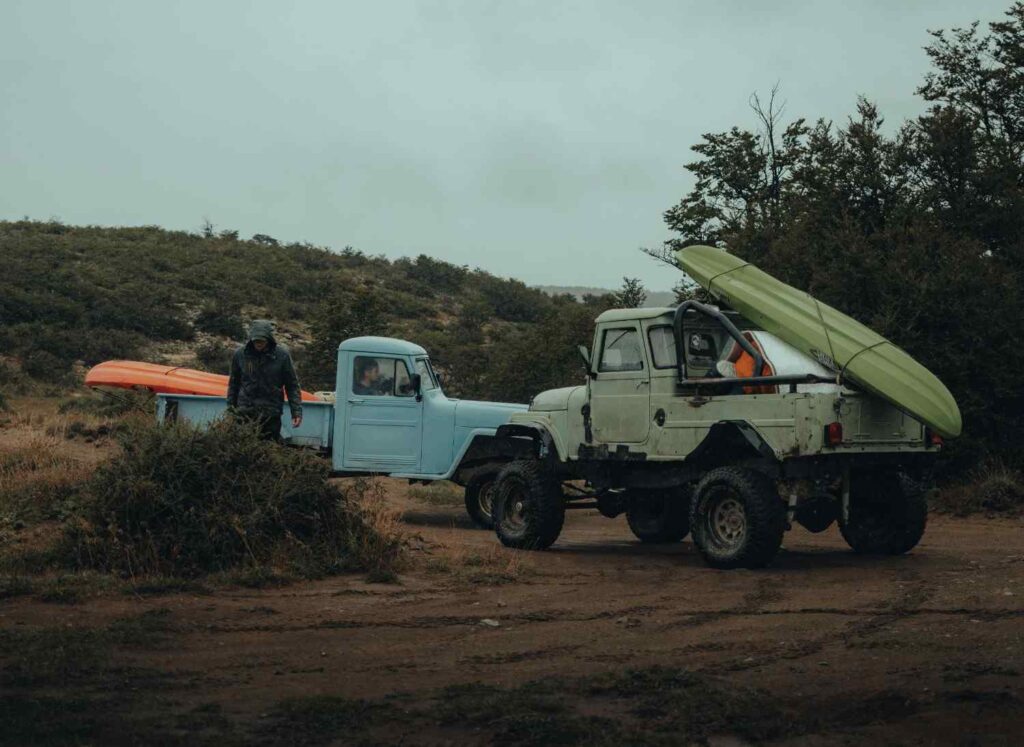
Loading one onto a roof rack alone can become the real problem.
I’ve seen people buy giant stable kayaks and then stop using them because transporting a kayak became exhausting.
That happens constantly.
Inflatable Kayaks With Crazy Weight Capacity
This surprises people too.
Some inflatables handle huge loads shockingly well now.
Especially drop-stitch models.
A few standouts:
- Sea Eagle FastTrack series
- Sea Eagle 385fta
- BOTE inflatables
- Advanced Elements tandem hybrids
The catch?
Inflatables often advertise very high capacity numbers because the tubes provide massive buoyancy.
But once again:
Floating capacity is not the same as comfortable paddling capacity.
Load an inflatable near its maximum and performance drops hard.
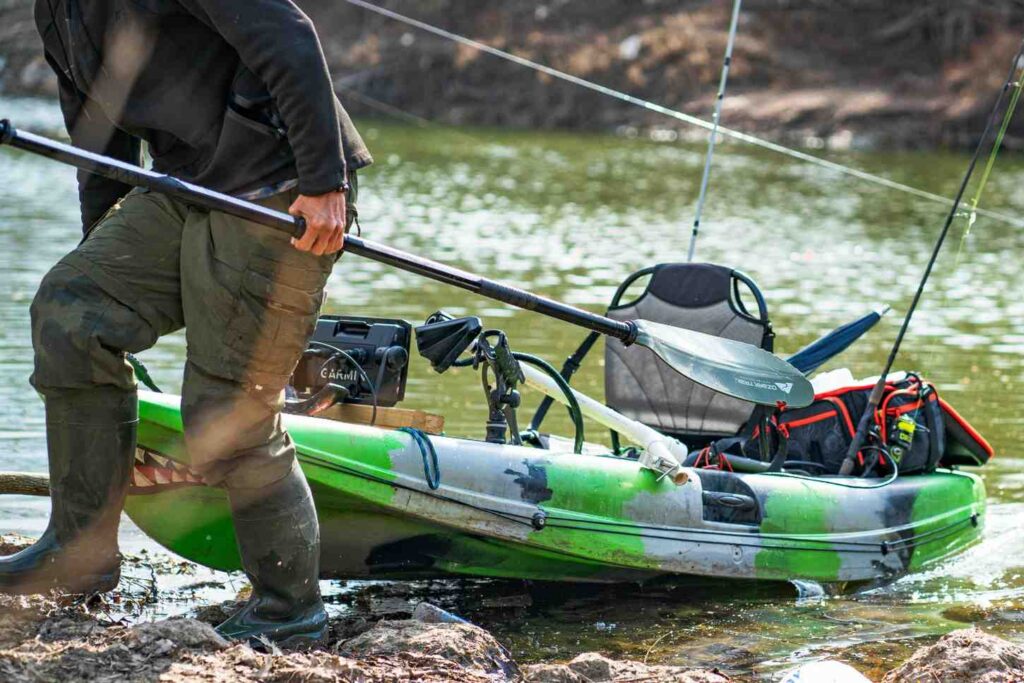
Tracking suffers. Flex increases. Wind becomes annoying.
Still useful though. Especially for RV travelers or apartment storage.
Tandem Kayaks Usually Have the Highest Numbers
Makes sense physically.
More length = more displacement.
Some tandems exceed 700–800 lb ratings.
But there’s an annoying reality nobody warns beginners about:
Tandems paddle beautifully with two people.
They can paddle terribly solo.
Weight distribution becomes awkward fast.
So if you’re buying a tandem purely because of the capacity number, stop and think about how you’ll actually use it.
That mistake gets expensive.
Saltwater Changes the Equation Slightly
Saltwater gives more buoyancy than freshwater.
A kayak floats slightly higher in the ocean.
But not enough to magically fix an overloaded setup.
And offshore conditions punish overloaded kayaks much harder anyway.
Why?
Because:
- Bow slap increases
- Tracking gets worse
- Waves push more water onboard
- Turning response slows
- Fatigue builds faster
A kayak that feels “fine” on a calm lake can feel awful offshore once loaded heavily.
Width vs Speed — The Tradeoff Nobody Escapes
You want maximum capacity?
You’re getting width.
Usually 34–40 inches wide.
Physics wins every time.
That means:
- More drag
- Slower cruising
- Harder long-distance paddling
- More wind resistance
There is no magical ultra-fast 600-pound-capacity kayak.
Doesn’t exist.
The closest compromise models are usually around:
- 12.5–14 feet long
- Moderate rocker
- Tunnel or pontoon-style hulls
- Wider beam with tapered bow entry
That’s why models like the Bonafide P127 and Wilderness Systems ATAK 140 get recommended so often for larger paddlers.
They still move decently despite carrying serious weight.
The Smart Way to Choose Capacity
Forget the marketing numbers for a minute.
Start here instead.
Add up:
- Your body weight
- All gear
- Water and food
- Electronics
- Batteries
- Cooler
- Dog
- Future upgrades
Then add another 30–40% overhead minimum.
That final number is your real target.
Not the sticker number on the kayak.
And if you plan to stand while fishing?
Add even more margin.
Standing stability under load is a completely different game than simple flotation.
What I’d Personally Recommend Based on Use
Big Paddler + Casual Recreation
Look at:
- Crescent Crew
- Wilderness Systems ATAK 140
- Jackson Big Rig HD
You want stability without turning the kayak into a floating dock.
Serious Fishing Setup
Hard to beat:
- Hobie Pro Angler series
- Old Town Sportsman line
- Bonafide P127
These are purpose-built for heavy loadouts.
Camping and Gear Hauling
The NuCanoe Frontier 12 keeps showing up for a reason.
It carries absurd amounts of gear without becoming unpredictable.
Need Portability Too?
Then stop chasing the absolute highest capacity.
A 140-pound kayak sitting in your garage unused helps nobody.
Sometimes a lighter 400–500 lb platform is the smarter move.
One Last Thing Most Buyers Learn Too Late
Manufacturer capacity ratings are not standardized.
Some companies test conservatively. Others push optimistic marketing numbers.
That’s why experienced paddlers pay attention to:
- Real user reviews
- Waterline photos
- Loaded performance videos
- Freeboard under load
- Stability reports from heavier paddlers
The spec sheet only tells part of the story.
Actual hull behavior tells the truth. 😃😃
And once you paddle an overloaded kayak for even ten minutes, you immediately understand the difference.