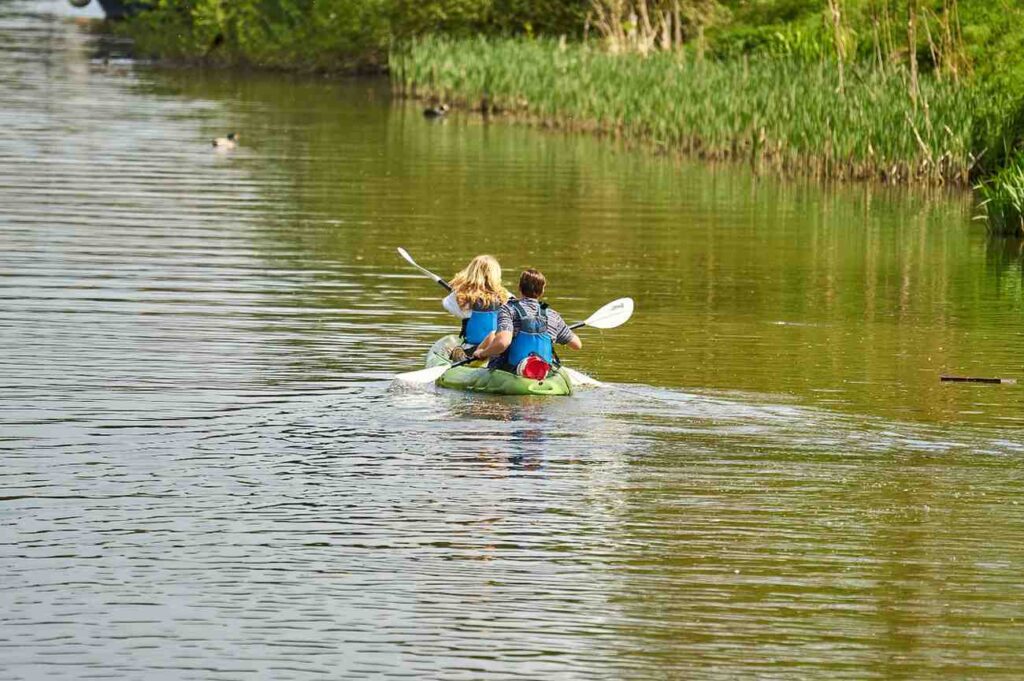
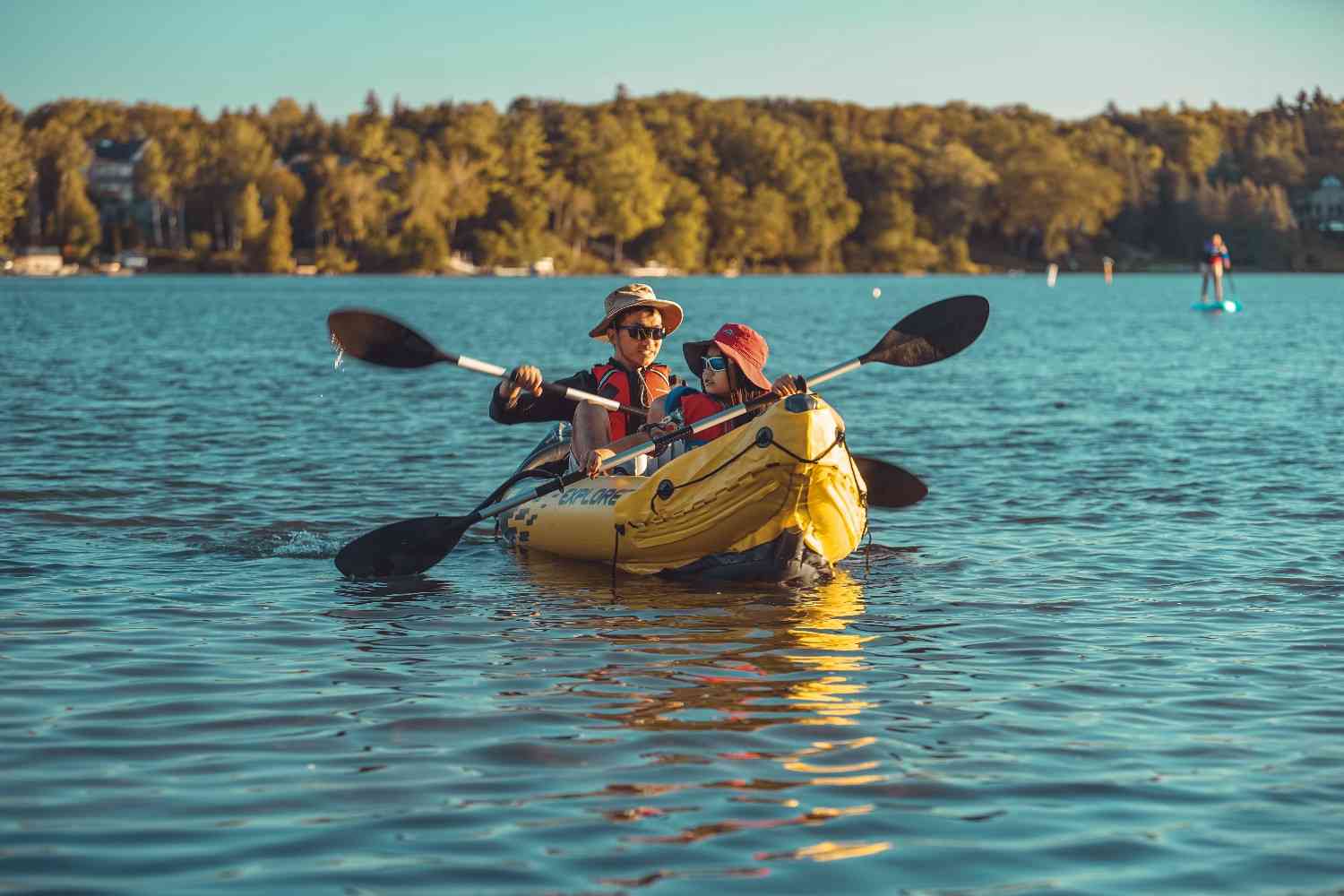
I’ve seen couples laugh so hard they nearly tipped over.
I’ve also seen couples argue over which direction to paddle before they even left shore.
Same river.
Same weather.
Completely different experience.
That’s the funny thing about tandem kayaks.
People think they’re buying a boat.
They’re really buying teamwork.
And if you’re beginners?
The kayak you choose matters more than you think.
Because the wrong tandem kayak feels like dancing with someone who keeps stepping on your feet.
The right one?
Everything clicks.
The boat moves smoothly.
Communication gets easier.
And suddenly you’re talking about the next trip before this one even ends.
The best tandem kayak for beginners isn’t the fastest or the most expensive.
It’s the one that forgives bad timing, uneven paddling, and rookie mistakes.
Trust me.
There will be plenty of those.
The Quick Answer If You Want The Best Tandem Kayaks
| Kayak | Best For | Length | Biggest Strength |
| Ocean Kayak Malibu Two | Best Overall | 12 ft | Stable and beginner friendly |
| Perception Rambler 13.5T | Comfort | 13’6″ | Spacious and forgiving |
| Lifetime Kokanee | Budget Buyers | 10’6″ | Affordable and easy to use |
| Brooklyn Kayak Company TK122 | Fishing Couples | 12’8″ | Tons of storage |
| Advanced Elements Island Voyage 2 | Inflatable Option | 11’2″ | Portable and stable |
If a beginner couple asked me:
“We want something simple that won’t scare us.”
I’d say:
Ocean Kayak Malibu Two.
It’s been around forever for a reason.
Stable.
Predictable.
And surprisingly fun.

The Biggest Mistake Couples Make
One person chooses the kayak.
The other person chooses silence.
Bad combination.
I’ve watched couples buy sleek, narrow tandem kayaks because they looked exciting.
First trip?
- Wobbling constantly
- Bumping paddles together
- Arguing over steering
- Ending early
The kayak wasn’t bad.
It just wasn’t beginner friendly.
A beginner tandem should prioritize stability over speed.
Always.
Because confidence changes everything.
If both paddlers feel secure, they’ll learn quickly.
If one person feels nervous?
Nobody has fun.
Why Tandem Kayaks Feel Weird At First
Here’s the part nobody warns beginners about.
You’re not paddling independently.
Every movement affects another person.
You paddle hard.
They paddle softly.
The kayak drifts.
You stop.
They keep paddling.
The kayak turns.
At first?
It’s messy.
And honestly…
That’s normal.
What Beginners Usually Experience
- Paddles hitting each other
- Uneven rhythm
- Zigzagging
- Small disagreements
- Laughing at mistakes
After an hour?
Things improve.
After a few trips?
You stop thinking about it.
That’s when tandem kayaking becomes addictive.
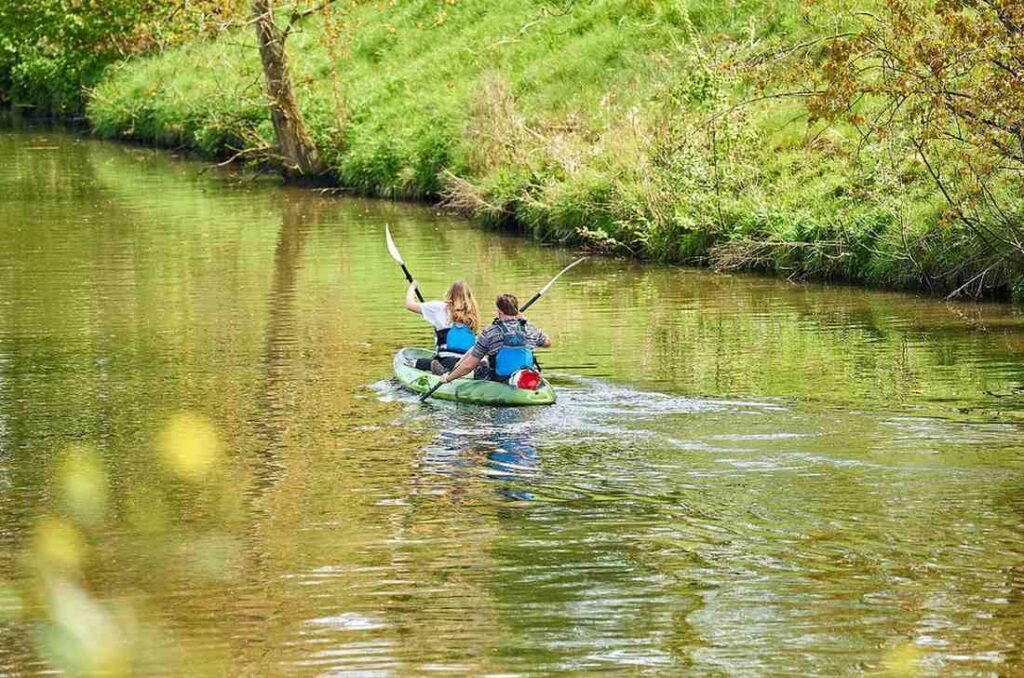
Ocean Kayak Malibu Two: The Safe Bet
This kayak has introduced thousands of people to paddling.
And I understand why.
It feels stable immediately.
No drama.
No surprises.
You climb aboard and think:
“Okay. I can do this.”
That’s valuable.
Especially for beginners.
Why Couples Love It
- Wide and stable hull
- Comfortable seating
- Easy to re-enter
- Handles lakes and calm coastal water
- Can even paddle solo
I’ve seen couples keep this kayak for ten years.
Not because it’s perfect.
Because it keeps delivering exactly what they wanted:
Fun without stress.
Weight Capacity Matters More Than You Think
This is the section people skip.
And regret later.
Manufacturers advertise:
“Maximum capacity: 500 pounds.”
Sounds great.
But here’s what I tell people.
Never paddle near the maximum weight limit.
Because:
- Stability decreases
- Water sits lower in the hull
- Speed drops
- Tracking gets worse
Aim for using about 70-80% of the rated capacity.If carrying extra gear or paddling with a partner, look for a tandem model with the highest weight capacity you can reasonably afford.
That leaves room for:
- Coolers
- Dry bags
- Fishing gear
- Unexpected gear additions
The kayak feels happier.
You’ll feel happier too.
Sit-On-Top Vs Sit-Inside For Couples
This debate comes up constantly.
My answer?
For beginners:
Sit-on-top wins.
Sit-On-Top
Pros:
- Easier to get in and out
- More stable
- Better for warm weather
- Easier after a capsize
Getting back on the water is often much easier after a capsize, especially if you’ve already practiced getting into a kayak safely and efficiently in different conditions.
Cons:
- You’ll get wetter
- Less protection from wind
Sit-Inside
Pros:
- Drier ride
- Better cold-weather protection
- More efficient
Cons:
- Harder to re-enter
- Can feel cramped
- Less beginner friendly
I’ve seen nervous beginners relax instantly on a sit-on-top.
That’s hard to ignore.
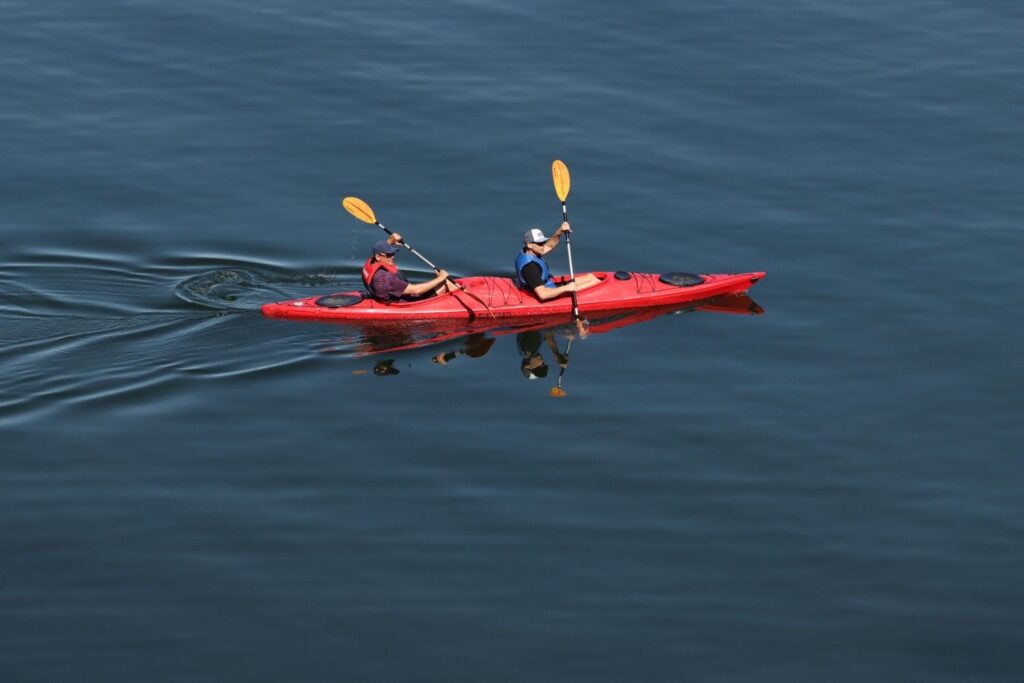
Team A Vs Team B: Same Lake, Different Day
Team A
Buys:
- Narrow kayak
- Focuses on speed
- Ignores weight limits
- Never practices together
First trip:
- Constant wobbling
- Poor steering
- Frustration
- Ends early
Team B
Chooses:
- Stable hull
- Comfortable seats
- Plenty of capacity
- Beginner-friendly design
First trip:
- Laughs at mistakes
- Learns quickly
- Gains confidence
- Starts planning weekend trips
The difference isn’t skill.
It’s choosing a kayak that matches reality.
Beginners don’t need perfection.
They need forgiveness.
Communication Is The Secret Feature Nobody Talks About
The front paddler sees the scenery.
The rear paddler usually steers.
Problems happen when neither person talks.
Simple phrases make a huge difference:
- “Left turn.”
- “Slow down.”
- “Big wave.”
- “Take a break.”
That’s it.
No complicated system.
No military commands.
I’ve watched couples transform their experience just by talking more.
Funny enough…
The kayaking lessons sometimes improve things off the water too.
I’ve heard that more than once.
The Weirdest Tandem Experience I’ve Ever Seen
A couple rented a tandem kayak.
The husband insisted he should steer.
The wife agreed.
Ten minutes later?
He was paddling backward.
Completely convinced they were going straight.
She quietly corrected him.
He ignored her.
Eventually she stopped paddling entirely.
The kayak spun in circles.
He finally looked back.
Realized what was happening.
They both burst out laughing.
By the end of the day?
Best trip ever.
That’s tandem kayaking.
You make mistakes.
You laugh.
You improve.
The kayak becomes part of the story.
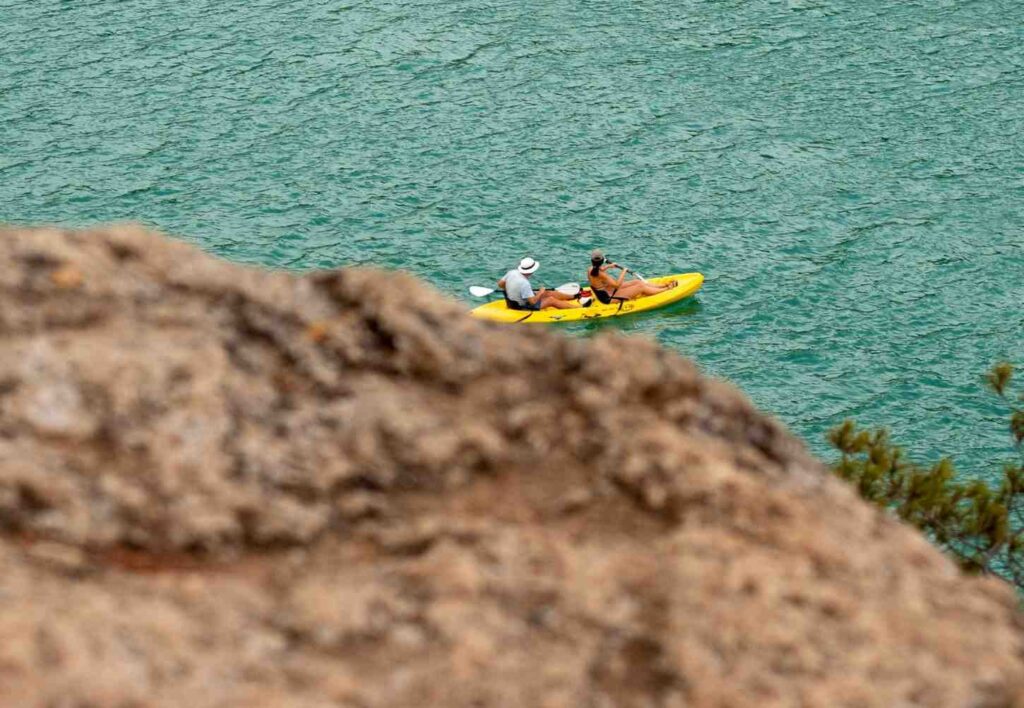
Wind Changes The Entire Experience
This deserves attention.
Because tandem kayaks are long.
Long boats catch wind.
Even moderate wind can:
- Push the bow sideways
- Slow progress
- Tire beginners quickly
- Make steering harder
Here’s what experienced couples do:
- Paddle early mornings
- Stay near shore
- Check weather before launching
- Paddle into the wind first
- Save energy for the return trip
Weather can change quickly on open water, especially if you’re just starting out. That’s why many beginners look for the best sit-on-top kayak for ocean beginners, as these models are designed to offer better stability and confidence in changing conditions.
This is the part everyone misses.
The paddle home is almost always harder.
Plan for that.
Not just the fun part.
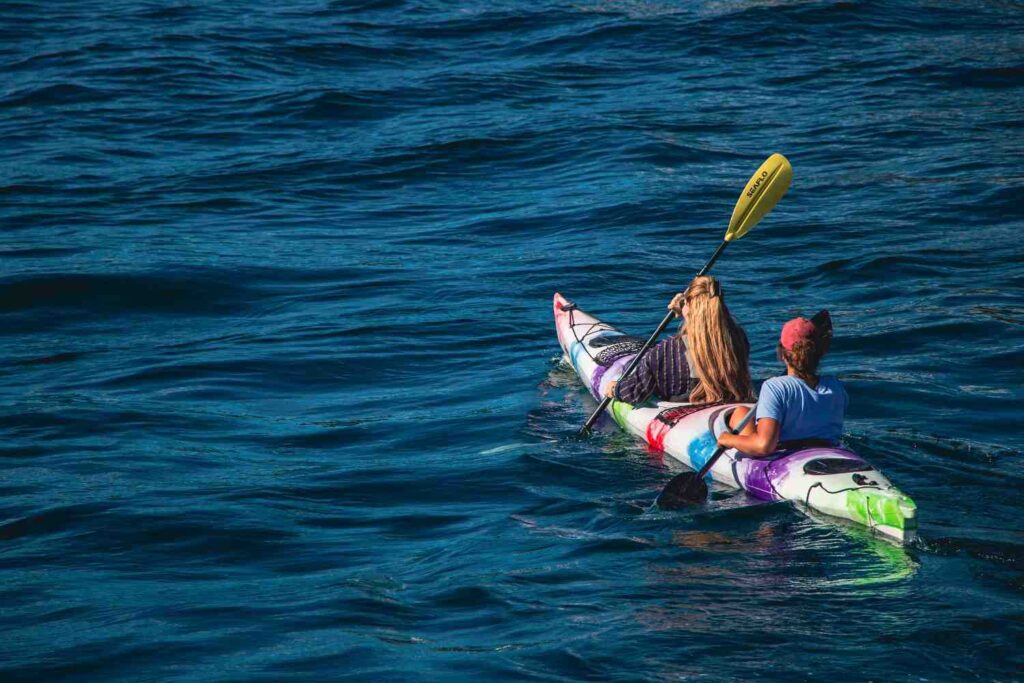
Common Mistakes Beginner Couples Make
Avoid these and you’ll learn faster.
- Buying for speed
- Ignoring weight limits
- Choosing narrow kayaks
- Paddling without communication
- Going out in windy conditions
- Sitting incorrectly for weight balance
- Expecting perfection on day one
Weight limits affect more than just safety—they influence stability, performance, and comfort on the water. It’s also worth thinking ahead about how to transport a kayak, since heavier or larger models can be much harder to load and carry without the right setup.
And here’s another mistake.
People compare themselves to experienced paddlers.
Don’t.
Everyone looks awkward at first.
Everyone.
Frequently Asked Questions
What’s the best tandem kayak for beginner couples?
For most beginners:
Ocean Kayak Malibu Two.
Stable, forgiving, and easy to learn.
Are tandem kayaks harder to paddle?
Initially, yes.
But after a few trips, coordination becomes natural.
Most couples improve quickly.
Is a tandem kayak faster than two single kayaks?
Sometimes.
If both paddlers work together.
Poor coordination can actually make it slower.
Can one person paddle a tandem kayak?
Many models allow it.
But they’re heavier and less agile than solo kayaks.
Should beginners buy inflatable tandem kayaks?
If storage space is limited, absolutely.
Modern inflatable kayaks are far more durable than people expect.In fact, today’s inflatable kayaks are built with reinforced materials and improved designs that make them a reliable option for recreational paddlers and beginners alike.
Final Thoughts
A tandem kayak teaches patience.
It teaches communication.
It teaches humility too.
You can’t force rhythm.
You can’t ignore your partner.
And you definitely can’t pretend coordination happens automatically.
But that’s the beauty of it.
Trip after trip, things get easier.
The arguments become jokes.
The awkward moments become stories.
One day you’ll realize something.
You aren’t thinking about paddle strokes anymore.
You aren’t worrying about balance.
You’re just enjoying the water together.
And honestly?
That’s what most couples wanted from the beginning.
Not the perfect kayak.
Not the fastest boat.
Just a reason to spend more time side by side.
A good tandem kayak gives you exactly that.