Quick Answer
If you’re trying to decide between an ocean kayak and a river kayak, here’s the answer I’d give if we were standing beside the water instead of scrolling through product pages.
Choose an ocean kayak if you’ll spend most of your time on large lakes, coastal waters, bays, or open water where you’ll paddle longer distances and deal with wind, waves, and changing conditions.
Choose a river kayak if your adventures involve winding rivers, narrow channels, shallow water, or technical sections where quick turns matter more than speed.
Here’s the biggest mistake people make:
They buy a kayak based on where they want to paddle once a year instead of where they’ll paddle fifty times a year.
That’s usually an expensive lesson.
Twenty-Five Years Taught Me One Thing
Early in my career, I watched people ask the exact same question over and over.
“Which kayak is better?”
I used to answer by comparing features.
Length.
Width.
Weight.
Storage.
Those things matter.
But they aren’t what usually decides whether someone loves or hates their kayak.
One afternoon changed the way I answered forever.
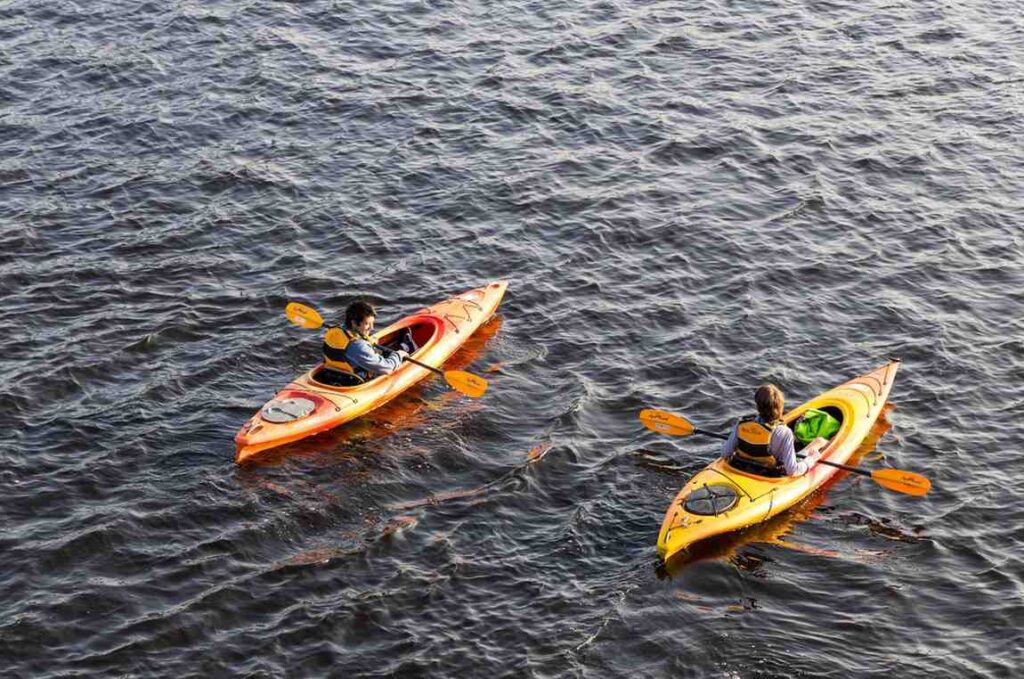
Two friends launched together.
One brought a long touring-style ocean kayak.
The other had a shorter river kayak.
The plan sounded simple.
Paddle five miles across a windy lake.
The ocean kayak glided effortlessly.
The river kayak wasn’t broken.
It wasn’t poorly built.
It simply wasn’t designed for that job.
A week later, those same paddlers switched locations and floated down a narrow river full of sharp bends and fallen trees.
This time the river kayak looked effortless.
The long ocean kayak suddenly felt awkward, slow to turn, and frustrating.
That’s when it clicked.
The water decides which kayak is better—not the manufacturer.
Team A vs. Team B
Every paddler eventually falls into one of these groups.
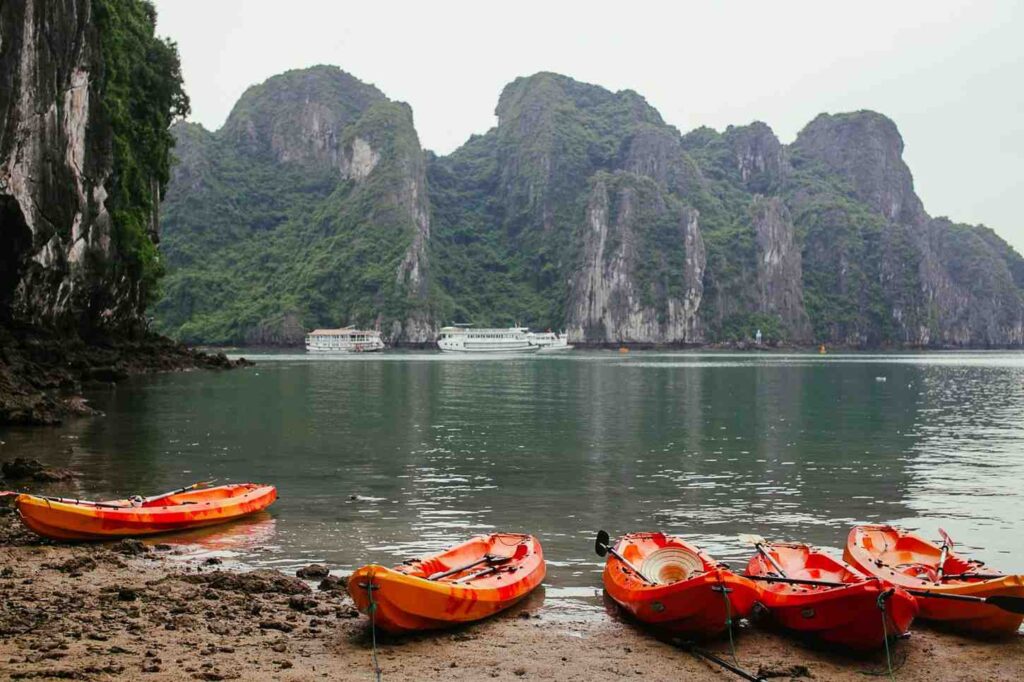
Team A: Ocean Kayak Paddlers
These paddlers usually enjoy covering distance.
They’re happy spending several hours on open water.
Their trips often include:
- Coastal bays
- Large lakes
- Ocean shorelines
- Island hopping
- Long scenic tours
- Overnight camping trips
Efficiency matters.
Tracking matters.
Handling waves matters.
Team B: River Kayak Paddlers
River paddlers think differently.
The water keeps changing.
Every bend hides something new.
Their adventures often involve:
- Narrow rivers
- Slow creeks
- Rocky channels
- Small rapids
- Fallen trees
- Tight turns
Quick handling becomes much more important than outright speed.
Neither group is right.
They’re solving different problems.
The Biggest Difference Starts Under the Water
Most buyers look at the deck.
Experienced paddlers look underneath.
That’s where the real story lives.
Hull design changes almost everything.
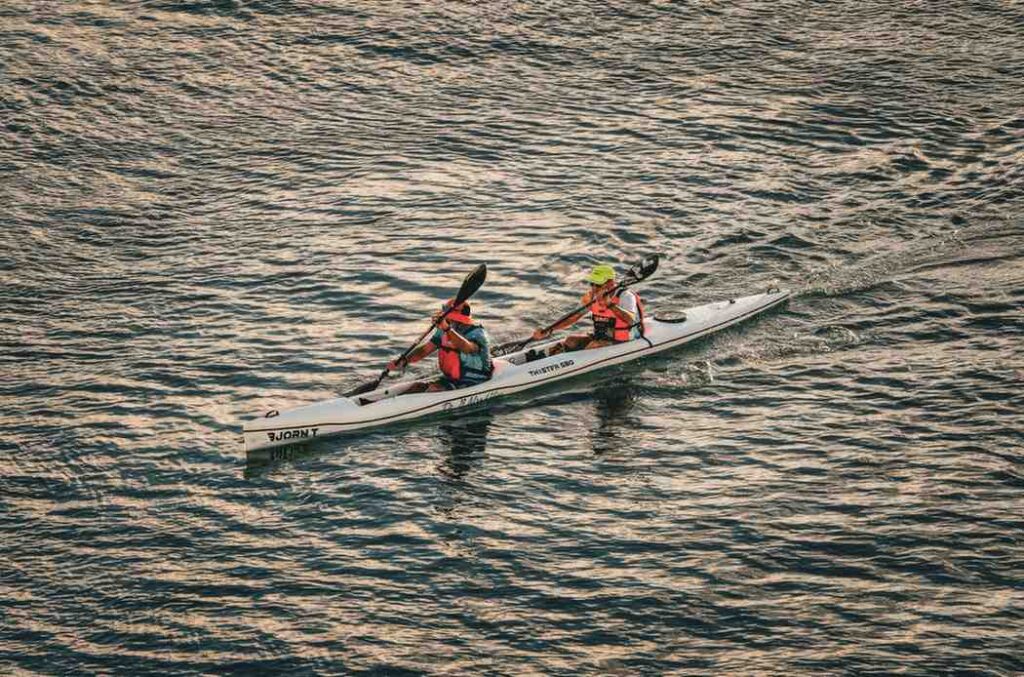
An ocean kayak usually has a longer, narrower hull.
That shape helps it:
- Track straighter.
- Paddle faster.
- Handle waves more efficiently.
- Maintain speed with less effort.
A river kayak takes the opposite approach.
It’s typically shorter with more rocker—that upward curve at the bow and stern.
Why?
Because rivers rarely reward straight-line speed.
They reward quick reactions.
Imagine driving a limousine through downtown traffic.
Now imagine driving a compact SUV.
Neither vehicle is better.
Each one simply belongs in a different place.
Kayaks work exactly the same way.
Side-by-Side Comparison
| Feature | Ocean Kayak | River Kayak |
| Best Water Type | Open water, bays, coastline | Rivers, creeks, streams |
| Tracking | Excellent | Good |
| Turning | Good | Excellent |
| Speed | Excellent | Good |
| Stability | Very Good | Very Good |
| Wind Performance | Excellent | Fair |
| Shallow Water | Good | Excellent |
| Long Trips | Excellent | Moderate |
The table gives you the overview.
The real differences appear once you’re several miles from the launch.
Speed Isn’t About Racing
Whenever someone hears “faster kayak,” they imagine racing.
That’s rarely what matters.
Speed affects energy.
Suppose your favorite fishing spot sits three miles from the launch.
An efficient ocean kayak reaches it with fewer paddle strokes.
Less effort getting there means more energy for fishing, exploring, or simply enjoying the day. Once you’re on the water, applying a few freshwater kayak fishing tips can help you spend less time searching and more time catching fish.
A river kayak isn’t trying to win that race.
It’s built for something completely different.
Its shorter hull sacrifices efficiency so it can change direction almost instantly.
On winding rivers, that’s exactly what you want.
Turning Can Save Your Day
One lesson every river paddler eventually learns:
The obstacle you don’t expect is usually the one that causes trouble.
A fallen tree around a blind corner.
A large rock hidden just beneath the surface.
A fast current pushing you toward the outside of a bend.
That’s where a river kayak earns its reputation.
With a couple of paddle strokes and a slight lean, it changes direction quickly.
A longer ocean kayak needs more room to make the same adjustment.
Neither response is wrong.
One kayak is thinking about covering miles.
The other is thinking about surviving the next ten seconds.
Stability Feels Different Than Most People Expect
People often ask which kayak feels more stable.
The answer surprises them.
Both can be very stable.
They simply create confidence in different ways.
An ocean kayak feels planted while moving.
Once it’s gliding across open water, it settles into a comfortable rhythm.
A river kayak inspires confidence through agility.
Instead of resisting every movement, it responds quickly when you lean or steer around obstacles.
That’s why experienced paddlers often describe them differently.
One feels smooth.
The other feels lively.
Neither feeling is better.
It’s all about where you’re paddling.
The Story I Still Tell Beginners
Several years ago, two brothers rented kayaks during a family vacation.
One chose a long touring kayak because he liked how sleek it looked.
The other picked a shorter river kayak without giving it much thought.
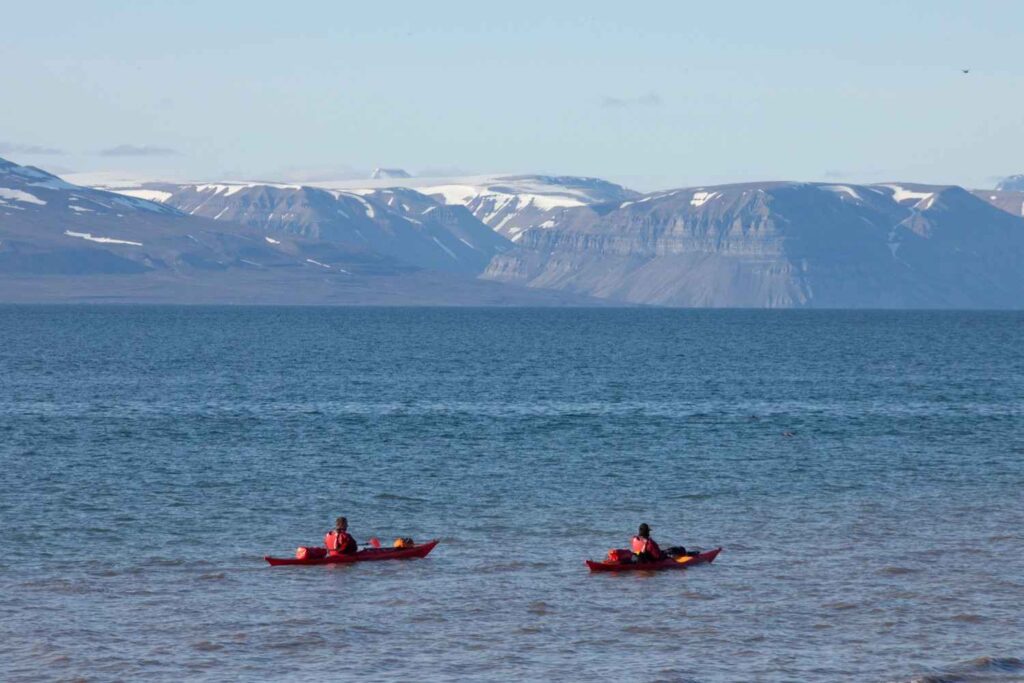
The next morning they paddled along a calm coastal shoreline.
The touring kayak moved effortlessly.
Every paddle stroke seemed to carry it farther.
A few days later they visited a twisting river with submerged logs and tight bends.
Everything changed.
The brother in the river kayak slipped through narrow gaps with ease.
The touring kayak constantly needed wide turns and careful planning.
Neither kayak had suddenly become worse.
They were simply being asked to do jobs they weren’t designed for.
By the end of the trip, both brothers understood something that online reviews rarely explain.
The best kayak isn’t the one with the best specifications. It’s the one that matches the water waiting in front of you.
Safety Isn’t the Same on the Ocean and the River
People sometimes ask which one is safer.
That’s like asking whether driving on a highway is safer than driving on a mountain road.
The risks are different.
An ocean kayak deals with:
- Wind that can build much faster than expected.
- Waves from boats and changing tides.
- Long distances from shore.
- Cold water that can quickly drain body heat.
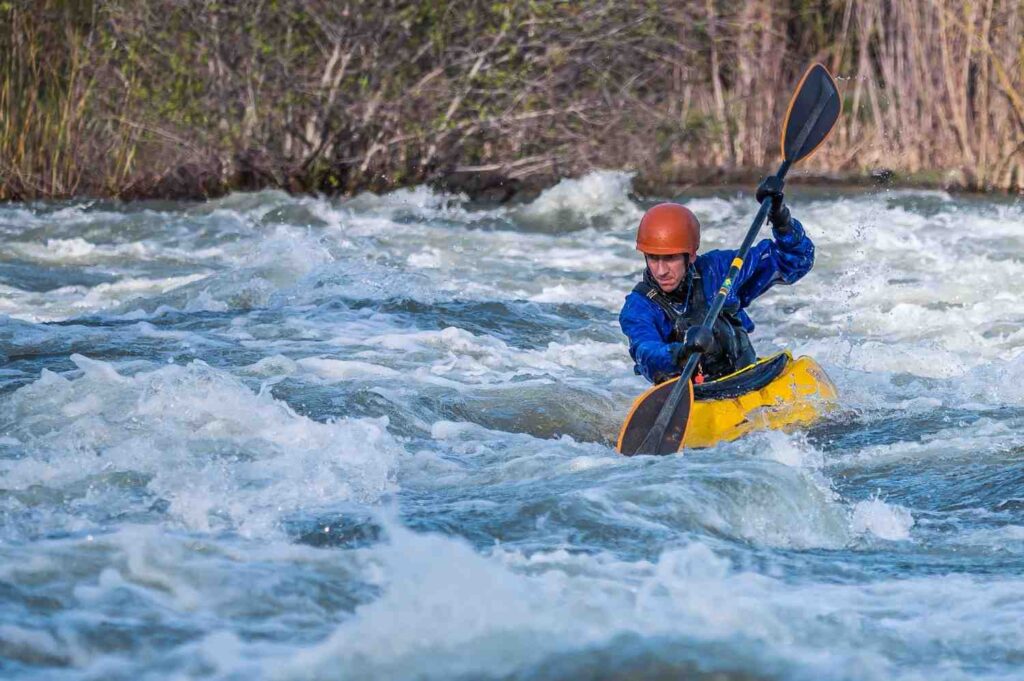
A river kayak faces another set of challenges:
- Fast current.
- Rocks hidden just below the surface.
- Fallen trees and strainers.
- Narrow channels with limited room to recover from mistakes.
Neither environment forgives poor preparation.
The safest paddlers aren’t the ones with the most expensive kayaks. They’re the ones who take the time to learn how to kayak safely in the ocean and respect the water they’re paddling.
Storage Matters More on Long Trips
A short afternoon paddle doesn’t require much gear.
A full day—or several days—on the water changes everything.
That’s where ocean kayaks usually have a clear advantage.
Many include:
- Large sealed storage compartments
- Front and rear deck bungees
- Dry hatch access
- More room for camping equipment, food, and extra clothing
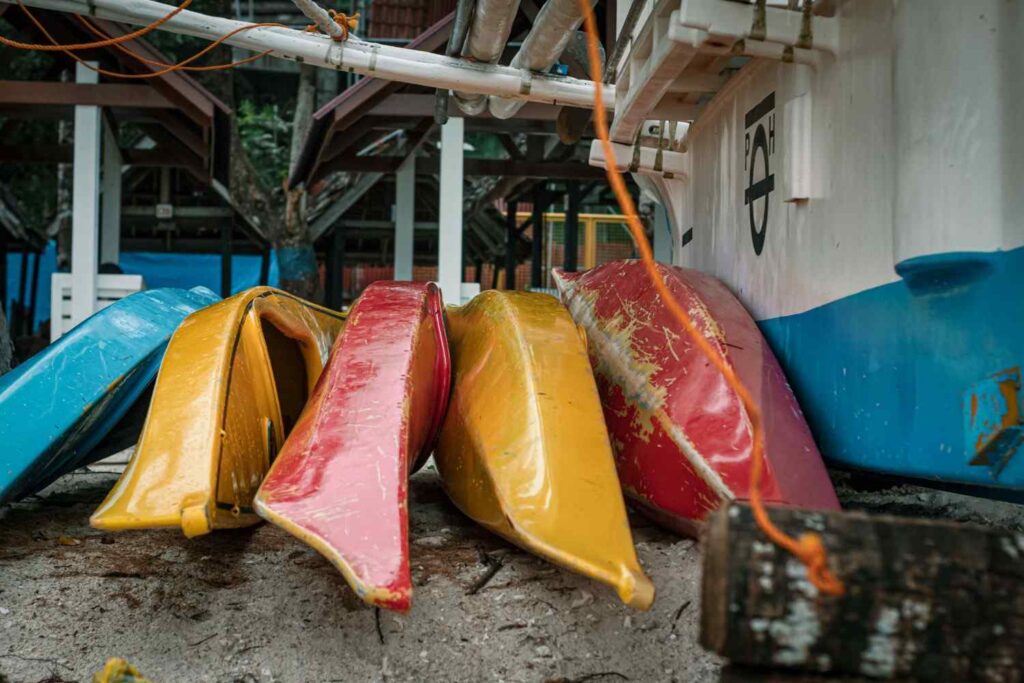
River kayaks usually keep storage simple.
That’s intentional.
A compact design makes the kayak easier to turn through narrow channels and technical water. Keeping your gear secured in the best kayak dry bag also prevents essential items from shifting around or getting wet while you navigate tighter sections.
If you’re carrying only lunch, a dry bag, and a first-aid kit, you’ll probably have all the space you need.
Wind Changes Everything
Here’s something beginners often underestimate.
A calm morning doesn’t guarantee a calm afternoon.
On open water, wind becomes one of your biggest challenges.
An ocean kayak’s longer hull helps it:
- Hold a straighter course.
- Cross open water more efficiently.
- Handle small waves with greater confidence.
A shorter river kayak catches more wind relative to its length and often needs more corrective paddle strokes.
That isn’t a flaw.
It’s simply designed for rivers where sharp turns matter more than covering miles efficiently.
Transportation Is Part of the Decision
Buying the perfect kayak doesn’t help much if getting it to the water becomes a chore.
Ocean kayaks are generally longer.
That means:
- More roof rack space.
- Slightly more effort to store in a garage.
- Greater care when loading and unloading.
River kayaks are usually shorter and easier to manage.
For solo paddlers, that convenience often means getting on the water more often.
I’ve met plenty of people who bought a large touring kayak, then gradually stopped using it because loading it alone became frustrating.
The best kayak is the one you’ll actually take out every weekend.Choosing a model that’s easy to own includes knowing how to transport a kayak, because the simpler it is to load and carry, the more often you’ll be motivated to get out on the water.
Which One Fits Your Style?
If someone asked me for advice in a kayak shop, here’s exactly what I’d say.
Choose an Ocean Kayak if…
- You paddle large lakes, bays, or coastal waters most of the time.
- You enjoy long-distance trips.
- Efficiency matters more than quick turns.
- Camping or touring is part of your plans.
- Wind and waves are common where you paddle.
Choose a River Kayak if…
- Most trips happen on rivers and creeks.
- You enjoy exploring narrow waterways.
- Maneuverability is more important than speed.
- You’ll encounter rocks, bends, and changing current.
- Short day trips make up most of your paddling.
Notice something?
This isn’t really about skill level.
It’s about matching the kayak to the environment.
The Lesson One Family Learned the Hard Way
A family I met rented kayaks for a weekend vacation.
They planned one day on a peaceful lake and another on a winding river.
To save time, they rented the same style of kayak for both trips.
The lake day went well enough.
The next day on the river was completely different.
The longer touring kayaks struggled around tight bends.
Several times they had to stop and back-paddle just to avoid fallen trees.
At the end of the trip, the father laughed and said, “Now I understand why rental places ask where you’re going before handing you a kayak.”
Exactly.
They’re not being nosy.
They’re trying to match the tool to the job.
Frequently Asked Questions
1. Can I use an ocean kayak on a river?
Yes, on calm and wider rivers. It becomes less practical on narrow or technical rivers with sharp bends and obstacles.
2. Can a river kayak be used in the ocean?
It can handle protected bays or calm coastal areas, but it’s generally not designed for open ocean conditions, large waves, or long-distance paddling.
3. Which kayak is faster?
An ocean kayak is usually faster because its longer hull glides more efficiently through the water.
4. Which kayak turns more easily?
A river kayak. Its shorter length and increased rocker make quick turns much easier.
5. Which is better for beginners?
That depends on where you’ll paddle. Beginners should choose the kayak that matches their most common paddling environment rather than focusing on the brand or style alone.
6. Is an ocean kayak more stable?
Many ocean kayaks feel very stable while moving across open water. River kayaks often feel more responsive and agile in changing currents.
7. Which kayak is better for fishing?
For large lakes and coastal fishing, many anglers prefer ocean-style kayaks because of their tracking and storage. Smaller rivers often favor shorter, more maneuverable kayaks.
8. Which kayak carries more gear?
Ocean kayaks generally provide more storage space for camping equipment, food, and extra clothing.
9. Do I need different safety equipment?
Both require a properly fitted PFD. Depending on where you paddle, additional gear such as a helmet, bilge pump, paddle float, whistle, dry bag, or communication device may also be appropriate.
10. If I can only buy one kayak, which should I choose?
Buy the kayak that matches where you’ll paddle 80–90% of the time. That’s the choice you’ll appreciate every time you launch, not just on the occasional special trip.
Final Thoughts
After watching paddlers make this decision for years, one thing has stayed remarkably consistent.
Nobody regrets buying a kayak that suits their local water.
People regret buying one that looked impressive in the showroom but never felt right once it touched the water.
If your adventures involve open water, long paddles, and changing weather, an ocean kayak is built to make those miles feel easier.
If your weekends revolve around rivers, creeks, sharp turns, and technical water, a river kayak will reward you with agility and control.
Forget which kayak looks faster.
Forget which one has more online reviews.
Look at the water you’ll paddle most often.If rivers are part of your plan, learning how to kayak in a river for beginners will help you choose the right kayak and develop the skills needed for moving water.
That’s where your answer has been waiting all along.