

Quick Answer
If you want the short version, here it is.
Choose a Pelican kayak if you’re buying your first kayak, sticking to a budget, and spending most of your time on calm lakes, ponds, or slow-moving rivers. They’re affordable, lightweight, and surprisingly capable for casual paddling and occasional fishing.
Choose a Perception kayak if kayaking is becoming more than a weekend hobby. They generally offer better tracking, higher-quality outfitting, more comfortable seating, and hull designs that perform noticeably better once you’re on the water for several hours.
Neither brand is “better” for everyone.
The better kayak is the one that matches how you’ll actually use it—not the one with the bigger price tag.
I’ve Seen This Decision Cost People Hundreds of Dollars
One conversation sticks with me.
A customer walked into the shop convinced he needed the most expensive fishing kayak we had. He’d watched every review online and figured spending more automatically meant catching more fish.
So I asked one question.
“Where do you usually paddle?”
His answer?
“A small lake about ten minutes from my house.”
No rough water.
No long-distance trips.
No overnight camping.
Just quiet evening paddles after work and the occasional bass fishing trip on Saturday morning.
He almost walked out with a kayak that cost nearly twice what he actually needed.
Instead, we talked through how he planned to use it.
Two years later he came back—not because the kayak failed—but because he’d fallen in love with kayaking and was finally ready to upgrade.
That’s the mistake I see most often.
People buy for the paddler they hope to become instead of the paddler they are today.
Team A vs. Team B
Think of these two brands as serving different types of paddlers.
Team A: Pelican Owners
Pelican owners usually want kayaking to be simple.
They don’t want to spend weeks researching hull designs.
They’re looking for something they can lift onto a car, launch without help, and enjoy without worrying about every scratch.
Their weekends look something like this:
- Fishing a local pond
- Family outings on calm lakes
- Short recreational paddles
- Exploring quiet rivers
- Relaxing more than training

They value convenience.
Team B: Perception Owners
Perception owners often paddle farther.
Many spend entire days on the water.
Some fish tournaments.
Others enjoy exploring larger lakes where wind and boat wakes become part of the day.
They care about things newer paddlers rarely notice at first:
- Better seat support after four hours
- Straighter tracking in windy conditions
- Cleaner paddle strokes
- More efficient hull designs
- Better accessory compatibility

It’s less about prestige.
It’s about performance once experience starts growing.
The Biggest Difference Isn’t the Plastic
People love comparing materials.
That’s rarely what separates these brands.
Both build kayaks using durable polyethylene that can handle years of normal use.
The real difference is how that plastic is shaped.
Hull design changes almost everything.
Think of two pickup trucks with the exact same engine.
One is built for highways.
The other is built for rocky trails.
Same material.
Completely different driving experience.
Kayaks work the same way.
Perception spends more attention on hull performance.
Pelican focuses on making kayaking approachable and affordable.
Neither philosophy is wrong.
They’re simply solving different problems.
Side-by-Side Comparison
| Feature | Pelican Kayak | Perception Kayak |
| Best for Beginners | Excellent | Very Good |
| Long-Distance Comfort | Good | Excellent |
| Stability | Very Good | Excellent |
| Tracking | Good | Excellent |
| Weight | Excellent (Lightweight) | Good |
| Fishing Features | Very Good | Excellent |
| Price | Budget Friendly | Mid to Premium |
| Upgrade Potential | Good | Excellent |
Numbers never tell the whole story.
But they do help narrow the choice.
The Seat Becomes the Boss After Three Hours
Here’s something almost nobody talks about in online reviews.
Every kayak seat feels comfortable in the parking lot.
The truth shows up about three hours later.
A typical Pelican seat gets the job done.
You’ll stay comfortable during shorter trips, especially if you’re paddling for an hour or two before heading home.
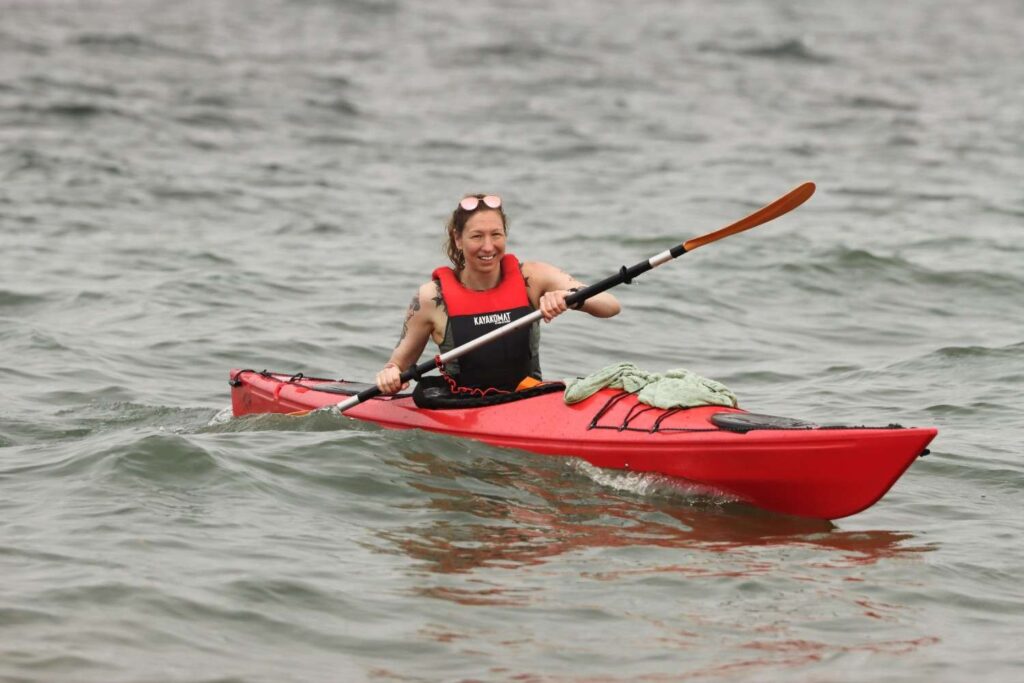
A Perception seat usually offers:
- Better lower back support
- More adjustment options
- Higher seating comfort on fishing models
- Less fatigue during long paddles
That might not sound exciting.
Until you’re halfway across a lake wondering why your back suddenly feels twenty years older.
Comfort isn’t a luxury once trips start getting longer. It’s part of performance, which is why investing in the best kayak seat cushion for back pain can make a noticeable difference in both endurance and enjoyment on the water.
Tracking: Why One Kayak Feels Like It Has a Mind of Its Own
Imagine pushing an empty shopping cart across a parking lot.
Some carts roll perfectly straight.
Others constantly drift left or right.
That’s tracking.
A kayak with good tracking naturally holds its course.
A kayak with weaker tracking asks you to make more correction strokes.
Those extra paddle strokes don’t seem like much.
After several miles?
They become tiring.
Most Pelican recreational kayaks track well enough for casual outings.
Perception kayaks generally hold a straighter line, especially when crossing open water or paddling into a headwind.
That’s one reason experienced paddlers often notice the difference immediately.

Fishing Features: Small Details That Matter
If fishing is the main reason you’re buying a kayak, pay attention to more than rod holders.
Look at how the entire deck is designed.
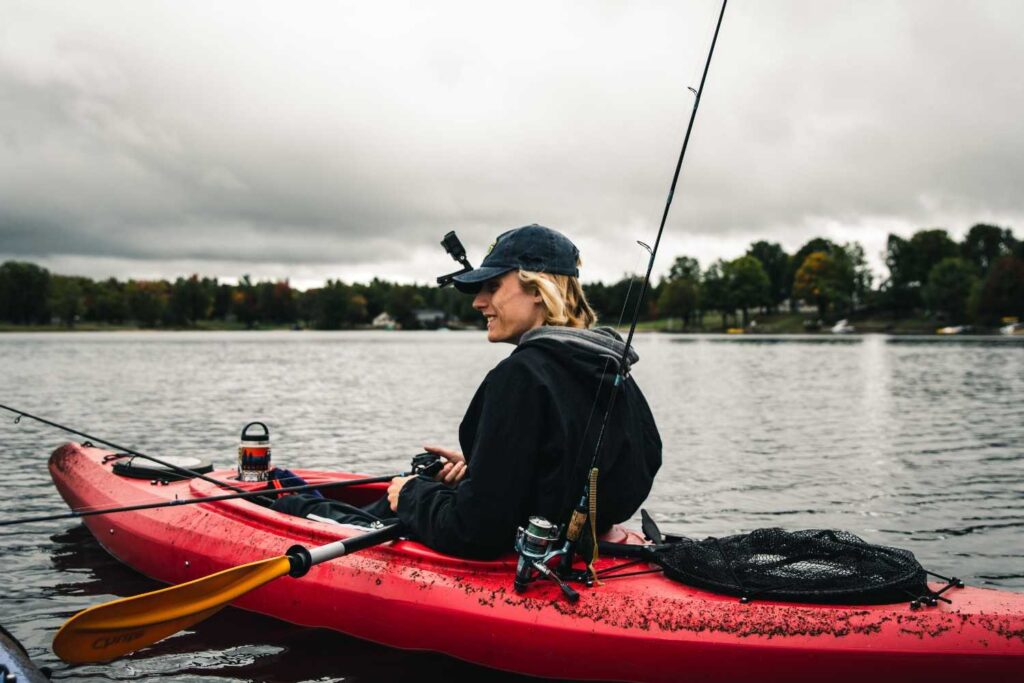
Many Perception fishing models include thoughtful features like:
- Adjustable gear tracks
- Better tackle organization
- More secure standing platforms
- Improved seat positioning
- Easier electronics installation
Pelican fishing kayaks still offer excellent value.
For many weekend anglers, they provide everything needed to enjoy productive days on the water without stretching the budget.
The question isn’t whether one can catch fish.The real question is which is the best kayak for fishing based on the type of water you fish, your gear, and the way you like to spend time on the water.
Both absolutely can.
The real question is whether you’ll appreciate those extra refinements after spending dozens of trips on the water.
Does One Brand Last Longer?
This question comes up almost every time someone is deciding between these two brands.
Here’s the honest answer.
Both can last for many years if you treat them properly.
I’ve seen Pelican kayaks that were still being paddled after nearly a decade. I’ve also seen expensive kayaks from premium brands destroyed in a single season because they were dragged across parking lots, left baking in the sun year-round, or stored incorrectly.
The brand isn’t usually what determines lifespan.
The owner is.
A few habits make a huge difference:
- Store the kayak out of direct sunlight whenever possible.
- Rinse it after paddling in saltwater.
- Avoid dragging it across concrete or rocks.
- Check seat hardware and handles once or twice a season.
- Use proper roof rack support during transport.
Taking the time to learn how to store a kayak properly helps protect it from UV damage, prevents unnecessary wear, and keeps it in good condition for many seasons of paddling.
Take care of either brand, and it’ll reward you with years of reliable use.
Stability: Confidence Changes Everything
People often ask which kayak is harder to tip over.
That’s understandable.
Nobody wants their first fishing trip to end with wet clothes and floating tackle boxes.
Here’s what I’ve noticed.
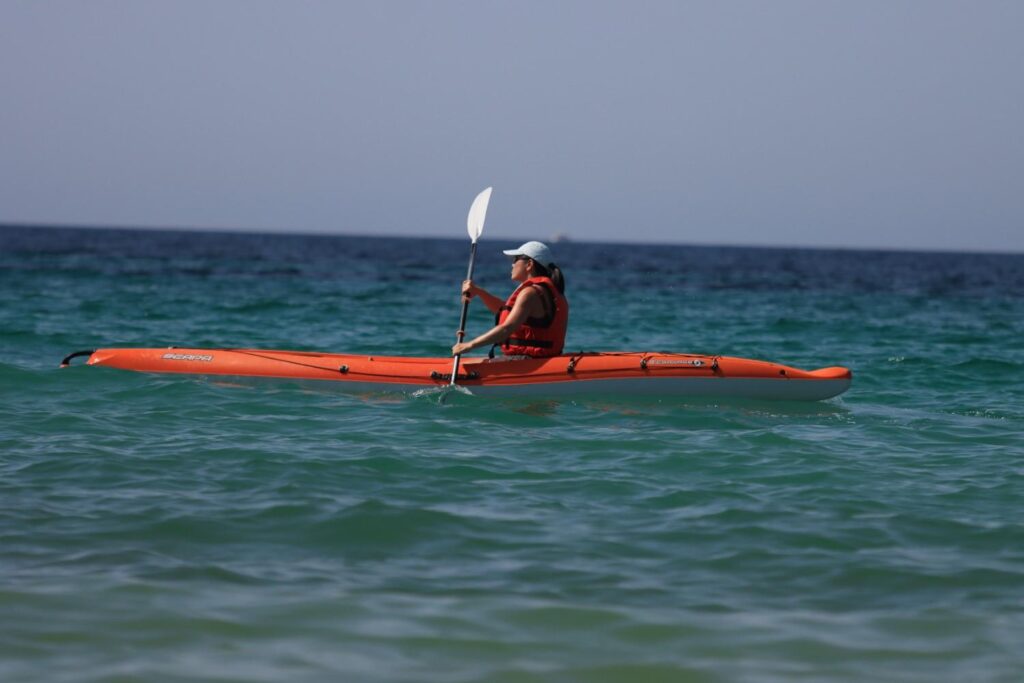
Most Pelican recreational kayaks feel very reassuring on calm water. Their wider designs give beginners immediate confidence.
Perception kayaks are just as stable in many models, but the stability often feels more refined. Instead of simply being wide, the hull is designed to stay predictable when you lean into turns, reach for gear, or paddle through boat wakes.
That’s something newer paddlers may not appreciate immediately.
After a season on the water?
You’ll notice it.
And confidence matters.
When you trust the kayak, you stop thinking about balance and start paying attention to the fish, the scenery, or the next bend in the river.
Loading Your Kayak Can Make the Decision for You
This is the part many buyers completely overlook.
Picture the end of a long day.
You’re tired.
Your shoulders are sore.
Now you have to lift the kayak onto your vehicle by yourself.Knowing how to transport a kayak safely and efficiently can make loading, securing, and unloading much easier while reducing the risk of injury or damage.
Suddenly, a difference of 10 or 15 pounds feels much bigger than it sounded in the showroom.
Many Pelican kayaks are lighter, which makes them easier to:
- Lift onto roof racks.
- Carry from the parking area to the launch.
- Move around the garage.
- Handle without another person.

Some Perception models are heavier because of their construction, outfitting, and additional features.
That’s not necessarily a downside.
Heavier kayaks often feel more planted on the water.
But it’s something to think about before buying.
Which Brand Fits Your Style?
Here’s the advice I’d give if we were standing beside a rack of kayaks.
Choose Pelican if…
- Your budget is limited.
- You’re buying your first kayak.
- Most trips will be on calm lakes or slow rivers.
- You want something lightweight and easy to transport.
- Fishing is casual rather than highly technical.
Choose Perception if…
- You paddle frequently throughout the season.
- Comfort on longer trips matters.
- You fish regularly and want better outfitting.
- You cover larger distances.
- You’re willing to spend more for better long-term performance.
Neither choice is wrong.
They’re simply built for different paddlers.
The Upgrade Story I See Again and Again
A few summers ago, I met two friends who decided to start kayaking together.
One bought a Pelican because he wasn’t sure whether kayaking would become a long-term hobby.
The other stretched his budget and bought a Perception.
During the first season, they were equally happy.
Short evening paddles.
Weekend fishing trips.
Family outings.
Both kayaks did exactly what their owners expected.
By the second year, things changed.
The Pelican owner had become obsessed with kayak fishing. He started paddling farther, exploring larger lakes, and spending entire Saturdays on the water.
Eventually he upgraded to a Perception.
Was the Pelican a mistake?
Not at all.
It was the perfect first kayak because it got him onto the water without spending more than he needed.
That’s a lesson worth remembering.

A kayak doesn’t have to be your forever kayak. It just has to be the right kayak for where you are today.
Frequently Asked Questions
1. Is Pelican a good kayak brand?
Yes. Pelican has earned a strong reputation for producing affordable, beginner-friendly kayaks that are reliable for recreational paddling and casual fishing.
2. Is Perception worth the extra money?
For paddlers who spend long hours on the water or paddle frequently, the added comfort, tracking, and build quality often justify the higher price.
3. Which brand is better for fishing?
Both offer capable fishing kayaks, but Perception generally includes more advanced fishing features, while Pelican provides excellent value for recreational anglers.
4. Are Pelican kayaks durable?
Yes. With proper storage and basic maintenance, a Pelican kayak can provide many years of dependable use.
5. Which kayak is easier for beginners?
Pelican is often the easier starting point because of its affordability, lighter weight, and stable recreational designs.
6. Are Perception kayaks heavier?
Many models are slightly heavier due to additional outfitting and construction, although the exact weight varies by model.
7. Which kayak tracks better?
In general, Perception kayaks maintain a straighter course and require fewer corrective paddle strokes, especially on larger bodies of water.
8. Can I stand and fish in both brands?
Many fishing models from both brands support standing, but always check the specific kayak’s design and stability before planning to fish while standing.
9. Which brand offers better value?
If your priority is keeping costs down while still getting on the water, Pelican offers outstanding value. If you paddle often and want higher performance over the long term, Perception typically delivers greater value for the investment.
10. Which kayak would I recommend to a first-time buyer?
If you’re still figuring out how much you’ll paddle, I’d recommend starting with a Pelican. If you’re already committed to kayaking as a regular hobby and have the budget, a Perception is likely to keep you satisfied for many years.
Final Thoughts
After watching thousands of people buy their first kayak, one pattern has never changed.
The happiest owners aren’t always the ones who spent the most money.
They’re the ones who bought a kayak that matched their actual paddling habits.
If you’re looking for an affordable, dependable kayak for relaxed paddling and occasional fishing, Pelican offers excellent value.
If kayaking has become a serious hobby—or you know it soon will—and you want better comfort, tracking, and overall performance, Perception is usually the stronger long-term investment.
Forget brand loyalty.
Forget online arguments.
Think about where you’ll paddle, how often you’ll go, how much gear you’ll carry, and how long you’ll stay on the water. It’s also worth comparing a sit-on-top vs sit-inside kayak for fishing, since each design offers different advantages depending on your comfort, fishing style, and typical water conditions.

Answer those questions honestly, and the right choice becomes surprisingly clear.