Quick Answer
If someone stopped me in a parking lot before buying their first fishing boat and asked, “Should I get a kayak or a canoe?” my answer would be simple.
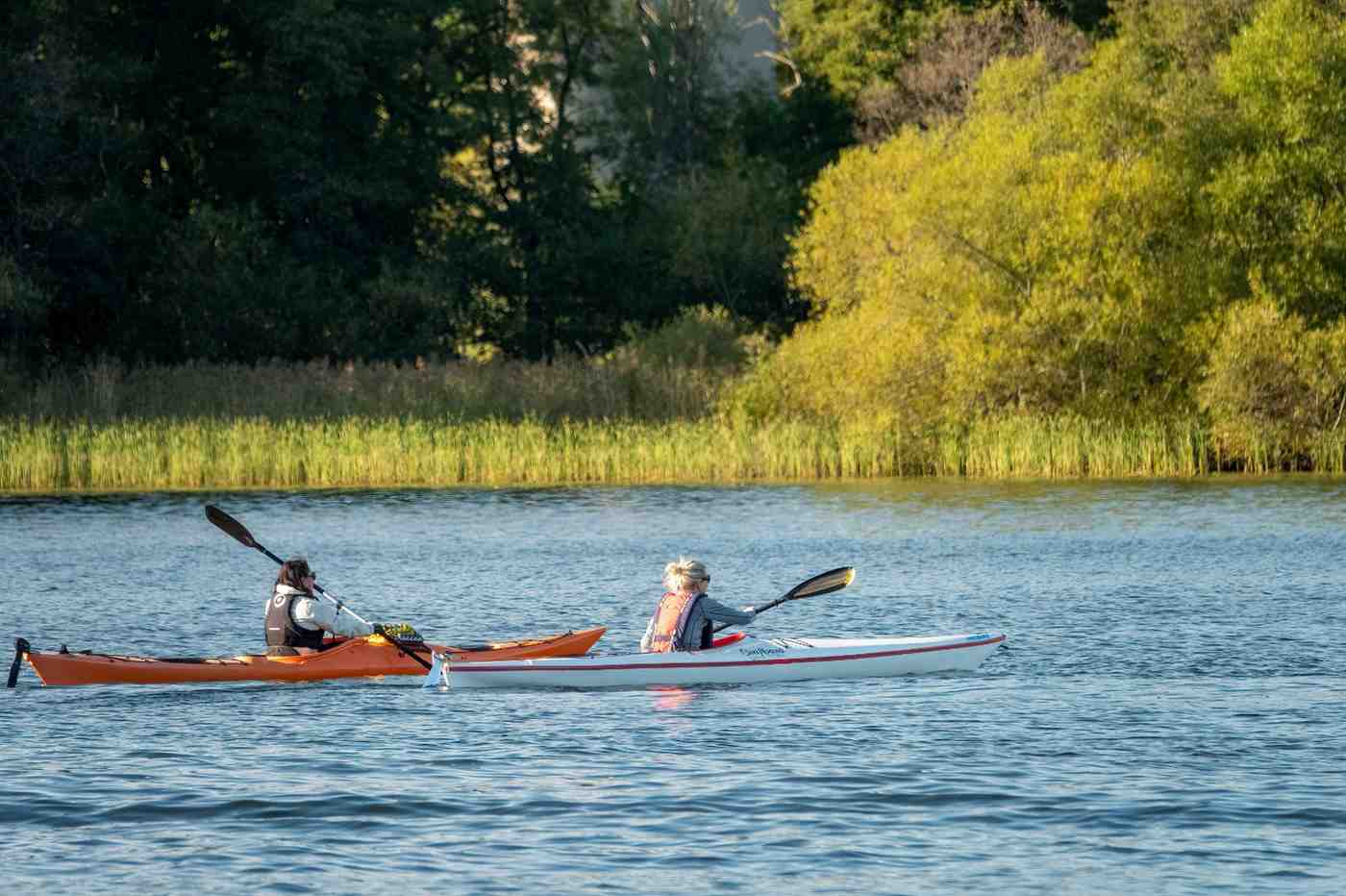
Choose a fishing kayak if you’ll mostly fish alone, want better control, and plan to cover more water.
Choose a canoe if you regularly fish with a partner, carry lots of gear, or enjoy relaxed trips on calm lakes and slow rivers.
Neither is automatically better.
The real question isn’t “Which one catches more fish?”
It’s which one fits the way you actually fish.
I’ve seen people catch trophy bass from both. I’ve also seen expensive boats become garage decorations because they weren’t the right fit for their owner.
Twenty-Five Years Changed My Opinion
When I first started helping anglers choose small fishing boats, I thought the answer was obvious.
Fishing kayaks were becoming more advanced every year.
Pedal drives.
Fish finders.
Standing platforms.
Rod holders everywhere.
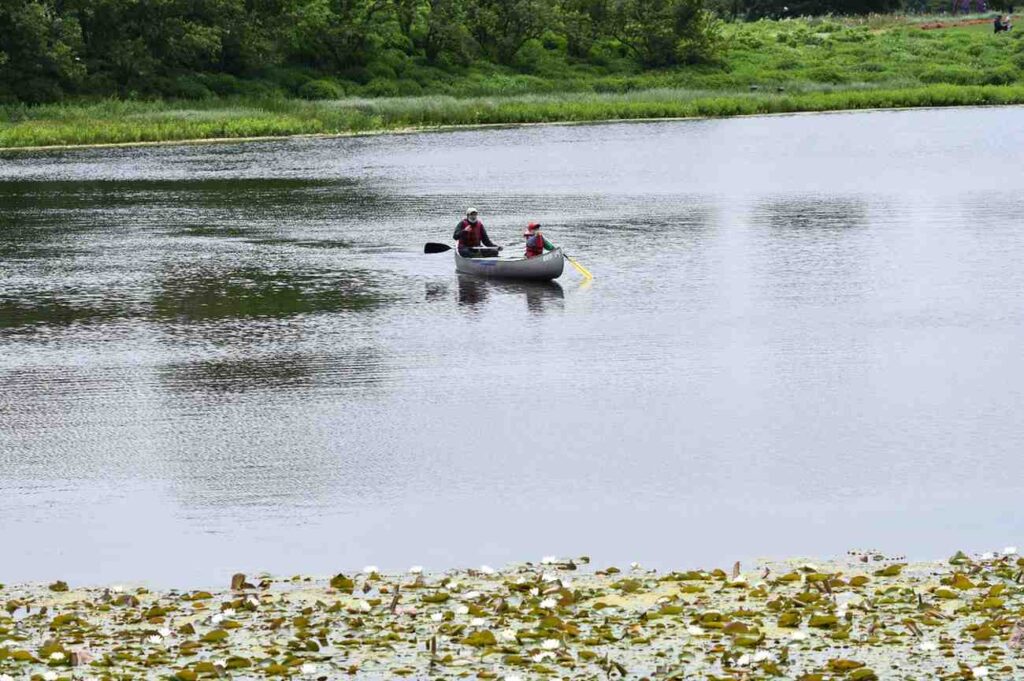
Then I met an older gentleman who still fished from a simple aluminum canoe he’d owned for nearly twenty years.
He consistently out-fished younger anglers using boats that cost several times more.
His secret wasn’t the canoe.
It was understanding where and how he fished.
That conversation reminded me of something people often forget.
The boat helps. The angler catches the fish.
Choosing the right platform simply makes the day easier.
Team A vs. Team B
Most anglers naturally fall into one of these groups.
Team A: Fishing Kayak Anglers
These anglers usually want mobility.
Their priorities include:
- Fishing solo.
- Covering more shoreline.
- Reaching shallow water.
- Moving quietly.
- Adding electronics and accessories.
- Launching almost anywhere.
Efficiency matters.
So does independence.
Team B: Canoe Anglers
Canoe anglers usually think differently.
Their priorities are:
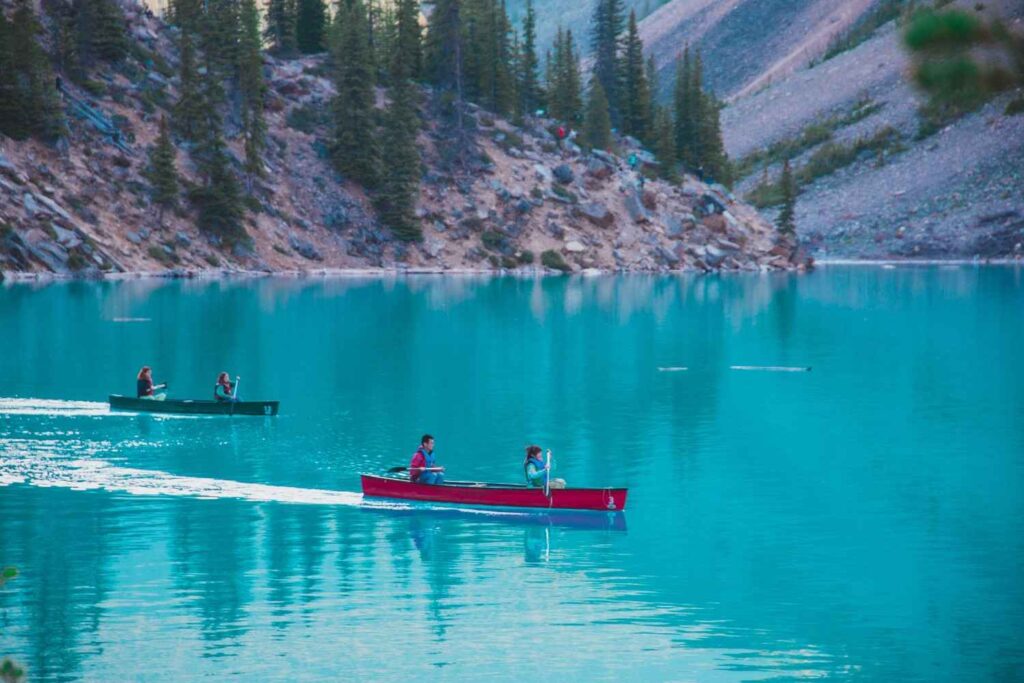
- Fishing with family or friends.
- Carrying coolers and camping gear.
- Comfortable seating.
- Simple equipment.
- Relaxed days on calm water.
Space matters more than speed.
Neither group is wrong.
They’re simply solving different problems.
The Biggest Difference Isn’t Speed
Many buyers assume kayaks are simply faster versions of canoes.
That’s only part of the story.
The biggest difference is how each boat uses its space.
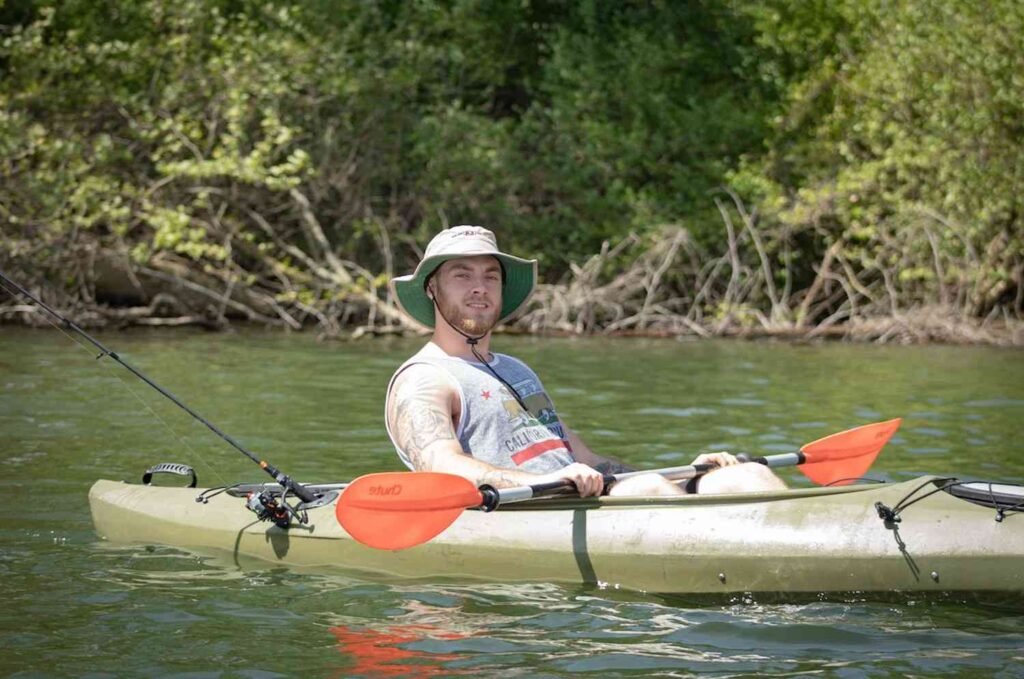
A fishing kayak wraps around the angler.
You’re sitting low, close to the water, with nearly everything within arm’s reach.
Rod holders.
Tackle trays.
Fish finder.
Landing net.
Everything has a place.
A canoe feels more like an open platform.
There’s room to move.
Room to shift gear.
Room to bring another person without everyone feeling crowded.
Think about the difference between driving a pickup truck and a compact SUV.
One isn’t better.
One simply carries people and gear differently.
Kayak vs. Canoe Comparison
| Feature | Fishing Kayak | Canoe |
| Best For | Solo anglers | Two or more anglers |
| Speed | Excellent | Good |
| Maneuverability | Excellent | Moderate |
| Gear Storage | Good | Excellent |
| Stability | Very Good | Good |
| Shallow Water | Excellent | Very Good |
| Long Paddling Trips | Excellent | Good |
| Easy Solo Launch | Excellent | Moderate |
| Passenger Capacity | Limited | Excellent |
Numbers only tell part of the story.
The real difference shows up after several hours on the water.
Control Changes Everything
One reason so many anglers switch to kayaks is control.
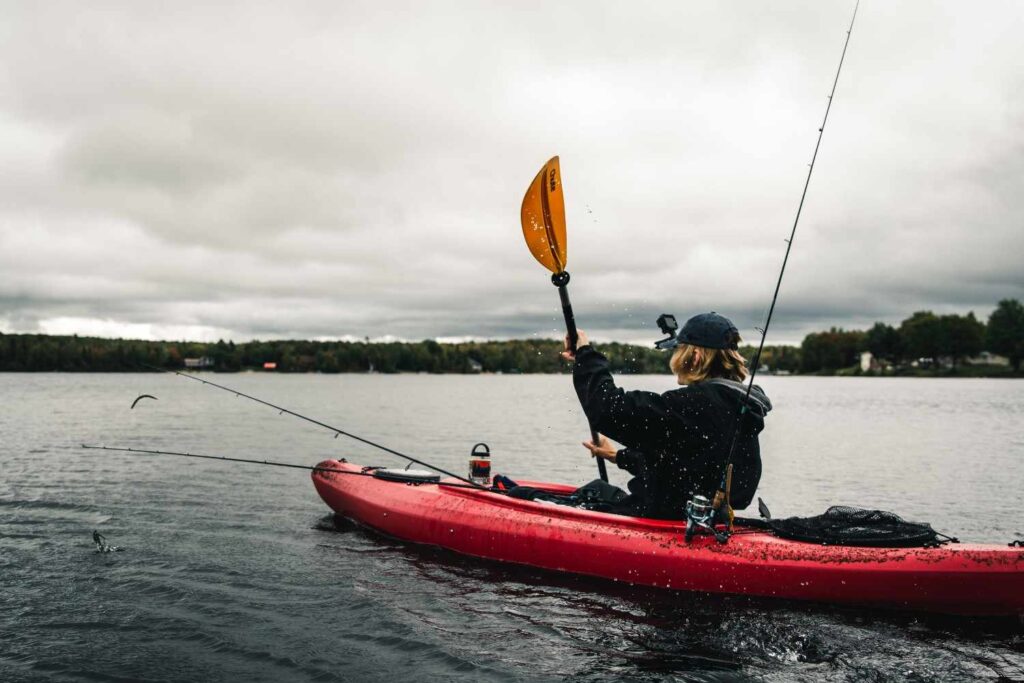
A properly designed fishing kayak responds quickly.
Small paddle adjustments make noticeable changes.
Pedal-drive models go even further.If you’re considering an upgrade, a fishing kayak with pedal drive can make covering more water, staying in position, and fishing hands-free much easier.
They let you keep both hands free while positioning yourself around docks, weed lines, or fallen timber.
That becomes a huge advantage when a fish suddenly changes direction.
A canoe can certainly be controlled well.
Experienced paddlers prove that every day.
But fishing alone in a canoe often means alternating between paddling and casting more frequently.
That’s not impossible.
It’s simply a different rhythm.
Storage Looks Different Than You Expect
People often assume bigger automatically means better.
Not always.
A canoe has more open space.
Coolers.
Camping equipment.
Extra rods.
Large tackle boxes.
Even a dog can ride comfortably.
A fishing kayak has more organized space.
Instead of one large open area, you’ll usually find dedicated storage compartments, tank wells, gear tracks, and built-in mounting points.
Everything stays where it’s supposed to.
Less clutter often means fewer tangled lines and less time searching for equipment.
Stability Depends on What You’re Doing
This surprises many first-time buyers.
A modern fishing kayak can feel incredibly stable.
Many wide sit-on-top models allow anglers to stand and cast comfortably.
Some are stable enough that experienced anglers can walk a few careful steps without feeling nervous.
A canoe feels stable in a different way.
Its open design lets you shift your position more freely.
That’s great for comfort.
But standing to cast usually requires more balance, especially in smaller recreational canoes.
Again, neither design wins every situation.
The water decides.
The Story I Still Remember
Several years ago, two friends launched before sunrise at the same reservoir.
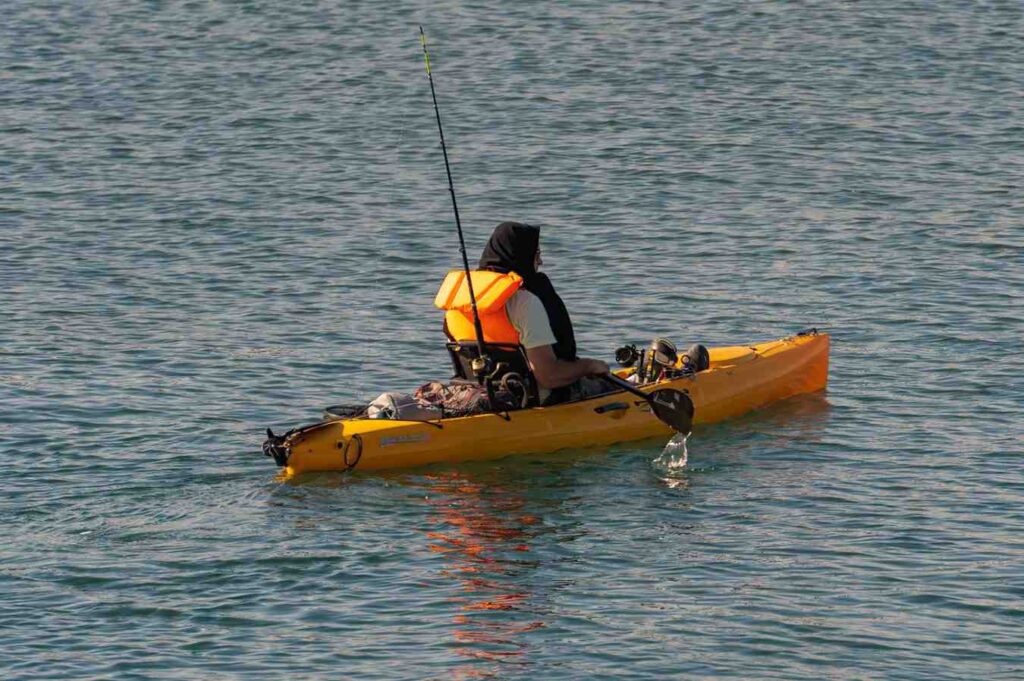
One paddled a fully rigged fishing kayak with electronics, anchor system, and pedal drive.
The other arrived in an old canoe that looked like it had seen a hundred fishing seasons.
By lunchtime, they had caught almost the same number of bass.
The difference wasn’t the fish.
It was how they spent the day.
The kayak angler quietly worked miles of shoreline, slipping into tight pockets between lily pads and submerged timber.
The canoe angler anchored near deeper structure, stayed patient, and comfortably carried enough food, tackle, and gear to fish until sunset without feeling cramped.
Neither boat held the other back.
Each simply matched its owner’s fishing style.
That’s the lesson many buyers overlook.
The best fishing boat isn’t the one with the most features. It’s the one that lets you fish the way you naturally enjoy fishing.
Lakes, Rivers, and Small Ponds Change the Answer
People often ask me whether a kayak or canoe is better.
My first question is always the same.
“Where do you spend most of your weekends?”
The answer usually decides everything.
On large lakes, a fishing kayak often has the advantage. It tracks straighter, handles wind more efficiently, and lets you cover more shoreline without wasting energy.
Small ponds tell a different story.
Both boats work well, especially when the water is calm.
Rivers depend on the current.
A shorter, maneuverable fishing kayak can weave around fallen trees, rocks, and tight bends with less effort. That’s one reason beginners learning how to kayak in a river for beginners often appreciate a kayak that’s easy to control in changing currents and narrow waterways.
A canoe performs beautifully on gentle rivers, but it usually needs more planning when the channel becomes narrow or technical.
The water should choose the boat—not the other way around.
Comfort Means Different Things
Many buyers think comfort is simply about the seat.
After thousands of hours on the water, I’ve learned it’s much more than that.
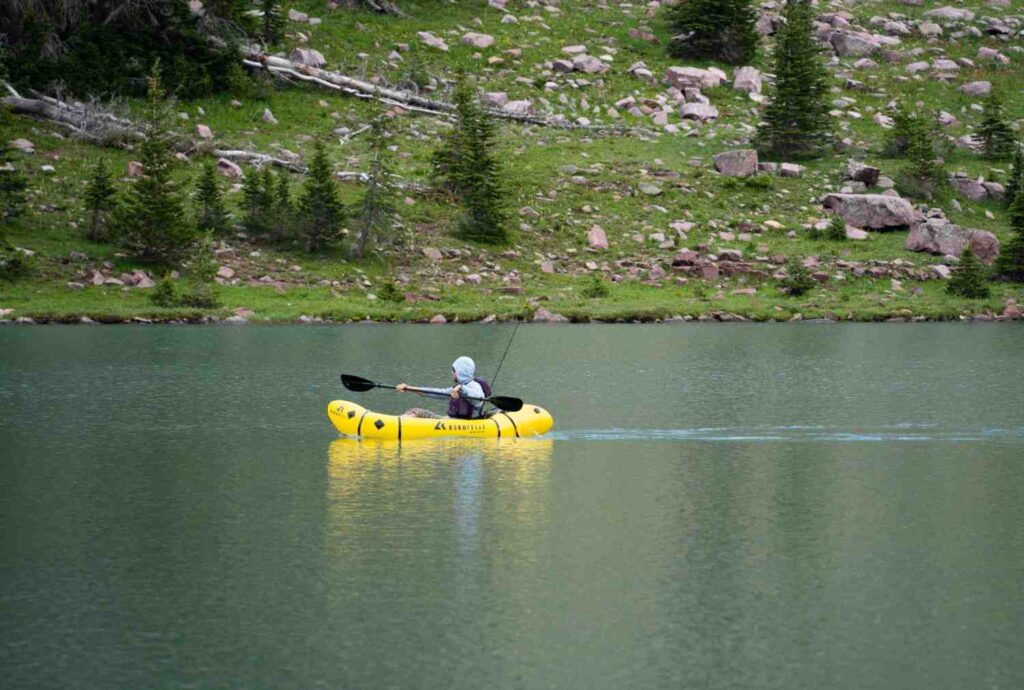
A modern fishing kayak often comes with an elevated frame seat that provides excellent back support for long days.
Everything stays within easy reach.
You spend less time twisting or stretching for gear.
A canoe offers another kind of comfort.
There’s room to move your legs.
You can change positions throughout the day.
If you’re sharing the trip with another angler, you won’t feel like you’re competing for elbow room.
Neither design owns the word “comfortable.”
They simply deliver comfort in different ways.
Fishing Alone or With a Partner?
This is where many buying decisions become easy.
Choose a Fishing Kayak if…
- You fish alone most of the time.
- You enjoy exploring different spots during the day.
- You want quick launches without needing help.
- Electronics and accessories are part of your setup.
- You like staying mobile instead of anchoring in one place.
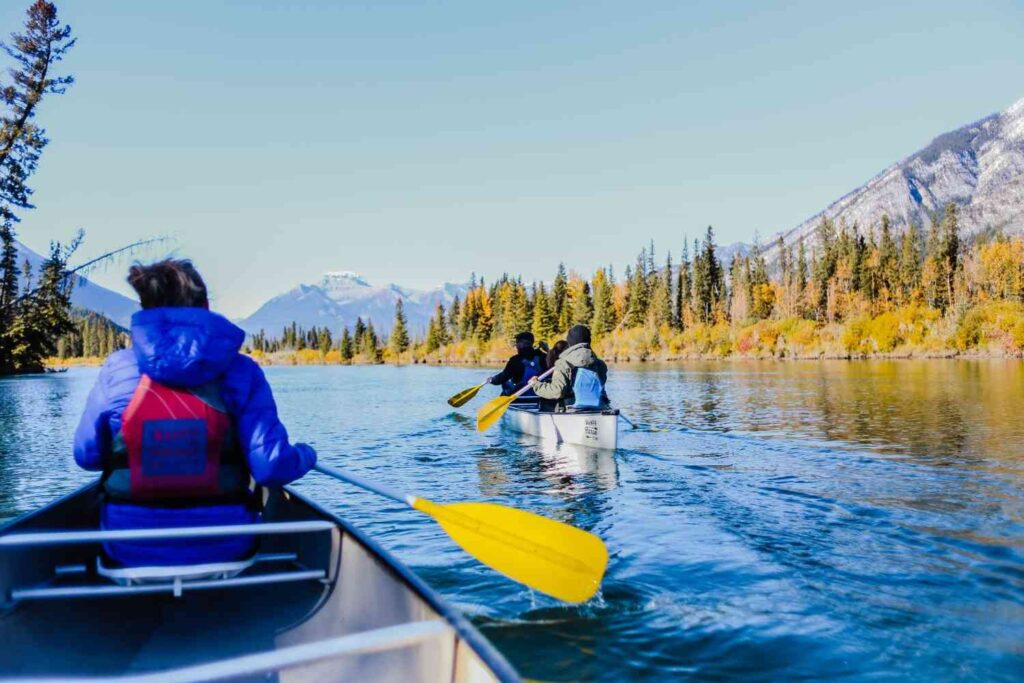
Choose a Canoe if…
- You regularly fish with family or friends.
- Carrying extra gear matters.
- Camping trips are part of your plans.
- You enjoy relaxed fishing more than constantly moving.
- You occasionally bring children or pets along.
Notice what’s missing?
Brand names.
That’s because the best brand can’t fix buying the wrong style of boat.
Wind Is the Great Equalizer
I’ve watched plenty of calm mornings turn into challenging afternoons.
Wind changes everything.
A fishing kayak usually sits lower in the water, giving the wind less surface to push around.
That makes holding position or paddling back to the launch noticeably easier.
A canoe presents more side profile.
Once the breeze picks up, you’ll often spend more effort correcting your direction.
That’s not a design flaw.
It’s simply part of using a larger, more open boat.
If your local lakes are known for afternoon winds, don’t ignore this detail. Developing the same habit is essential when learning how to kayak safely in the ocean, where changing wind conditions can affect both control and your ability to return safely to shore.
You’ll notice it every trip.
Transport and Storage Matter More Than People Expect
Buying the boat is only part of the decision.
Getting it to the water matters just as much.
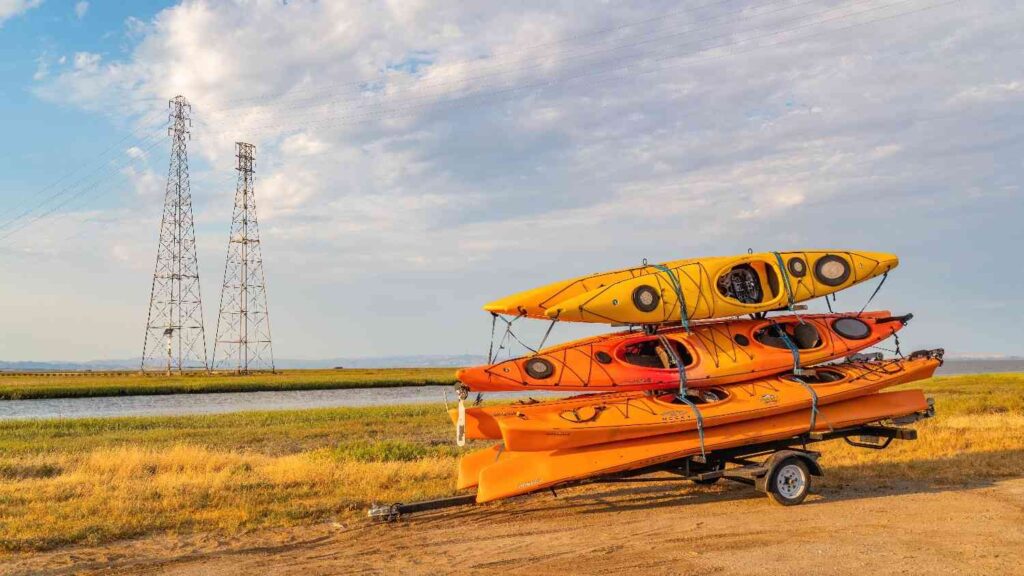
Most fishing kayaks are easier for one person to launch, especially if you use a kayak cart.
Many anglers can load one onto a roof rack without assistance, although heavier pedal-drive models may require more effort.
Canoes often need two people for comfortable loading, particularly longer models.
They’re also wider, which can make garage storage a little more challenging.
The easiest boat to own is usually the one you’ll use most often.That’s especially true when you know how to transport a kayak efficiently, making every trip to and from the water quicker, safer, and far less of a hassle.
Maintenance Is Surprisingly Simple
Neither option demands a lot of maintenance.
A few good habits make a big difference:
- Rinse the boat after fishing in saltwater.
- Check handles, seat hardware, and drain plugs regularly.
- Store it out of direct sunlight when possible.
- Clean mud, sand, and fishing debris before putting it away.
Proper storage makes a bigger difference than many paddlers realize. Learning how to store a kayak helps protect the hull from UV damage, prevents unnecessary wear, and keeps your kayak ready for the next adventure.
Spend ten minutes after each trip, and either boat can last for many years.
Frequently Asked Questions
1. Is a kayak or canoe better for bass fishing?
For most solo bass anglers, a fishing kayak offers better maneuverability, stealth, and access to shallow areas.
2. Which is more stable for fishing?
Modern fishing kayaks are often extremely stable, especially wider sit-on-top models. Canoes can also be stable, but standing usually requires more balance.
3. Can two people fish comfortably from a kayak?
Some tandem fishing kayaks are designed for two anglers, but a canoe generally provides more room and flexibility.
4. Which carries more fishing gear?
A canoe typically carries more total gear because of its larger open interior.
5. Is a fishing kayak easier to paddle?
For solo anglers, yes. It’s usually more efficient and easier to control, especially over longer distances.
6. Which is better for rivers?
That depends on the river. Fishing kayaks usually perform better in narrow, winding rivers, while canoes work well on wider, slower-moving rivers.
7. Which costs less?
Entry-level kayaks and canoes can be similarly priced. High-end fishing kayaks with pedal drives and electronics often cost significantly more.
8. Can I stand and fish in both?
Many fishing kayaks are designed specifically for stand-up casting. Some canoes allow standing as well, but balance depends on the design and your experience.
9. Which is easier for beginners?
Many beginners find a stable sit-on-top fishing kayak easier to learn because it’s simple to launch, paddle, and recover if they get wet.
10. If I can only buy one, which should I choose?
If 80–90% of your trips are solo, buy a fishing kayak. If most outings include another person or lots of gear, a canoe will probably serve you better over the long run.
Final Thoughts
After helping anglers choose between kayaks and canoes for decades, I’ve noticed something interesting.
Very few people regret buying a boat that matches their fishing style.
They regret buying one because someone else recommended it.
If you’re a solo angler who likes exploring new water, quietly working shorelines, and staying mobile throughout the day, a fishing kayak is usually the better fit.
If your favorite trips involve a fishing partner, extra gear, camping equipment, or relaxed days on calm water, a canoe offers space and simplicity that’s hard to beat.
Neither one catches fish by itself.
The better choice is the one that makes you want to launch again next weekend.
That’s the boat you’ll keep using for years.