

The first time someone asks me whether they really need a bilge pump, I already know what’s coming next.
Usually, they’ve watched a few kayaking videos, bought their first recreational kayak, and they’re trying to decide which gear is actually necessary. A bilge pump often ends up at the bottom of the shopping list because calm lakes don’t look dangerous.
Then one unexpected wave, a sloppy re-entry after falling in, or even heavy rain fills the cockpit with water.
That’s when everyone wishes they had spent a few extra dollars.
I’ve watched beginners make this mistake for years. The good news? Choosing the right bilge pump isn’t complicated once you know what actually matters.
The best kayak bilge pump for beginners is one that’s reliable, comfortable to use, easy to reach, and capable of moving plenty of water without exhausting you.
Why Every Beginner Should Carry a Bilge Pump
People often assume a bilge pump is only for sea kayakers.
That’s not true.
Water finds its way into kayaks more often than beginners expect.
Common situations include:
- A capsize during practice
- Waves washing over the bow
- Heavy boat wakes
- Rain collecting inside the cockpit
- Splashing while launching from shore
- An imperfect self-rescue
A few inches of water may not sound serious, but it changes how your kayak feels. The boat becomes heavier, less stable, and slower to paddle.

Removing that water quickly restores control.It’s also an important part of learning how to flip a kayak back over in water, since emptying excess water makes the kayak far easier to stabilize and re-enter safely.
What Exactly Is a Kayak Bilge Pump?
Think of a bilge pump like a giant hand-operated syringe.
One end pulls water from inside your kayak.
The other end pushes it back into the lake or river.
There’s no electricity involved. No batteries. No complicated setup.
Every push removes another load of water until your cockpit is mostly dry again.
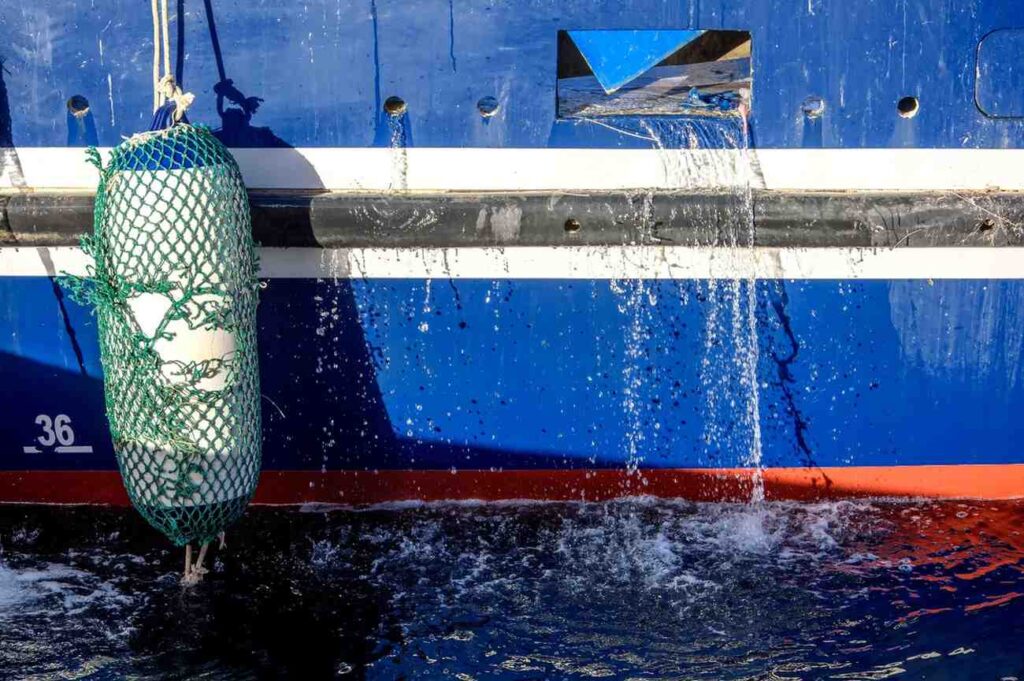
Simple tools often save the day because there’s very little that can fail.
The Features Beginners Should Never Ignore
Walk into an outdoor store and dozens of pumps may look almost identical.
They’re not.
Here’s what separates a dependable pump from one you’ll regret buying.
| Feature | Why It Matters |
| Large barrel | Removes more water with every stroke. |
| Comfortable handle | Prevents sore hands during continuous pumping. |
| Bright color | Easier to spot if dropped in the water. |
| Floating design | Stops the pump from sinking if released accidentally. |
| Corrosion-resistant materials | Better for saltwater and long-term durability. |
| Strong one-way valve | Keeps water flowing out instead of back inside. |
Notice what’s missing.
Fancy branding.
A famous logo doesn’t remove water any faster.
Bigger Isn’t Always Better
This surprises many first-time buyers.
Some assume the largest pump automatically performs best.
Not necessarily.
An oversized pump can become awkward inside smaller recreational kayaks. A tiny compact pump, on the other hand, often requires far more strokes to remove the same amount of water.
For most beginners, an 18- to 20-inch manual bilge pump offers the best balance between pumping speed and portability.
The Feature Everyone Forgets Until It’s Too Late
Ask experienced paddlers what they appreciate most after a real rescue.
Most won’t mention the barrel size.
They’ll talk about the handle.
Cold hands, wet gloves, and stress make small handles surprisingly difficult to grip.
A wide, non-slip handle allows longer pumping without fatigue.
It’s one of those details that seems unimportant in the store but becomes obvious on the water.
My First Lesson About Bilge Pumps
Years ago, I was helping a group of beginners on a quiet reservoir.
Everything looked perfect.
No wind.
Flat water.
Then a passing powerboat created a series of unexpected wakes.
One beginner stayed upright but took on several gallons of water through the cockpit.
The kayak didn’t sink.
It simply became sluggish and unstable.
We handed over a quality manual bilge pump, and within a couple of minutes the kayak felt almost normal again.
That paddler told me afterward, “I honestly thought these pumps were optional.”

After that afternoon, they never launched without one.It also reinforced an important lesson for anyone wondering is kayaking safe for non swimmers—the right safety equipment and good preparation make a significant difference every time you get on the water.
Which Type of Bilge Pump Makes the Most Sense?
Most new paddlers eventually compare manual and electric pumps.
Here’s the practical difference.
| Manual Bilge Pump | Electric Bilge Pump |
| Lower cost | More expensive |
| No batteries required | Requires power source |
| Lightweight | Heavier |
| Extremely reliable | More parts to maintain |
| Works anywhere | Depends on battery condition |
| Ideal for beginners | Better for advanced setups and fishing kayaks |

Unless you’re building a heavily equipped fishing kayak or planning long offshore trips, a quality manual pump is usually the smarter investment.
Safety Comes Before Any Pump
A bilge pump removes water.
It doesn’t replace safe decision-making.

Before every trip:
- Wear a properly fitted life jacket.
- Check the weather forecast.
- Tell someone where you’re paddling.
- Practice getting back into your kayak close to shore.
- Keep your pump where you can reach it instantly.
The biggest mistake I see isn’t buying the wrong pump.It’s overlooking essentials like the best kayak life jacket for women, because the right safety gear will always have a bigger impact on your time on the water than any accessory ever will.
It’s storing the pump inside a sealed hatch that’s impossible to reach after a capsize.
A safety tool only helps if it’s accessible.
What Else Should Be in Your Safety Kit?
A bilge pump works best alongside a few other simple pieces of equipment.
I recommend carrying:
- Paddle float
- Bilge sponge
- Whistle
- Dry bag
- Spare paddle for longer trips
- Throw rope when paddling with partners
Each item solves a different problem.The best kayak dry bag, for example, protects your phone, keys, spare clothing, and other essentials from water, making it one of the most practical pieces of gear you can carry on every trip.
Together, they make self-rescue far easier than relying on one piece of gear alone.
Mistakes That Waste Money Before You Ever Reach the Water
I’ve seen beginners buy excellent kayaks and then try to save a few dollars on the one piece of emergency equipment they may actually need.
That’s backwards.
Avoid these common mistakes:
- Buying the smallest pump because it takes up less space.
- Choosing a pump with a slippery plastic handle.
- Ignoring whether the pump floats.
- Storing it inside a hatch instead of on the deck or beside the cockpit.
- Assuming a sponge can replace a bilge pump.
- Never practicing with the pump before the first trip.
Practice using your pump on a calm day. The middle of an emergency isn’t the time to learn how it works.
A Few Minutes of Practice Changes Everything
One habit separates confident beginners from nervous ones.
They practice.

Launch in shallow water, deliberately splash water into the cockpit, and spend a few minutes pumping it out.
Notice how the water exits.
Try different hand positions.
See how quickly the cockpit empties.
Those five minutes build confidence that no product review ever will.
Taking Care of Your Bilge Pump
Fortunately, maintenance is simple.
After each trip:
- Rinse the pump with clean fresh water.
- Pump fresh water through the barrel several times.
- Let it dry before storing it.
- Check the piston for sand or debris.
- Inspect the discharge hose for cracks.
- Store it away from direct sunlight.
Saltwater paddlers should be especially careful. Salt left inside the pump slowly wears down seals and moving parts.
A quick rinse after every trip can add years to its life.
How Long Should a Good Bilge Pump Last?
People often expect to replace a bilge pump every couple of seasons.
That’s rarely necessary.
A quality manual bilge pump commonly lasts five to ten years, sometimes even longer.
Its lifespan depends on:
- How often it’s used.
- Whether it’s rinsed after saltwater trips.
- Protection from prolonged sun exposure.
- Storage conditions.
- Overall build quality.
If pumping becomes noticeably harder or the seals begin leaking, it’s time to replace it.
One Afternoon I’ll Never Forget
One windy afternoon, I watched two kayakers capsize within minutes of each other.
Both had nearly identical recreational kayaks.
The difference wasn’t the kayak.
It was their preparation.

One paddler reached for a sturdy manual bilge pump clipped beside the cockpit. Within a couple of minutes, most of the water was gone and they paddled back to shore without much trouble.
The second paddler had stored their pump inside a rear hatch.
Unfortunately, the hatch couldn’t be reached safely while sitting in the kayak.
That expensive pump might as well have stayed at home.
Since then, I’ve told every beginner the same thing.
The best safety gear is the gear you can reach immediately.The same principle applies to what to wear kayaking in cold weather, because wearing the right clothing from the start is far more effective than trying to stay warm after you’ve already become cold.
My Recommendation for First-Time Buyers
If someone asks me what I’d buy today for a first kayak, my answer is straightforward.
Choose a manual bilge pump with:
- An 18- to 20-inch body.
- A large, comfortable handle.
- A floating design.
- Bright, highly visible color.
- Corrosion-resistant construction.
- A dependable one-way valve.
- Positive reviews for durability rather than fancy features.
You’ll probably use it only occasionally.
But if the day comes when your cockpit fills with water, you’ll be glad you chose reliability over gimmicks.
Frequently Asked Questions
1. Do I really need a bilge pump as a beginner?
Yes. Even calm lakes can surprise you with waves, boat wakes, or an unexpected capsize. A bilge pump removes water much faster than a sponge alone.
2. Can a sponge replace a bilge pump?
No. A sponge is excellent for removing the last small amount of water, but it’s far too slow after a flooded cockpit.
3. How much water can a manual bilge pump remove?
Most quality pumps move a significant amount of water with every stroke, allowing you to empty most recreational cockpits within a few minutes.
4. Should I buy a floating bilge pump?
Absolutely. Beginners occasionally drop equipment into the water. A floating pump is much easier to recover.
5. Can I use the same pump with different kayaks?
Yes. A manual bilge pump works with most recreational, touring, and sea kayaks.
6. Where should I keep my bilge pump?
Secure it beside the cockpit or on the deck where it can be reached immediately. Avoid storing it inside sealed compartments.
7. Do sit-on-top kayaks need a bilge pump?
Usually not. Sit-on-top kayaks drain water through scupper holes, while sit-inside kayaks benefit much more from carrying a bilge pump.
8. Is an electric bilge pump worth buying?
Most beginners don’t need one. A manual pump is lighter, simpler, less expensive, and highly dependable.
9. How often should I replace my bilge pump?
Replace it only if the seals wear out, cracks develop, or pumping performance noticeably declines.
10. What’s the single most important feature in a beginner’s bilge pump?
Reliability. A dependable pump that’s comfortable to use will always outperform a feature-packed model that fails when you need it most.
Final Thoughts
The best kayak bilge pump for beginners isn’t the one with the flashiest packaging or the longest list of features.
It’s the one that’s dependable, easy to operate with wet hands, and always within reach when conditions suddenly change.
Water has a way of reminding paddlers that small pieces of safety equipment often make the biggest difference. Buy a quality manual bilge pump, practice with it before your first real emergency, and make it part of every trip.

When the unexpected happens, confidence doesn’t come from luck. It comes from being prepared.