
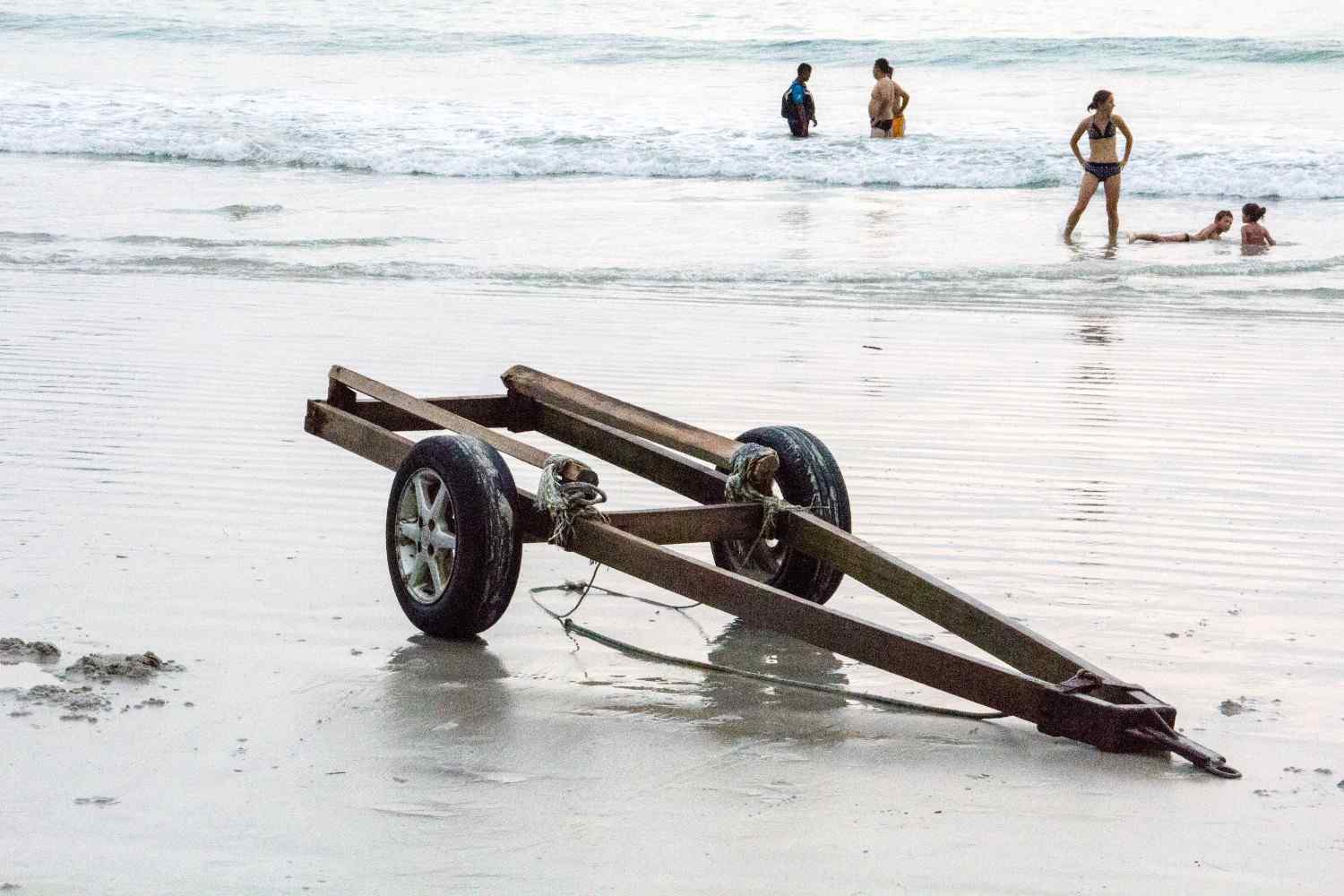
Quick Answer
If your kayak weighs more than about 75 pounds, stop shopping based on price alone.
A heavy kayak needs a cart with a strong frame, wide tires, and a weight capacity that comfortably exceeds your fully loaded kayak.
I’ve watched paddlers spend thousands on premium fishing kayaks and then trust them to the cheapest cart they could find. That’s backwards. The cart carries every pound of that investment across gravel, sand, mud, and rough boat ramps.
Here’s the advice I give beginners.
| Your Situation | Best Cart Style |
| Heavy fishing kayak | Bunk-style cart |
| Soft plastic hull | Wide padded bunk cart |
| Mixed terrain | Balloon-wheel cart |
| Mostly paved launches | Solid rubber wheels |
| Long walks to the water | Large pneumatic tires |
A good cart doesn’t just make transportation easier.
It protects your kayak—and your back.
Why Heavy Kayaks Break Cheap Carts
The first kayak cart I ever saw fail wasn’t carrying an oversized kayak.
It was carrying an average fishing kayak over rough gravel.
Halfway to the launch, one wheel bent sideways.
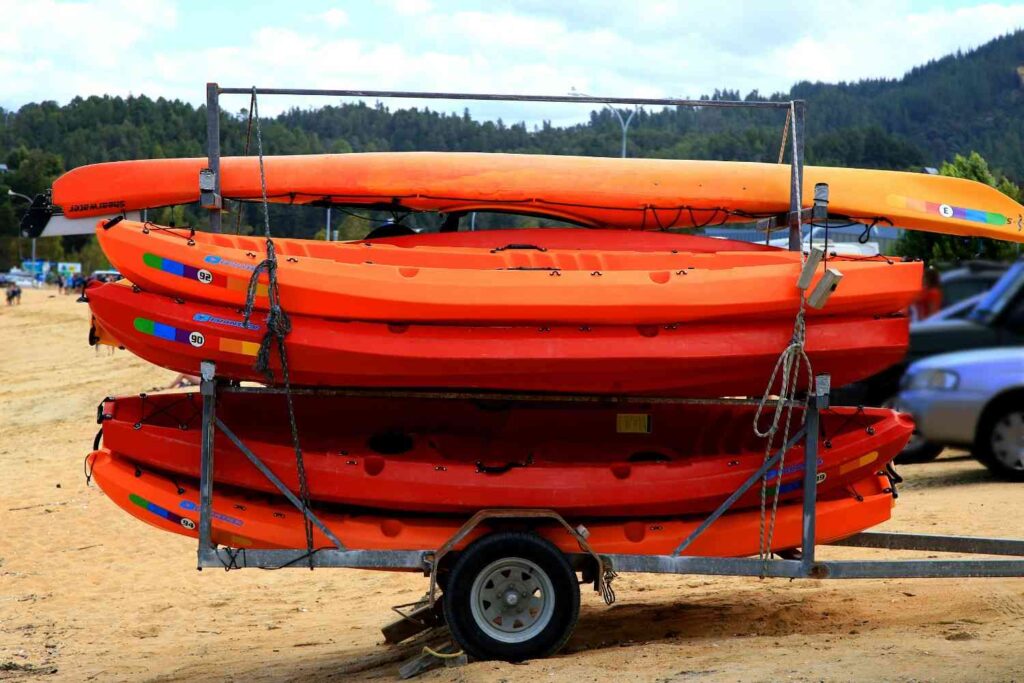
The paddler hadn’t overloaded it.
The frame simply wasn’t designed for repeated impacts.
That’s something many people overlook.
Manufacturers advertise maximum weight limits, but those numbers are usually measured under ideal conditions.
Real launches aren’t ideal.
You’ll encounter:
- Rocks
- Tree roots
- Sand
- Curbs
- Uneven parking areas
- Boat ramps
Each bump puts extra stress on the frame.
That’s why I tell people to choose a cart rated well above their kayak’s actual weight.
The extra capacity isn’t wasted.
It’s insurance.
Start by Knowing Your Real Kayak Weight
Many owners underestimate how much they’re actually moving.
They know the kayak weighs 90 pounds.
Then they add:
- Fishing rods
- Tackle crate
- Battery
- Fish finder
- Anchor
- Cooler
- Safety gear
Suddenly that “90-pound kayak” weighs closer to 120 pounds.

That’s the number your cart has to handle.It’s an especially important consideration for anyone using the best fishing kayak for big guys, since larger, heavier kayaks place much greater demands on both carts and transport equipment.
Always calculate your fully loaded weight—not just the manufacturer’s advertised weight.
Which Cart Design Works Best?
Every cart has strengths.
Every design has limitations.
Choosing the wrong style creates unnecessary frustration.
| Cart Type | Best For | Advantages | Limitations |
| Bunk-style | Heavy fishing kayaks | Excellent hull support | Slightly larger to store |
| Scupper cart | Sit-on-top kayaks | Fast loading | Not suitable for every hull |
| Center cart | Recreational kayaks | Compact and versatile | Can shift on rough terrain |
| Balloon-wheel cart | Sand and beaches | Rolls easily on soft ground | More expensive |
I’ve used every style over the years.
For heavy fishing kayaks, bunk-style carts consistently provide the best support and stability.
They spread the load across a wider area instead of concentrating pressure on one point.
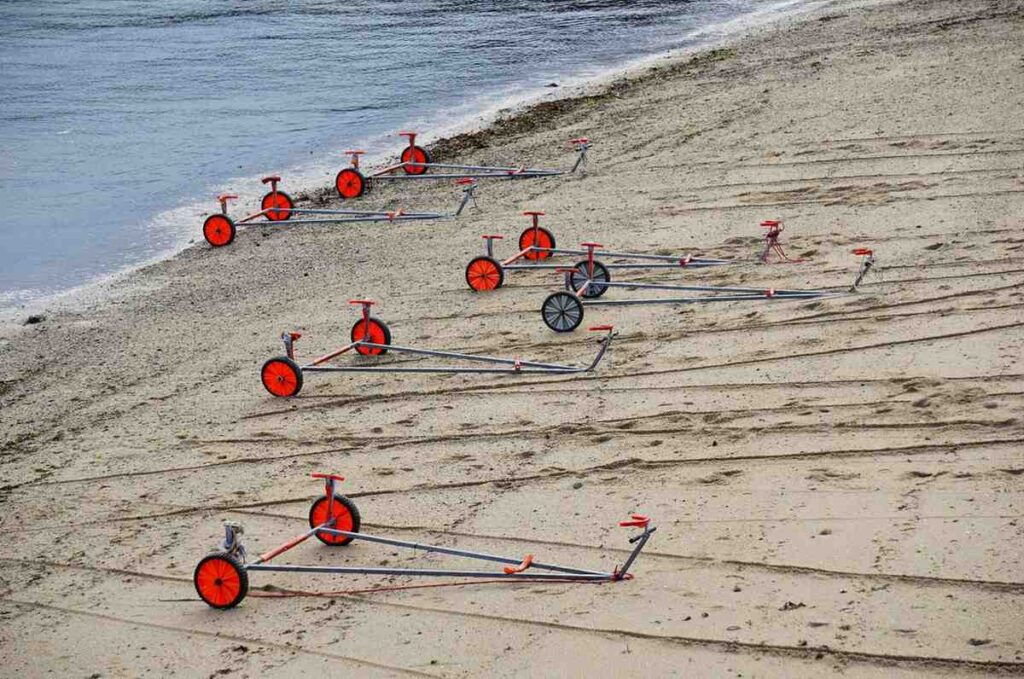
Wheels Matter More Than Most People Realize
People spend hours comparing frames.
Then they ignore the wheels.
That’s backwards.
The wheels determine how much effort you’ll use getting from the parking lot to the water.
Here’s a simple comparison.
| Wheel Type | Performs Best On |
| Solid rubber | Pavement and concrete |
| Pneumatic tires | Gravel, grass, dirt |
| Balloon tires | Sand and soft beaches |
| Foam-filled tires | Mixed terrain with minimal maintenance |
I’ve watched someone drag a 100-pound kayak through beach sand using small hard wheels.
It looked exhausting.
Five minutes later another paddler rolled a heavier kayak across the same sand using balloon tires with almost no effort.
Same beach.
Same distance.
Different wheels.
Huge difference.
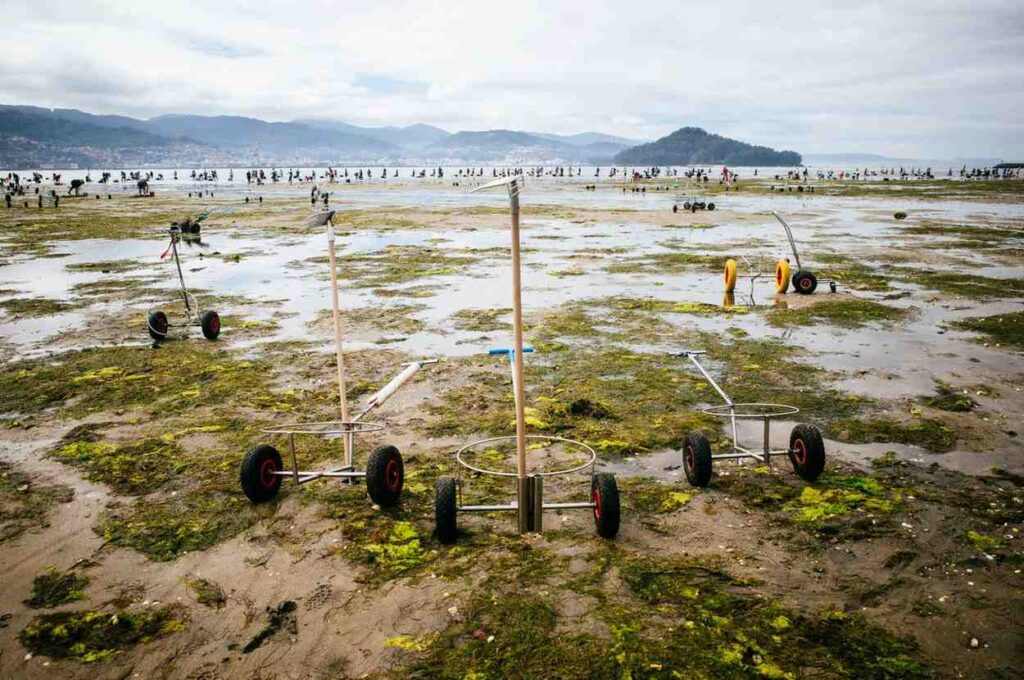
The Biggest Loading Mistake Beginners Make
Many people place the kayak in the center of the cart without thinking about balance.
Sometimes that’s correct.
Often it isn’t.
If too much weight sits behind the wheels, the bow becomes difficult to control.
Too much weight in front and you’ll feel every pound in your arms.
The goal is balance—not perfection.
Once the cart is positioned correctly, you should be able to lift the front of the kayak without feeling like you’re deadlifting the entire boat.
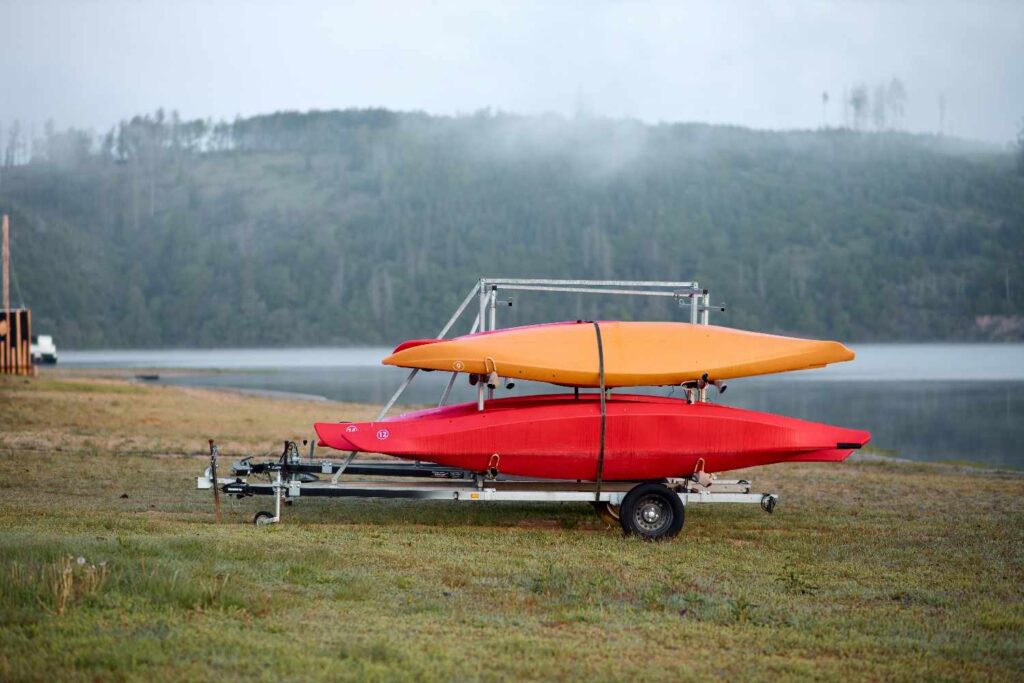
This usually takes a little trial and error during your first few outings.The same is true when learning how to transport a kayak, as you’ll quickly discover the loading and tie-down method that works best for your kayak, vehicle, and routine.
After that, loading becomes automatic.
The Straps Are Just as Important as the Cart
A strong frame won’t help if the kayak isn’t secured properly.
I’ve seen expensive carts tip over because someone rushed through the last thirty seconds of loading.
Usually the problem isn’t the cart.
It’s loose straps.
Before moving the kayak, check that:
- The straps are snug but not crushing the hull.
- The kayak sits centered on the cart.
- Buckles aren’t pressing against the kayak.
- Loose strap ends are tucked away so they can’t catch on branches or wheels.
The kayak should become part of the cart, not something simply resting on top of it.
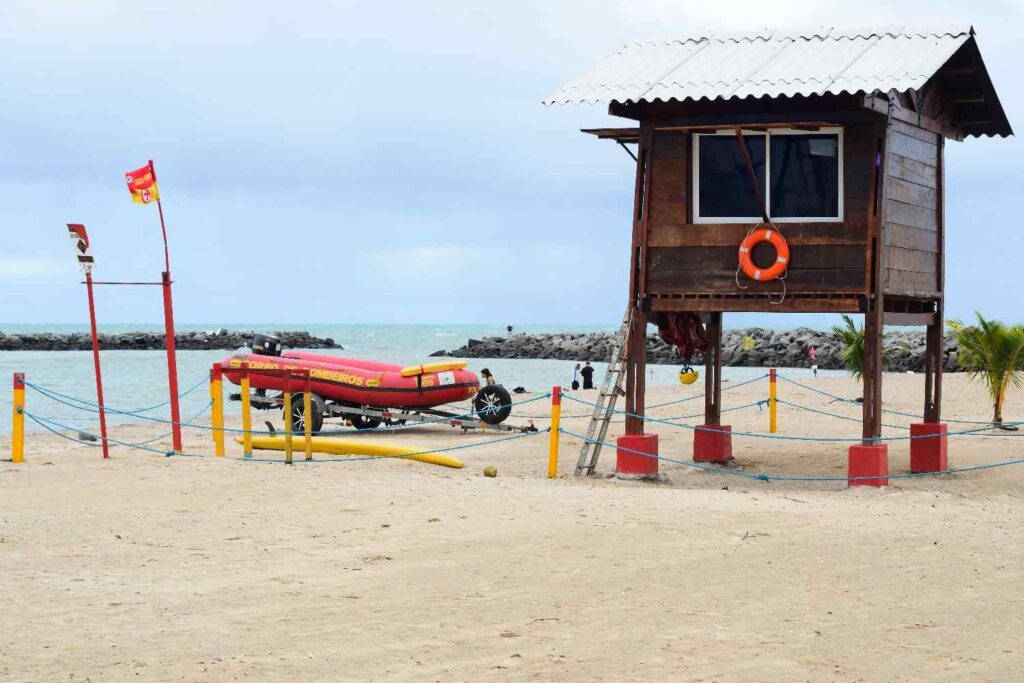
If it rocks side to side before you start walking, stop and adjust it.
One Lesson a Muddy Boat Ramp Taught Me
Several years ago I watched a paddler hauling a fully rigged fishing kayak down a muddy launch.
Everything looked fine until one wheel sank into a soft patch.
The cart twisted sideways, the kayak slipped, and the entire setup rolled onto its side.

Nothing broke, but it easily could have.
The interesting part?
His cart wasn’t overloaded.
The wheels were simply too narrow for the conditions.
A few minutes later another angler rolled an even heavier kayak across the same muddy ramp using a cart with wide pneumatic tires.
No struggle.
No sinking.
No drama.
That morning reminded me that terrain often matters more than weight capacity.It’s a lesson you’ll quickly appreciate when learning how to launch a kayak from a rocky shore, where uneven footing and loose rocks often present a bigger challenge than the kayak’s weight itself.
Don’t Ignore Maintenance
A kayak cart doesn’t need much attention.
But it does need some.
Saltwater, sand, and mud slowly wear out moving parts if they’re never cleaned.
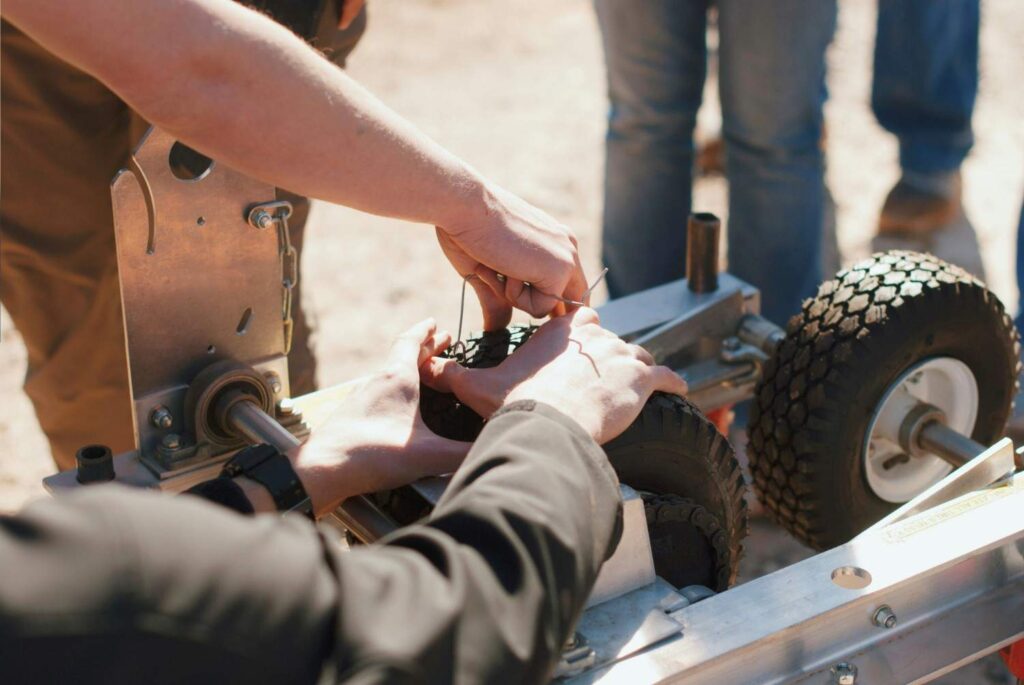
After each trip:
- Rinse the frame with fresh water.
- Wash sand from the axle.
- Check wheel pins and clips.
- Tighten loose hardware.
- Inspect straps for cuts or fraying.
It takes less than ten minutes.
Those few minutes can add years to the cart’s life.The same attention to detail applies to how to store a kayak, since proper storage and routine care help extend the lifespan of all your paddling equipment.
Features Worth Paying Extra For
Not every premium feature is worth the money.
Some genuinely make life easier.
Here’s what I appreciate after years of hauling heavy kayaks.
| Feature | Why It Matters |
| Wide padded bunks | Better hull support |
| Large pneumatic wheels | Easier pulling on rough ground |
| Aluminum frame | Strong without excessive weight |
| Adjustable width | Fits different kayak hulls |
| Quick-release wheels | Easier storage and transport |
| Corrosion-resistant hardware | Better durability around saltwater |
Fancy colors don’t move a kayak.
Good engineering does.
When a Cart Isn’t the Right Tool
Sometimes the smartest decision is leaving the cart in the vehicle.
For example:
- Extremely rocky trails with large boulders
- Narrow forest paths with exposed roots
- Steep stairways to the water
- Deep marshes where wheels constantly sink
In places like these, a carrying partner or a shoulder carry may actually be safer.
Experience teaches you to choose the right tool for the launch—not force the cart into situations it wasn’t built for.
A One-Minute Check Before Every Trip
Before heading toward the water, pause for one quick inspection.
| Check | What to Look For |
| Wheels | Spin freely without wobbling |
| Axle | Secure and straight |
| Straps | Tight and undamaged |
| Frame | No cracks or bent sections |
| Kayak balance | Even weight distribution |
| Tire pressure (if pneumatic) | Properly inflated |
That one-minute habit catches most problems before they become expensive repairs.
Frequently Asked Questions
1. How much weight should a kayak cart support?
Choose a cart rated at least 20–30% higher than your kayak’s fully loaded weight to provide a comfortable safety margin.
2. What’s the best cart for a 100-pound fishing kayak?
A bunk-style cart with a heavy-duty aluminum frame and large pneumatic or balloon tires is usually the most dependable choice.
3. Are scupper carts safe for heavy kayaks?
Some are, but always check the kayak manufacturer’s guidance. Certain heavy kayaks aren’t designed to support their full weight through the scupper holes.
4. Which wheels work best on sand?
Balloon tires spread the load over a larger surface area, making them much easier to pull across soft sand.
5. Can I leave the cart attached while paddling?
No. Remove and store the cart before launching unless it’s specifically designed to remain attached.
6. How do I stop the kayak from sliding off the cart?
Center the kayak correctly, tighten the straps securely, and make sure the cart is positioned at the balance point.
7. Is aluminum better than steel?
For most paddlers, yes. Aluminum offers an excellent balance of strength, corrosion resistance, and lighter weight.
8. Do I need inflatable tires?
Not always. They’re excellent for gravel, grass, and uneven ground, but solid wheels work well if you mostly launch from paved ramps.
9. How long should a quality kayak cart last?
With regular cleaning and occasional hardware replacement, a well-built cart can last for many years of frequent use.
10. Can one person move a heavy fishing kayak with a cart?
Absolutely. A properly balanced kayak on the right cart allows one person to move surprisingly heavy boats with much less effort than carrying them by hand.
Final Thoughts
A heavy kayak doesn’t have to be difficult to transport.
The right cart changes everything.
Look for a model with a generous weight rating, a sturdy frame, wheels designed for the terrain you actually paddle, and enough support to protect the hull. Don’t judge a cart by its price tag alone. Judge it by how confidently it carries your kayak over the ground you use every weekend.

I’ve learned over the years that the best cart is the one you stop thinking about. The same idea applies when choosing the best kayak roof rack for SUV—a reliable setup quietly does its job, so you can focus on the adventure instead of your gear. It rolls smoothly, stays balanced, and lets you focus on the day’s paddle instead of fighting your equipment.
Choose carefully once, maintain it well, and it can serve you through many seasons of fishing, exploring, and long walks from the parking lot to the water.