
Quick Answer
If you only remember one thing, remember this:
The best kayak roof rack is the one that matches both your SUV and your kayak—not the most expensive one on the shelf.
I’ve watched people spend hundreds of dollars on premium racks only to struggle every weekend because they bought the wrong style. Then I’ve seen paddlers use a mid-priced rack for ten years without a single problem because it fit their needs perfectly.
Here’s the simple rule I teach every beginner:
| If You… | Choose… |
| Carry one recreational or fishing kayak | J-cradle rack |
| Carry two kayaks | Folding J-cradles or vertical stacker |
| Own a heavy fishing kayak | Saddle-style rack or kayak loader |
| Paddle every weekend | Premium rack with locking system |
| Paddle a few times each summer | Quality budget rack with proper straps |
Buying the rack is only half the job.
Loading it correctly matters even more.
The Mistake Nearly Every First-Time Buyer Makes
Years ago a customer arrived at the launch with a brand-new SUV and an expensive fishing kayak.
Everything looked perfect.
Until we noticed the kayak wobbling every time someone shut a door.
The problem wasn’t the straps.
It wasn’t the rack.
His factory crossbars were rated for only 75 pounds.Understanding how to transport a kayak includes checking your vehicle’s roof rack weight limits before loading, helping you avoid damage and travel more safely.
The kayak weighed 68 pounds.
Add the rack itself, paddles, and a few accessories, and he’d already exceeded the roof’s weight limit before leaving his driveway.
That’s something many beginners never think about.
Before shopping, check these three numbers:
- Your SUV’s roof load limit
- Crossbar weight capacity
- Fully loaded kayak weight
Ignore any one of them and you’re asking the rack to do something it wasn’t designed to handle.
Not Every SUV Is Ready for a Kayak Rack
This surprises people.
Owning an SUV doesn’t automatically mean you can mount a kayak tomorrow.
Some vehicles already have:
- Raised roof rails
- Flush roof rails
- Factory crossbars
Others have nothing except a smooth roof.
That changes everything.
| Roof Type | Installation Difficulty | Best Option |
| Raised rails | Easy | Most aftermarket racks fit |
| Flush rails | Moderate | Vehicle-specific mounting kit |
| Factory crossbars | Easy | Add kayak carrier only |
| Bare roof | Harder | Complete roof rack system required |
Spend five minutes identifying your roof style before buying anything.
It’ll save hours of frustration later.
J-Cradles, Saddles, or Foam Blocks?
People ask this almost every weekend.
There’s no universal winner.
Each design solves a different problem.
| Rack Style | Best For | Advantages | Drawbacks |
| J-Cradle | One kayak | Easy loading, saves roof space | Requires lifting kayak higher |
| Saddle Rack | Heavy fishing kayaks | Excellent support and stability | Costs more |
| Foam Blocks | Occasional use | Affordable and portable | Not ideal for frequent highway travel |
| Stacker Rack | Two or more kayaks | Maximum carrying capacity | Loading takes more practice |
I’ve used all four.
For most SUV owners carrying one recreational or fishing kayak, a quality J-cradle remains the easiest long-term solution.
It strikes the best balance between stability, price, and convenience.
Cheap Straps Cause More Problems Than Cheap Racks
Here’s something that doesn’t get talked about enough.
I’ve replaced far more straps than roof racks.
Sunlight weakens webbing.
Saltwater speeds up wear.
Metal buckles eventually rust if they’re never rinsed.
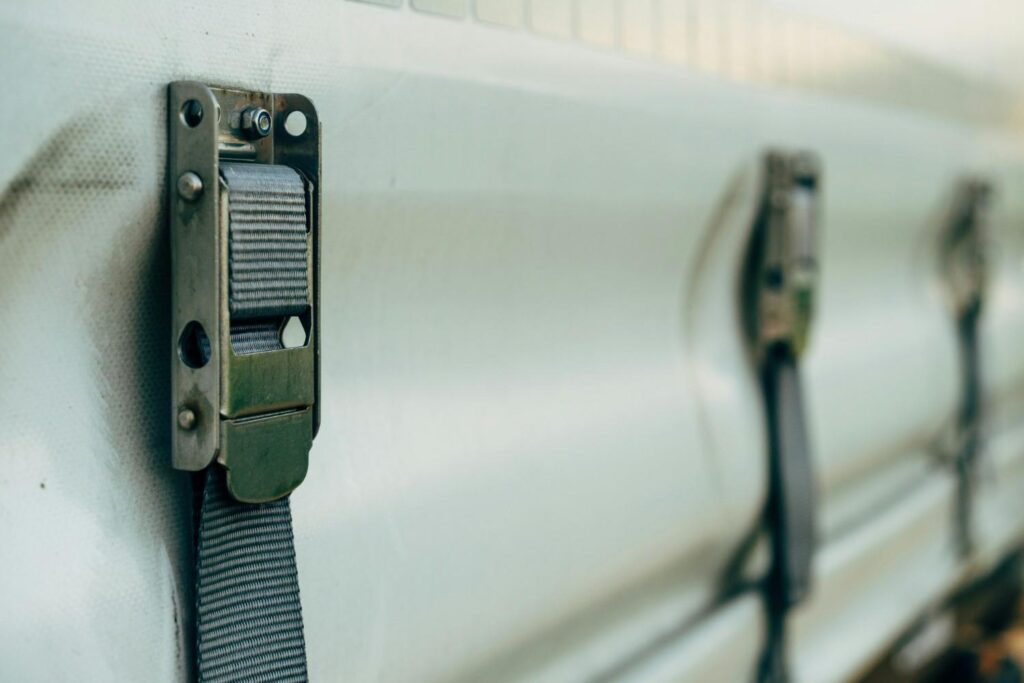
A rack can last ten years.
Straps often shouldn’t.Properly storing both your kayak and its gear matters just as much, so learning how to store a kayak helps extend the life of your equipment and keeps everything ready for your next trip.
Before every trip, check for:
- Frayed edges
- Cracked stitching
- Bent buckles
- UV damage
- Loose cam mechanisms
A five-minute inspection beats watching a kayak slide sideways on the highway.
Never use ratchet straps on a composite or plastic kayak unless the manufacturer specifically recommends them. Cam straps provide secure tension without crushing the hull.
Loading Alone Doesn’t Have to Be a Workout
Heavy fishing kayaks intimidate a lot of beginners.
Understandably so.
Lifting seventy or eighty pounds above shoulder height isn’t fun.
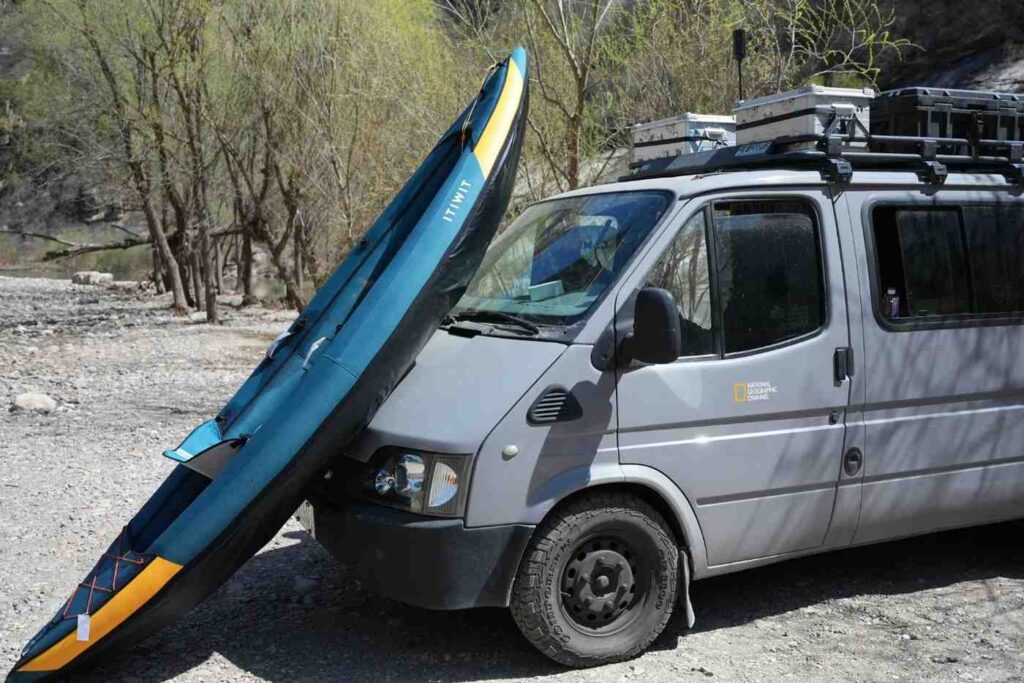
Fortunately, you don’t have to muscle it onto the roof.
Many experienced paddlers use simple loading techniques such as:
- Sliding the kayak from the rear using a protective towel or roller
- Side-loading with a lift assist
- Portable kayak loading bars
- Assisted loading systems for taller SUVs
The goal isn’t proving how strong you are.
The goal is protecting both your back and your kayak.Choosing the best lightweight kayak under 40 pounds can make lifting, carrying, and loading much easier while reducing strain every time you head to the water.
A scratched bumper heals your pride.
A back injury takes much longer.
Highway Travel Is Where Weak Setups Get Exposed
Everything can seem perfect in your driveway.
Then you hit 70 mph.
That’s when problems show up.
Wind creates forces that many beginners underestimate. A kayak doesn’t just sit on the roof. It acts like a giant wing trying to catch air from every direction.
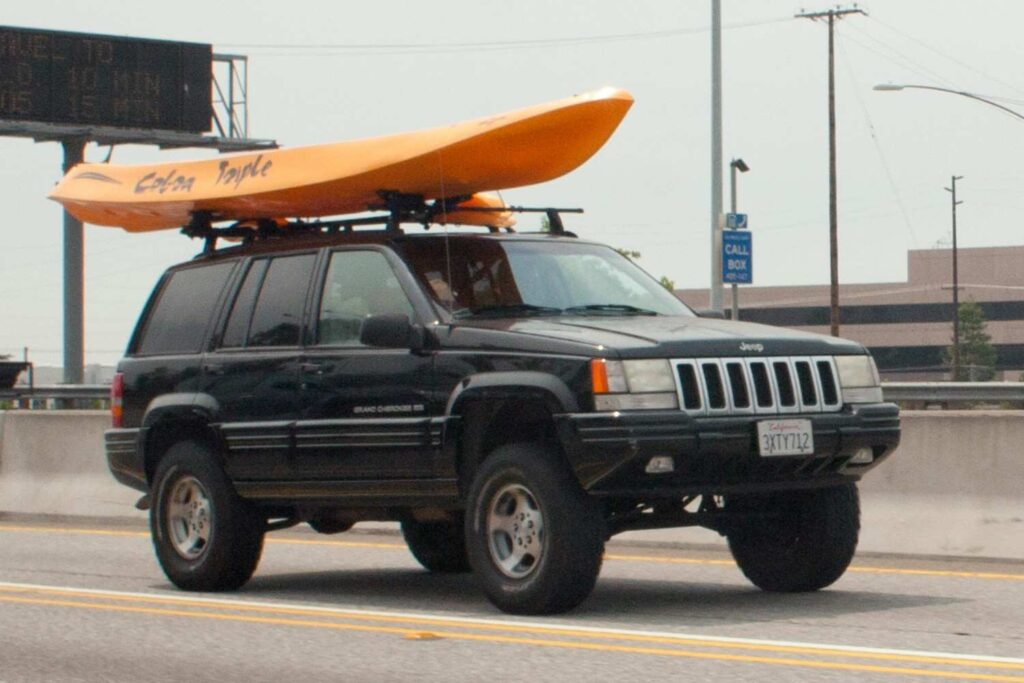
I’ve seen setups survive local roads for months and then fail during a single highway trip.
Before any long drive, check:
- Bow tie-downs
- Stern tie-downs
- Crossbar attachment points
- Strap tension
- Rack bolts
- Locking mechanisms
If something moves in the driveway, it’ll move even more on the highway.
I stop after the first 10–15 minutes of driving and recheck every strap. That’s a habit worth keeping whether you’re hauling a hard-shell boat or inflatable kayaks, especially when extra gear is secured on your vehicle. Webbing often settles during the first few miles.
It’s a habit that has prevented countless problems.
The Rack I’d Recommend to My Own Family
People often ask for one “best” rack.
Realistically, the answer depends on the kayak and vehicle.
Still, after decades around paddlers, here’s the advice I’d give a family member.
| Situation | Recommended Rack Type |
| Beginner with one kayak | Folding J-cradle |
| Heavy fishing kayak owner | Saddle-style carrier |
| Two kayaks on one SUV | Vertical stacker |
| Occasional summer paddler | Basic J-cradle system |
| Older paddler wanting easier loading | Assisted-loading rack |
Notice something?
I’m recommending rack styles rather than specific brand names.
That’s intentional.
A rack that works perfectly on one SUV can be frustrating on another.
Fit matters more than logos.
The Weirdest Roof Rack Failure I’ve Ever Seen
One summer morning a paddler arrived at the launch convinced his rack was defective.
The kayak kept shifting during every trip.
He’d tightened the straps.
Checked the bolts.
Even replaced the rack.
Same problem.
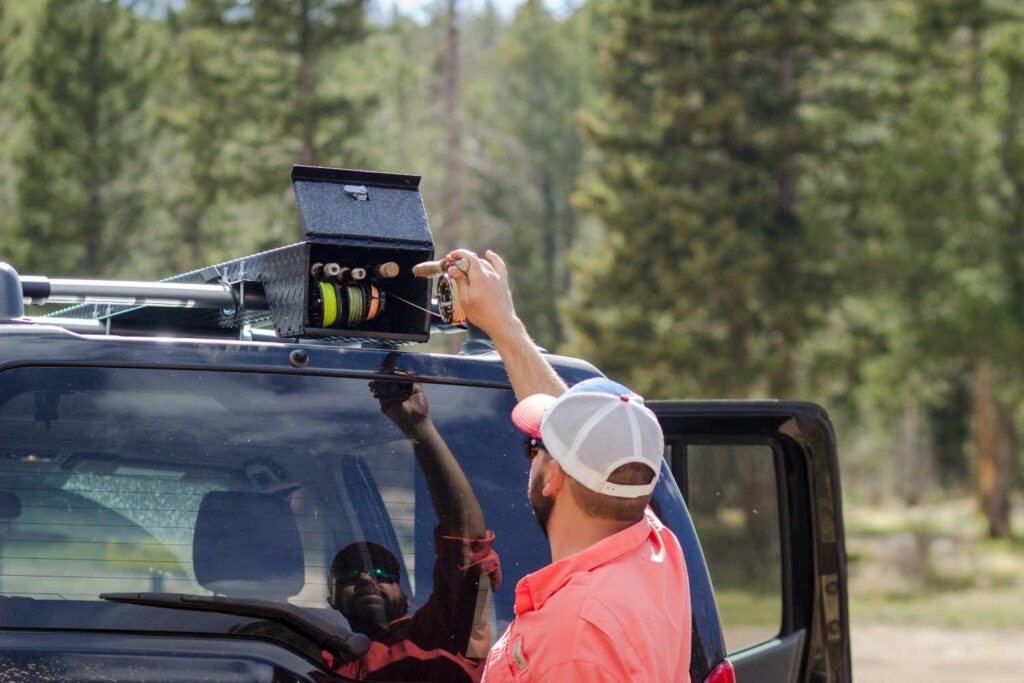
The actual cause?
His crossbars had been installed backward.
That tiny mistake changed how the rack gripped the bars and created just enough movement to loosen everything over time.
It took less than five minutes to fix.
The lesson?
Always check the simple things first.
Most rack problems aren’t manufacturing defects.
They’re installation issues.
A Pre-Trip Check That Takes Less Than One Minute
Before leaving home, walk around the vehicle once.
That’s it.
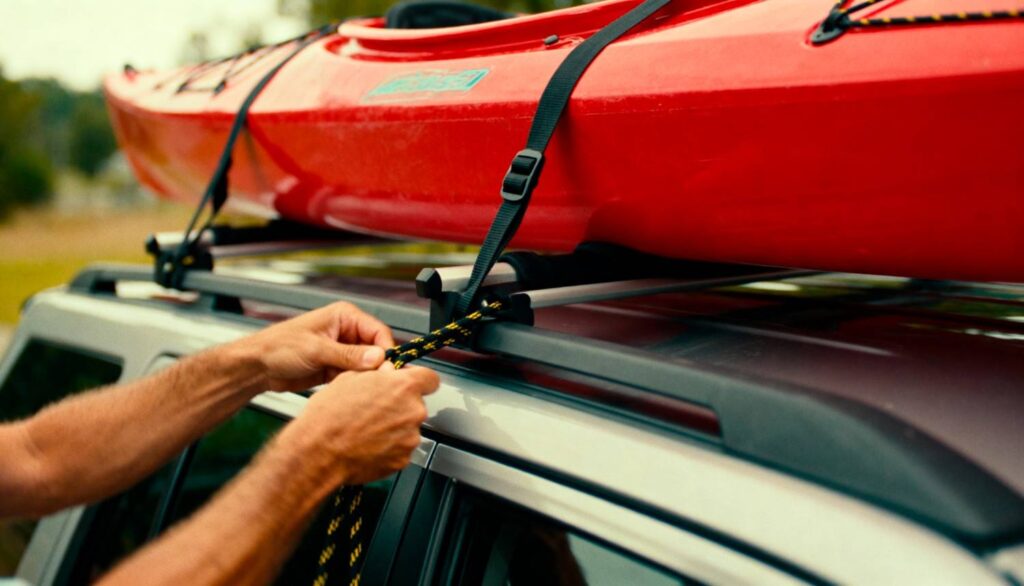
Check these items:
| Item | What You’re Looking For |
| Crossbars | No looseness |
| Rack mounts | Secure attachment |
| Straps | Tight and untwisted |
| Bow line | Firm tension |
| Stern line | Firm tension |
| Kayak hull | Properly seated |
| Buckles | Fully closed |
Experienced paddlers do this automatically.
New paddlers should make it a habit.
One minute now can save hours of trouble later.
Safety Comes Before Convenience
I’ve watched people skip bow and stern lines because they were in a hurry.
I’ve seen others ignore loose straps because they were “only driving a few miles.”
That’s usually when problems happen.
A kayak should never rely on a single attachment point.
Think of your setup like a backup system.
If one component fails, another should still keep the kayak secure.
That’s why quality transport setups use:
- Crossbars
- Main straps
- Bow tie-downs
- Stern tie-downs
Multiple layers of security.
Exactly how it should be.
Frequently Asked Questions
1. Do I need crossbars before installing a kayak rack?
Usually, yes. Most kayak carriers attach to crossbars rather than directly to the roof.
2. Can I transport a kayak on factory roof rails alone?
In most cases, no. Roof rails normally require compatible crossbars before a kayak carrier can be installed safely.
3. What’s the safest rack for a heavy fishing kayak?
Saddle-style racks generally provide the best support because they distribute weight across a larger area of the hull.
4. Are foam block carriers safe?
They can work for occasional short trips, but they’re not my first choice for frequent highway travel.
5. Do I need bow and stern tie-downs?
Absolutely. They add stability and help prevent movement during sudden stops, strong winds, and highway driving.
6. How much weight can an SUV roof hold?
Every vehicle is different. Check your owner’s manual for the exact roof load rating before carrying a kayak.
7. Can one person load a kayak onto an SUV?
Yes. Many paddlers use loading rollers, lift assists, or rear-loading techniques to make solo loading easier.
8. How often should roof rack bolts be checked?
I recommend checking them before every major trip and after long highway drives.
9. Do kayak racks damage the kayak hull?
Not when they’re installed and adjusted correctly. Problems usually come from overtightened straps or poor support.
10. How long should a quality kayak roof rack last?
With proper care, cleaning, and occasional hardware replacement, a good rack system can easily last many years of regular use.
Final Thoughts
The best kayak roof rack for an SUV isn’t necessarily the most expensive model or the one with the most features.
It’s the rack that safely supports your kayak, fits your vehicle correctly, and makes loading easy enough that you’ll actually use it.

Most beginners do best with a quality J-cradle. Owners of heavy fishing kayaks usually appreciate saddle-style systems. Families carrying multiple boats often benefit from stackers or folding carriers.
Whatever rack you choose, focus on proper installation, quality straps, and regular inspections.
A good rack should disappear into the background. You shouldn’t spend every mile worrying about the kayak above your head.
When everything is set up correctly, the drive becomes the easiest part of the adventure. That means you can arrive relaxed and ready for experiences like kayaking with a dog, instead of wasting energy dealing with loose gear or transportation problems.