Why Pedal Kayaks Feel “Weird” at First
The first 20 minutes on water is where most people get confused.
You expect smooth forward motion. Instead you get:
- kayak speeding up in bursts
- slight zig-zag tracking
- over-steering near structure
- legs tiring faster than expected
Here’s what’s actually happening.
Your legs are now your throttle.That’s exactly why a fishing kayak with pedal drive feels more efficient for anglers who want hands-free movement while staying focused on fishing.
Not your hands. Not wind. Not current.
And most beginners don’t have “pedal control memory” yet — so they unknowingly overpush or underpush.
That mismatch creates instability.
The #1 Reason People Struggle (It’s Not Fitness)
People think it’s stamina.
It’s not.
It’s cadence mismatch between pedals and hull response.
Kayak hulls don’t respond instantly like a bicycle. They glide.
So when you push pedals like a bike, this happens:
- kayak overshoots intended line
- steering correction comes late
- fish spot positioning becomes messy
- constant micro-adjustments drain energy
You’re basically “chasing the kayak” instead of guiding it.
The Fix Nobody Teaches: 3-Beat Control Method
This is the simple control loop experienced anglers use without thinking.
1 push → 2 glide → 3 correct
That’s it.
- Push: short controlled pedal burst
- Glide: let kayak travel naturally
- Correct: tiny steering adjustment if needed
Most beginners skip glide.
Big mistake.
Glide is where kayak tells you what it’s doing.
If you remove glide, you remove feedback.
Pedal Drive Types You’ll Actually Encounter
Not all pedal systems behave the same.
| System Type | Real Behavior on Water | Strength | Weak Point |
| Propeller Drive | Direct forward thrust, fast response | Speed + tight control | More drag in weeds |
| Fin Drive | Smooth glide, natural tracking | Efficiency + stealth | Slight delay in turns |
| Hybrid Assist | Pedal + electric boost | Long range fishing | Mechanical complexity |
Simple truth:
Prop feels sharper. Fin feels smoother. Hybrid feels powerful but heavier mentally.
Real Kayak Options (What People Actually Buy)
Now the part most articles avoid — real models that show up in the field.
Hobie Mirage Series
- Pro Angler / Outback type platforms
Best for serious pedal fishing control
- MirageDrive fin system = smooth glide + stealth approach
- Expensive but proven in real fishing pressure
Old Town Sportsman Series
- PDL pedal drive system (prop style)
Strong all-round control + stability
- Feels more “boat-like” under power
- Great for wind and larger water
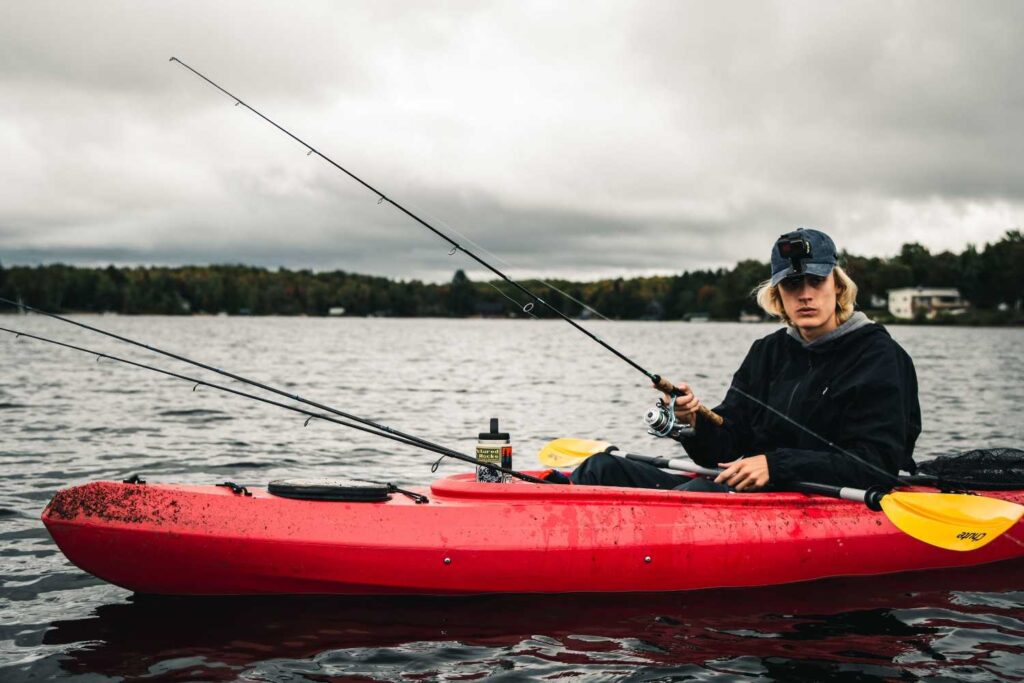
Perception Kayaks (Outlaw / Crank style)
- Entry to mid-level pedal platforms
Budget-friendly pedal learning platform
- Less refined but very usable
- Good for first-time pedal users before upgrading
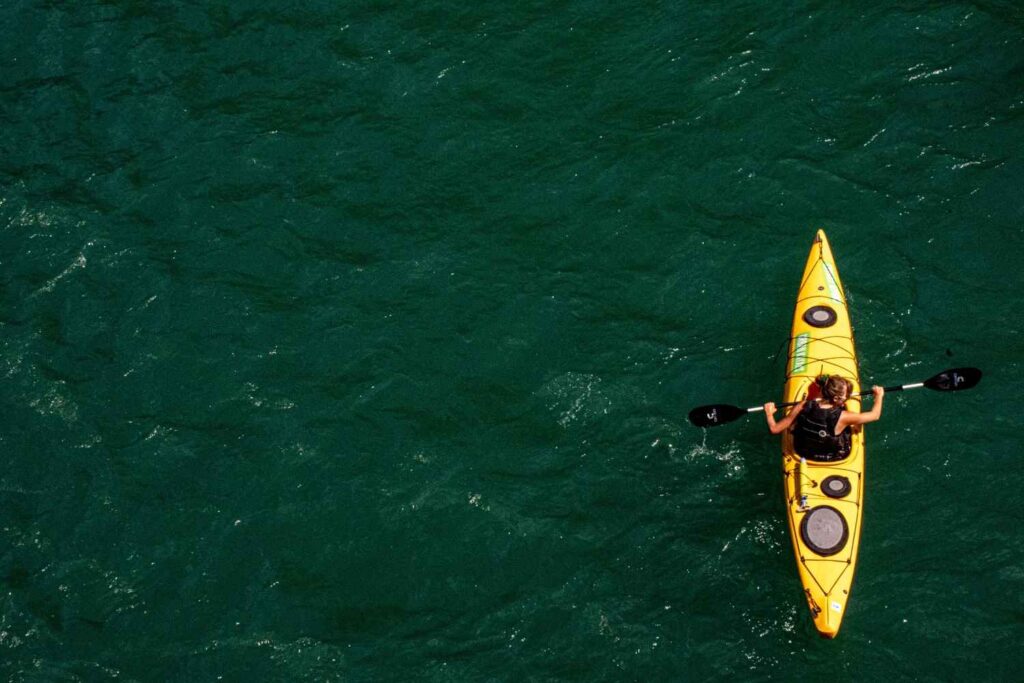
Simple breakdown:
- Hobie = refinement + stealth
- Old Town = power + control
- Perception = learning + affordability
Price Reality (Nobody Tells Beginners This)
Let’s be real.
A pedal kayak setup is not just kayak cost.
You’re buying a system.
Typical full setup cost:
- Entry pedal kayak: $1,200 – $2,000
- Mid-range (Old Town / Perception upgraded): $2,000 – $3,000
- Premium (Hobie Mirage): $3,500 – $5,500+
But that’s not all.
Add-ons people forget:
- seat upgrade: $100 – $300
- anchor system: $50 – $150
- safety gear: $100+
- transport cart: $80 – $200
Real truth:
Most “budget kayaks” become mid-budget after setup.That’s why exploring the best fishing kayak under $1500 can often give you a better balance of quality, features, and long-term value from the start.
The Missing Skill: Pedal Control Memory
This is where experience actually separates anglers.
Your body learns:
- how hard to push
- when to stop pushing
- how kayak reacts in wind
- how glide behaves under load
After 3–5 trips, something changes.
You stop thinking about pedals.
Your legs start “auto-adjusting.”
That’s pedal control memory.
Until that kicks in, everything feels slightly unstable.
Summer Heat Reality (Big Guys Don’t Escape This)
Hot weather changes everything.
Especially on pedal kayaks.
What happens:
- seat heat builds up fast
- legs fatigue quicker under resistance
- dehydration reduces control accuracy
- long pedal sessions feel heavier than they are
Quick field fixes:
- breathable seat cushion (mesh style)
- frequent short glide breaks
- early morning or late evening fishing
- light clothing, not heavy gear load
Simple truth:
Heat doesn’t reduce kayak performance — it reduces your control precision.For larger anglers spending long hours on the water, choosing the best fishing kayak for big guys can improve comfort, stability, and overall control during extended sessions.
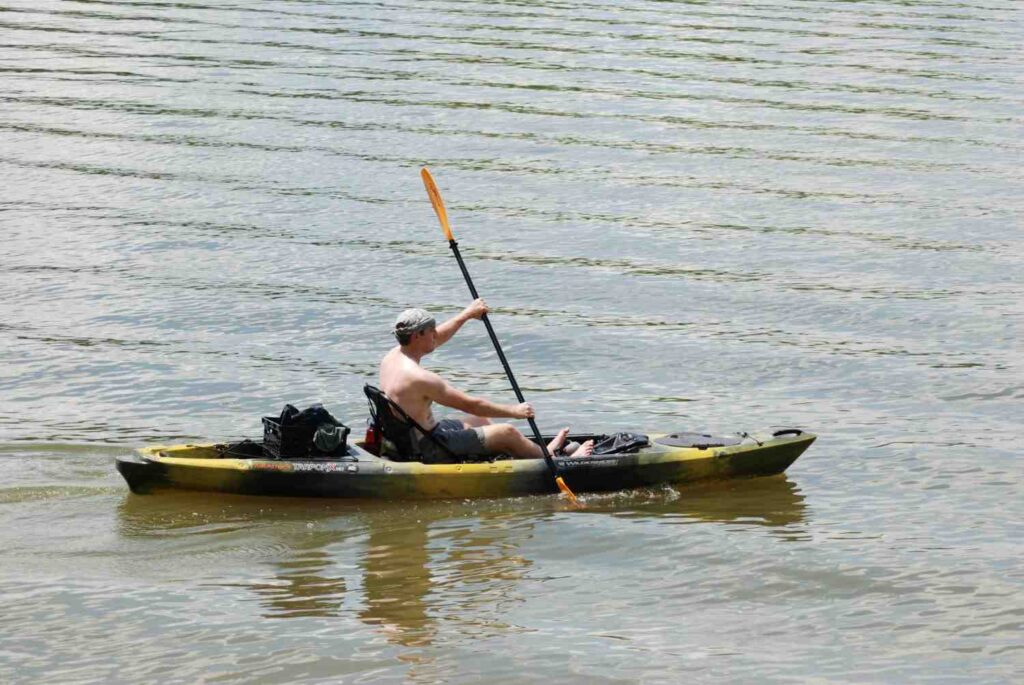
Fin vs Prop Under Real Pedal Use (Full Field Table)
| Factor | Fin Drive (Hobie style) | Prop Drive (Old Town style) |
| Start response | Smooth gradual push | Instant thrust |
| Long drift control | Excellent | Good but sharper |
| Wind stability | Medium-high | Very high |
| Weed performance | Clean flow | Can clog |
| Fatigue over time | Lower | Slightly higher |
| Fishing stealth | Excellent | Moderate |
| Tight maneuvering | Smooth arc turns | Sharp turns |
The Missing Reality: Pedal Doesn’t Fix Bad Balance
This part breaks setups more than anything.
If balance is wrong:
- kayak pulls sideways under pressure
- steering feels delayed
- battery drain increases
- constant correction fatigue builds
Rule:
If you’re correcting constantly, your system is unbalanced — not your skill.
Success vs Failure Setup (Real Water Behavior)
Team A (Struggled Setup)
- full pedal force from start
- rear-heavy battery
- no glide awareness
- over-steering constantly
Result:
- fatigue fast
- unstable fishing position
- frustration builds
Team B (Controlled Setup)
- controlled pedal cadence
- balanced weight
- glide use built-in
- light steering corrections
Result:
- stable tracking
- longer fishing sessions
- better catch positioning
Same kayak.
Different control system.
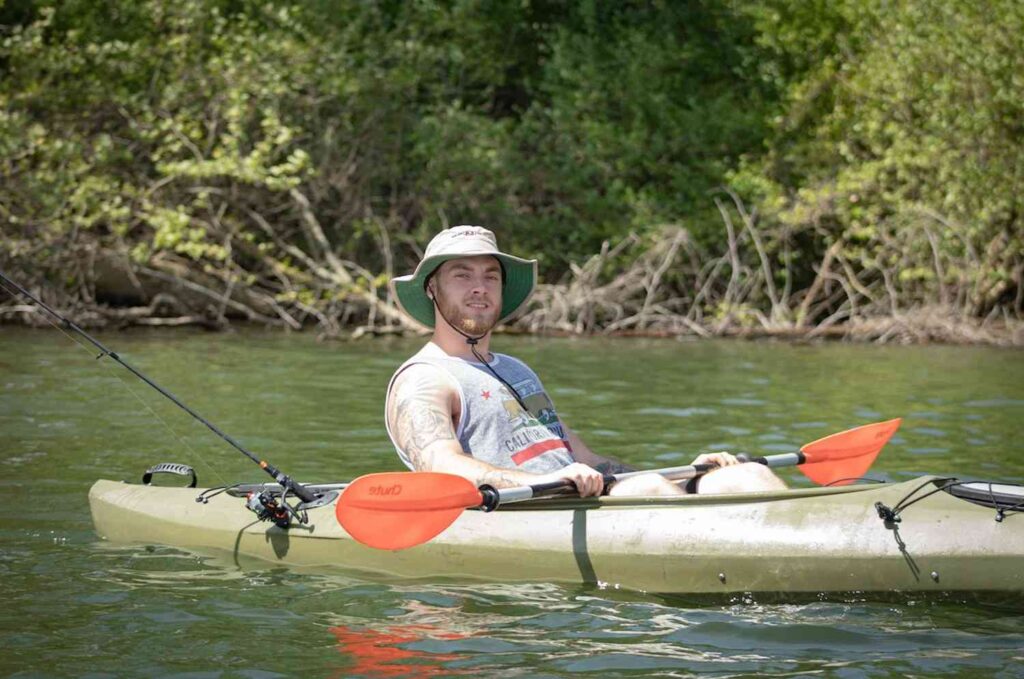
Common Mistakes That Kill Performance
- treating pedals like bicycle speed control
- ignoring glide phase completely
- poor weight distribution
- over-correcting steering
- full power use too early
- skipping learning phase of control
Biggest mistake:
thinking pedal system replaces skill — it doesn’t. It amplifies it.That becomes even more noticeable in a 2 person fishing kayak with pedals, where coordination and rhythm between both anglers can make a big difference on the water.
FAQ
Do I need a pedal kayak for fishing?
No — but it gives better positioning control in wind and structure fishing.
Which brand is best?
Hobie for finesse, Old Town for power, Perception for budget entry.
Is pedal fishing hard?
First 1–2 trips feel awkward. After that it becomes natural.
Is it worth the money?
If you fish often — yes. Control improvement is real.That’s why learning how to pick the perfect kayak for fishing matters, especially if you want a setup that matches your skill level and fishing style.
Final Thought
A fishing kayak with pedals is not about speed.
It’s about learning how a floating system reacts to your legs instead of your hands.
Once you get cadence, glide, and balance right — everything becomes predictable.
Before that, it feels unstable.
Same water.
Same kayak.
Different control understanding.