

Yeah, I’ve seen this setup go wrong in every possible way.
Loose mounts, spinning kayaks, dead batteries in 40 minutes… same story again and again.
And honestly? Most people think the motor is the problem. It’s not.
The #1 Thing That Breaks Everything
Balance, not power
You can throw the best trolling motor on a kayak and it’ll still behave like trash if weight distribution is off.
Here’s what it looks like in real life:
- kayak keeps turning left or right
- feels “floaty” in the back
- nose keeps lifting when you accelerate
That’s not a motor issue. That’s battery placement error
Battery goes:
- dead center
- as low as physically possible
- strapped like your life depends on it
Even 3–4 inches off center can start that slow drift nobody understands.

Motor Size Mistake Everyone Makes
More thrust doesn’t fix a bad setup
People overbuy thinking it’ll solve control issues.
Reality:
- 30–55 lb thrust → normal kayak setups (calm water, lakes)
- 55–70 lb → wind, current, light load fishing gear
- 100 lb+ → overkill, starts fighting the kayak itself
And here’s the weird part nobody tells you:
Too much power makes steering worse, not better.
Why?
Because kayak hulls are light. They don’t “absorb” torque like a boat.
Shaft Depth Problem (The Silent Killer)
This one shows up after everything is already mounted.
If your prop is:
- half out of water → you’ll hear cavitation (that annoying choppy sound)
- too deep → drag feels like someone is holding your kayak back
Correct setup:
prop fully submerged, but not scraping bottom in turns
You want clean water flow, not turbulence.
Trust me on this — I’ve seen people change motors before fixing shaft depth.
Mounting Position (Where Control Is Born)
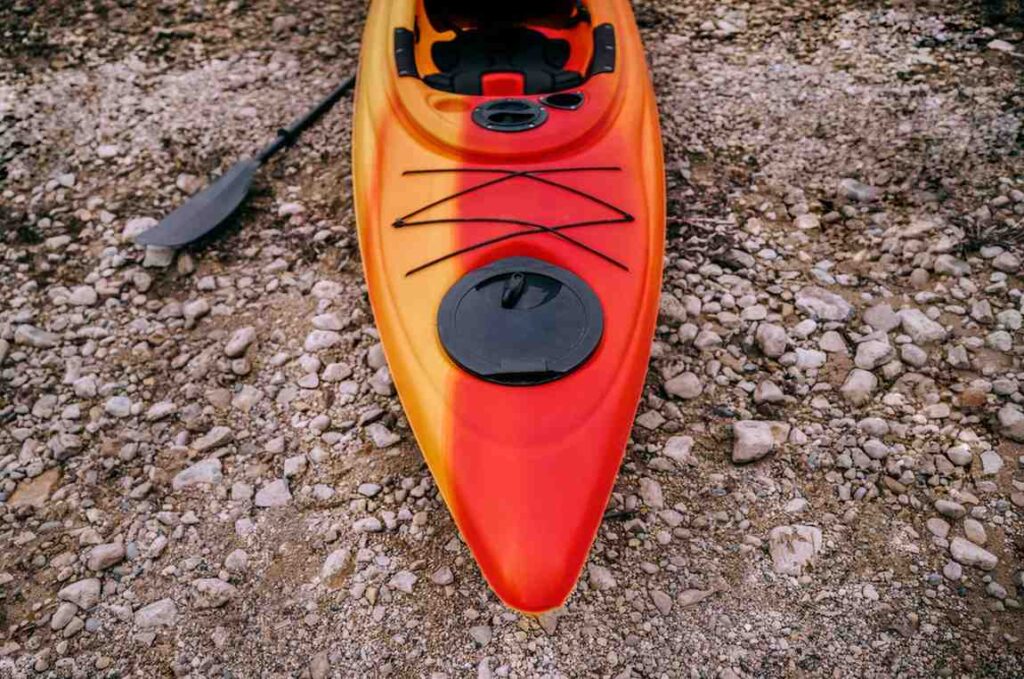
Most kayak mounts fall into 3 real categories:
Rear mount
- easiest setup
- beginner friendly
- stable in calm water
Side mount
- useful in narrow kayaks
- but you’ll fight slight drift all day
Bow mount
- best tracking
- more complex installation
But here’s the rule that overrides everything:
Motor must sit perfectly on the kayak’s centerline
Even a small angle creates this slow “circle drift” that drives people crazy.
And they usually blame current. It’s not current.
Battery Setup (Where Most Setups Fail Quietly)
Car battery in a kayak? I’ve seen it. It ends badly.
You want:
- deep cycle marine battery
- 12V system
- 50Ah–100Ah range depending on usage time
Placement matters more than capacity when setting up your battery.
Put it:
- center line
- low floor position
- tightly strapped (no movement at all)
Loose battery = slow instability
You won’t notice it immediately. It builds over time.
Wiring (Small Detail, Big Fire Risk)
Simple chain:
Battery → fuse → switch → motor
And don’t skip fuse. That’s not optional.
Real-world failure I’ve seen:
- twisted wire joints
- tape insulation only
- no waterproof sealing
Then one fishing trip later… corrosion starts and power drops randomly.
Use proper connectors. Heat shrink tubing. Waterproof joints.
This is the part everyone regrets ignoring.

“Why Is My Kayak Turning One Side?”
This comes up constantly.
Check in this order:
- motor alignment
- battery placement
- prop blockage (fishing line wrapped around shaft)
One of these is always guilty.
And no, it’s rarely the motor itself.
Quick field test:
Lift motor, paddle kayak straight manually.
If it still drifts → setup issue, not motor issue.
First Water Test (Don’t Rush This)
People ruin their own setup here.
Don’t start full throttle.
Do this:
- low speed first
- check straight tracking
- then increase gradually
- test turning left and right
If it “fish tails” → weight issue
If it “pulls side” → alignment issue
Simple pattern every time.
The Weird Problem Nobody Talks About
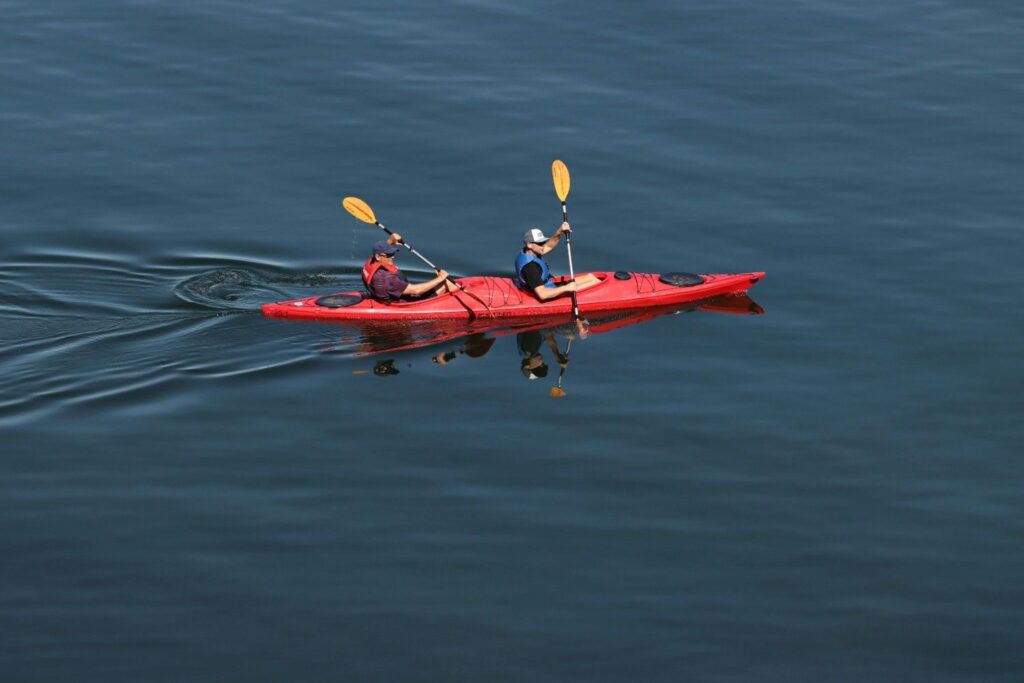
Wind against current.
This combination makes kayak feel stuck.
Motor running fine, battery fine… but movement feels weak.
Fix:
- angle slightly into wind
- shift weight a bit forward
- avoid full throttle fight mode
You don’t overpower this. You adjust it.
Maintenance (Where Setups Slowly Die)
After every trip:
- clean prop
- remove fishing line
- disconnect battery
- rinse if saltwater
Most “motor problems” are actually neglect problems that built up quietly.

FAQ
Why does my kayak feel unstable after motor install?
Battery placement or uneven weight. Almost always that.
How long does battery last?
50Ah gives roughly 4–6 hours depending on throttle use.
Do I need a rudder?
Not required, but in wind it makes transporting your kayak easier.
Why does power drop randomly?
Usually wiring loss or low battery voltage under load.
Final Reality Check
Kayak trolling motor setup isn’t a bolt-on upgrade. It’s a balance system when properly set up.
Once motor alignment, battery position, and thrust all line up properly… the kayak stops fighting you.
It just moves. Smooth. Controlled. Done.